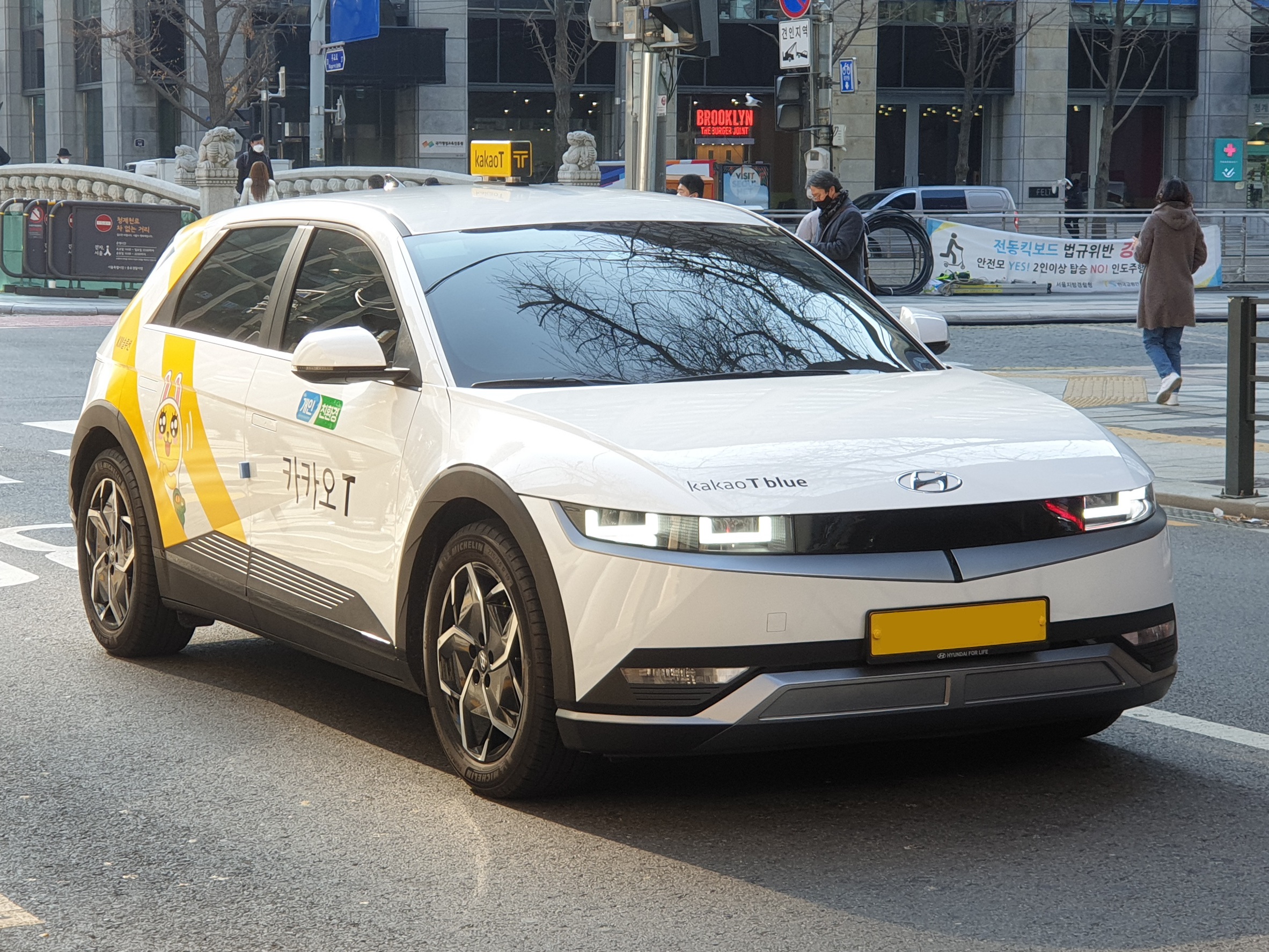
Photo: Damian B Oh / Wikimedia Commons, CC BY-SA 4.0. Adaptations retain CC BY-SA 4.0.
A practical guide to taxis in South Korea for visitors: how to tell taxi types apart, what the published fares and surcharges were, which apps accept overseas cards, and how to find the right taxi stand at Incheon Airport.
Quick answer
Regular taxis in Korea have yellow license plates and a roof sign that reads “TAXI”; deluxe taxis are usually black and charge higher fares. Visit Korea listed a regular base fare of 4,800 won in Seoul, Busan, Incheon, Gyeonggi-do, and Gwangju, with about 100 won added for every 130 meters to 150 meters of extra distance, and said a late-night fare usually applied from 22:00 to 04:00. Passengers can pay with cash, a credit card, or a transportation card, and tipping is not required. For app booking, k.ride, a version of Kakao T for foreign visitors, accepts overseas credit cards, and Uber Taxi works with an existing Uber account. These details were checked on the Visit Korea and Incheon Airport pages on November 12, 2026 (Korea time).
Taxi types: regular, deluxe, and international
Regular taxis charge standard metered rates. Visit Korea listed the regular base fare by region: 4,800 won in Seoul, Busan, Incheon, Gyeonggi-do, and Gwangju; 4,500 won in Daegu and Ulsan; 4,600 won in Gangwon; and 4,300 won in Daejeon and Jeju. Deluxe taxis are usually black, use more expensive vehicles, and offer a higher service standard; their fares are higher and can vary by company.
International taxis have drivers who speak one or more foreign languages, such as English, Japanese, or Chinese. The Seoul Metropolitan Government introduced them in 2009. They can be reserved through the International Taxi website (intltaxi.co.kr), by phone at +82-1644-2255, or through their own app, and airport pickups can be requested at the International Taxi Information Desk at Incheon International Airport. Visit Korea described airport trips to Seoul as using a fare table based on regional sections, while trips within or out of Seoul were metered with a 20% surcharge.
Fares and surcharges
After the base fare, the meter adds about 100 won for every 130 meters to 150 meters. Visit Korea said the late-night fare usually applied from 22:00 to 04:00 and was highest between 23:00 and 02:00. Base fares differ by region, so check the rules for the city you are in rather than applying a Seoul figure everywhere. An app estimate is a planning figure, not a guaranteed final meter total.
Booking with an app
k.ride is a version of Kakao T from Kakao Mobility designed for foreign visitors. Visit Korea listed English, Chinese, and Japanese support, sign-in with a Google or Apple account, and acceptance of overseas credit cards. Uber Taxi uses an existing Uber app and its payment details, with automatic message translation for communicating with drivers.
Set up the app while you have a stable connection. Before requesting a ride, confirm the pickup pin and save the destination’s Korean address or place name. When the car arrives, compare its plate with the booking details before getting in.
Paying and keeping records
Ask whether the fare will be charged through the app or paid to the driver, and check that your specific card works before relying on it.
Keep the receipt or the app trip record. It helps identify the vehicle, check the charged amount, or follow up on a lost item. For help in a foreign language, the 1330 Korea Travel Helpline (+82-2-1330) offered Korean, English, Japanese, Chinese, Russian, Vietnamese, Thai, and Indonesian, and could provide a list of tourist taxis and companies by region.
Taxis at Incheon Airport
Incheon Airport’s taxi guide listed separate stands by terminal and taxi type. At Terminal 1, standard taxis used stands 5C, 6C, and 6D; deluxe and jumbo taxis used 7C and 8C; and international and smart taxis used 4C. At Terminal 2, standard taxis used 7C for Seoul, 6D for Gyeonggi, and 5D for Incheon; deluxe and jumbo taxis used 7D; and international and smart taxis used 3C.
The airport listed a standard taxi base fare of 4,800 won and a deluxe and jumbo base fare of 7,000 won. It applied no boundary surcharge between the airport and Seoul, Incheon, Goyang, Gwangmyeong, Gimpo, or Bucheon; beyond those areas, Seoul and Gyeonggi taxis applied a 20% surcharge and Incheon taxis a 30% surcharge. A night surcharge of approximately 20% to 40% applied between 22:00 and 04:00. The airport also warned about call vans posing as taxis and advised using the designated taxi stands. For estimated taxi times and fares to central Seoul and the rail and bus alternatives, see the airport transportation guide linked below.
What to check before you ride
Fares, surcharges, and stand locations can change, so check the current airport or city information before a trip. Confirm the taxi class before getting in, because deluxe and international taxis are priced differently from regular taxis. Do not accept unsolicited ride offers at airports or terminals; use the marked taxi stand. Before getting out, check for your phone, wallet, and bags, and keep the receipt or trip record.
Related guides
The airport transportation guide compares trains, buses, and taxis from Incheon and Gimpo airports to Seoul.
The bus guide explains how to ride city and intercity buses in Korea.
The Seoul subway guide covers getting around Seoul by subway.
The money and currency guide covers cash, cards, and currency exchange in Korea.