Jeju Island: a travel planning guide
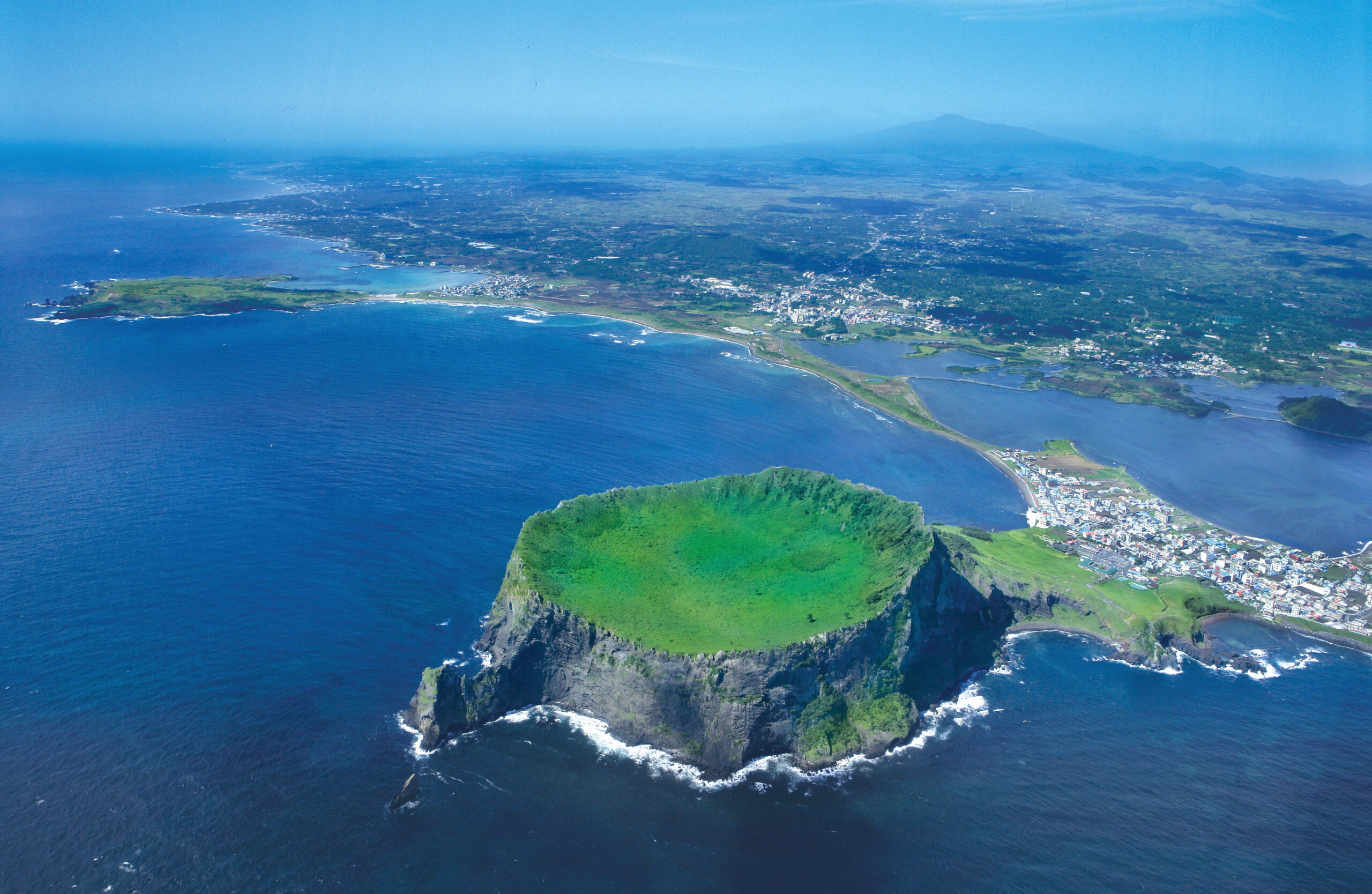
Seongsan Ilchulbong from the air.jpg by Korea.net / Korean Culture and Information Service, CC BY-SA 2.0.

Jeju Island lies southwest of the Korean Peninsula, with Hallasan at its center. Its volcanic landscape includes the Geomunoreum lava tube system, Seongsan Ilchulbong and Mount Halla, the three components of the UNESCO World Heritage property inscribed in 2007. Use the island’s place names to organise your plans, then check access and transport for the stops you choose.
Understanding the island
Hallasan and the surrounding volcanic cones, known as oreum, provide the island’s central geographic reference. Official addresses place Jeju International Airport and Manjanggul in Jeju-si, while Seongsan Ilchulbong is in Seogwipo-si. Jeju-si and Seogwipo-si are administrative place labels within this island guide.
Place names to recognise
- Jeju-si: the airport’s address and Manjanggul’s location both use this administrative name.
- Seogwipo-si and Seongsan: Seongsan Ilchulbong’s address is in Seongsan-eup, Seogwipo-si.
- Jungmun: Korea Airports Corporation names Jungmun on the airport limousine route toward Seogwipo.
- Keep these names in view when checking the location of each stop on your itinerary.
Volcanic landscapes, hiking and coast
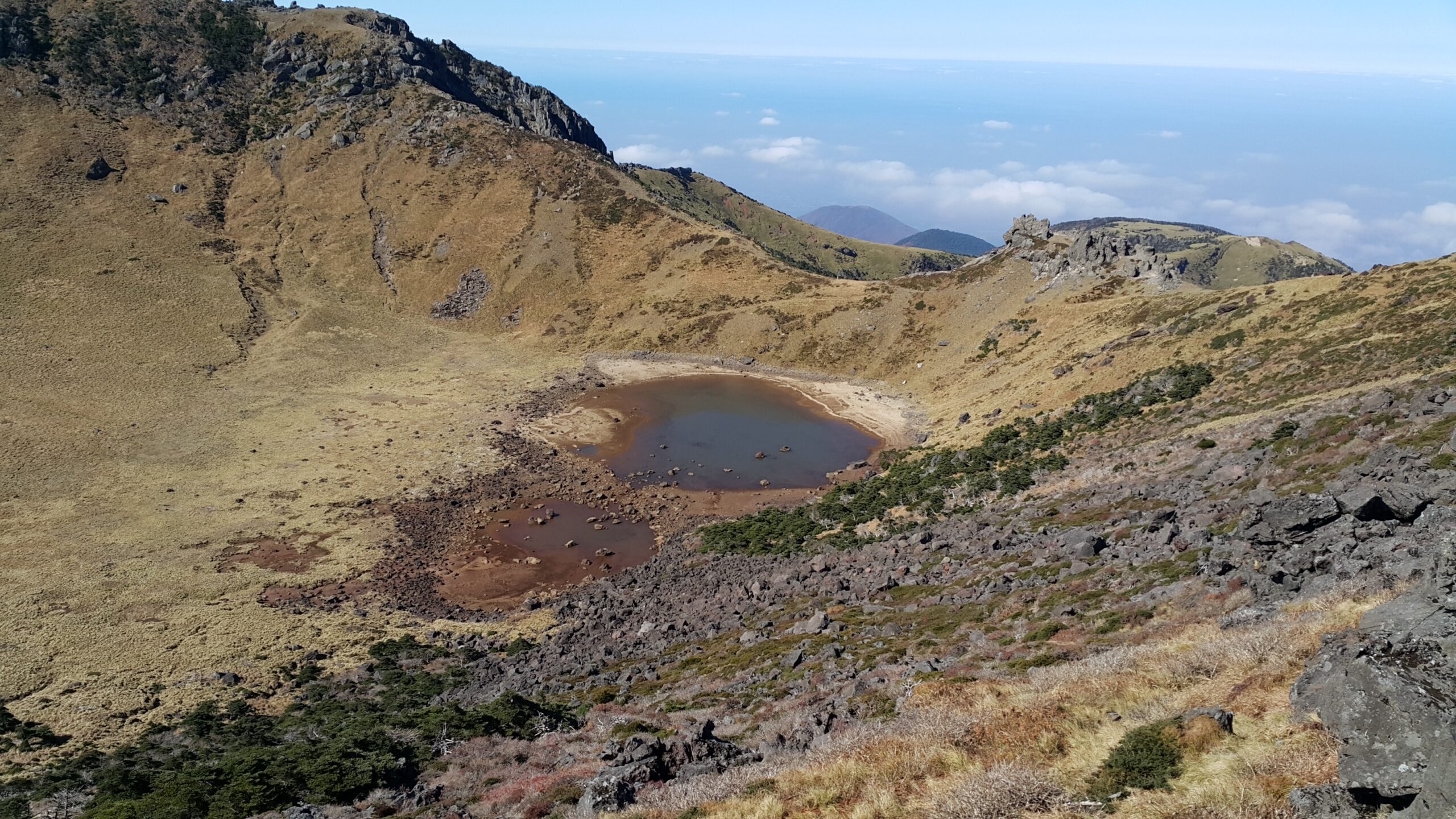
The Peak of Hallasan, Baengnokdam 1.jpg by Joshua0608, CC BY-SA 4.0.

Visit Jeju gives Hallasan’s elevation as 1,950 metres. The upper Seongpanak and Gwaneumsa trails lead to the Baengnokdam summit under normal conditions; Eorimok, Yeongsil and Donnaeko do not connect to the summit. Advance reservations are required for the summit sections from Jindallaebat on Seongpanak and from Samgakbong on Gwaneumsa. Check the official Hallasan reservation system for current trail access before planning a summit hike.
Seongsan Ilchulbong is a volcanic tuff cone in Seongsan-eup, Seogwipo-si. Visit Jeju describes a summit crater about 600 metres across, with views of the crater, Seongsan villages and the sea. Its visitor information distinguishes a paid route to the summit from a free area around the base, including Umutgae Beach. Check the official visitor page for opening arrangements before going.
Manjanggul is a lava tube in the Geomunoreum system, with its address in Gujwa-eup, Jeju-si. Visit Jeju describes a public section of about one kilometre, reached through Entrance 2, with a lava column at its end. Confirm current access on the official Manjanggul page before adding a cave visit to your day.
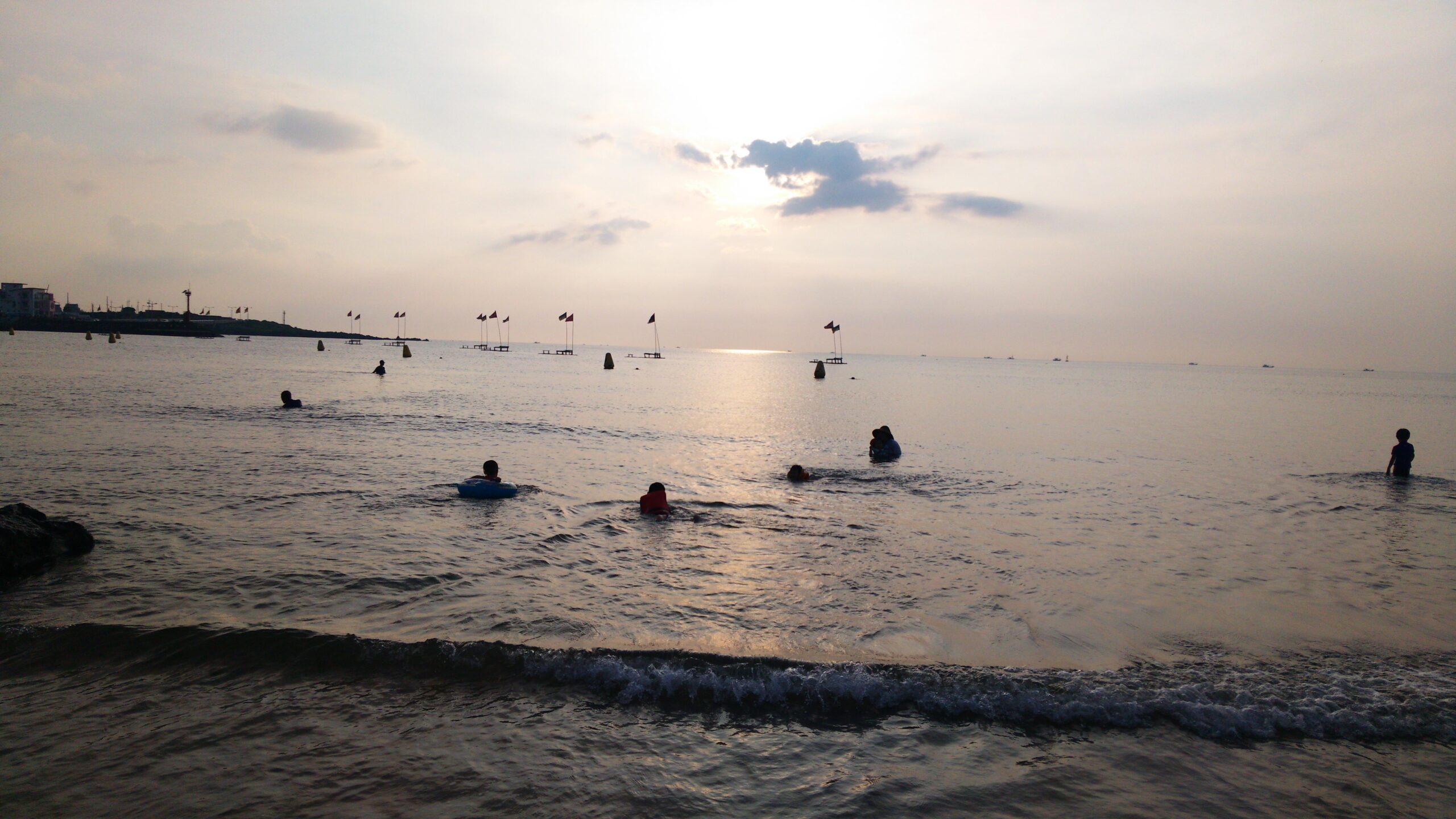
Ihoil-dong, Jeju-si, Jeju-do, South Korea – panoramio – song songroov (24).jpg by song songroov, CC BY 3.0.

For coastal stops, Visit Korea names beaches including Iho Tewoo, Samyang and Geumneung. Check the individual beach’s current visitor information before setting your plans.
Food and markets
Foods described in Visit Korea’s Jeju guide include black pork, pork noodle soup, galchiguk (cutlassfish soup), sea-urchin seaweed soup and okdomgui (grilled red tilefish). The same guide describes dombegogi as steamed black pork served in slices, and omegitteok as millet rice cake coated with bean powder or mashed red bean. Hallabong citrus is another food named in the guide.
Visit Korea also describes Dongmun Traditional Market’s night-market food scene and Seogwipo Maeil Olle Market’s local foods, including omegitteok and black pork.
Arriving in Jeju
Jeju International Airport is at 2 Gonghang-ro, Jeju-si. Visit Korea’s March 2025 transport overview describes domestic flights to the airport and passenger ferries from mainland ports to Jeju Port. Confirm current routes and departures with the airline or ferry operator before booking.
Getting around
Korea Airports Corporation lists airport limousine 600 from the stop in front of Gate 5, travelling through Jungmun to its Seogwipo terminus. Use the airport’s public-transport page to check the current route and timetable.
Visit Korea also identifies rental cars as a way to travel around Jeju. If you plan to drive, note Visit Korea’s advice to avoid driving at night because wildlife may appear on the roads after dark.
Before choosing accommodation
Use the airport’s Jeju-si location and the limousine’s Jungmun–Seogwipo route as initial orientation when checking accommodation addresses. Before choosing a property, check how you would reach your planned stops and make your arrival journey.
Seasonal planning
Visit Korea describes Jeju’s climate as closer to subtropical than that of mainland Korea. For wider timing context, Kignal’s Korea seasonal planning guide includes KMA’s rainy-season information for Jeju. For a Hallasan hike, check the reservation system’s current restrictions for the season and weather.
Checks before you go
- Before a summit hike, confirm the reservation for your chosen section and check trail access for the day.
- Visit Jeju states that disposable lunch containers are prohibited on Hallasan.
- Recheck attraction opening arrangements and the airport limousine timetable close to your visit.
Explore more
Browse Kignal’s destination guides for more trip-planning options.