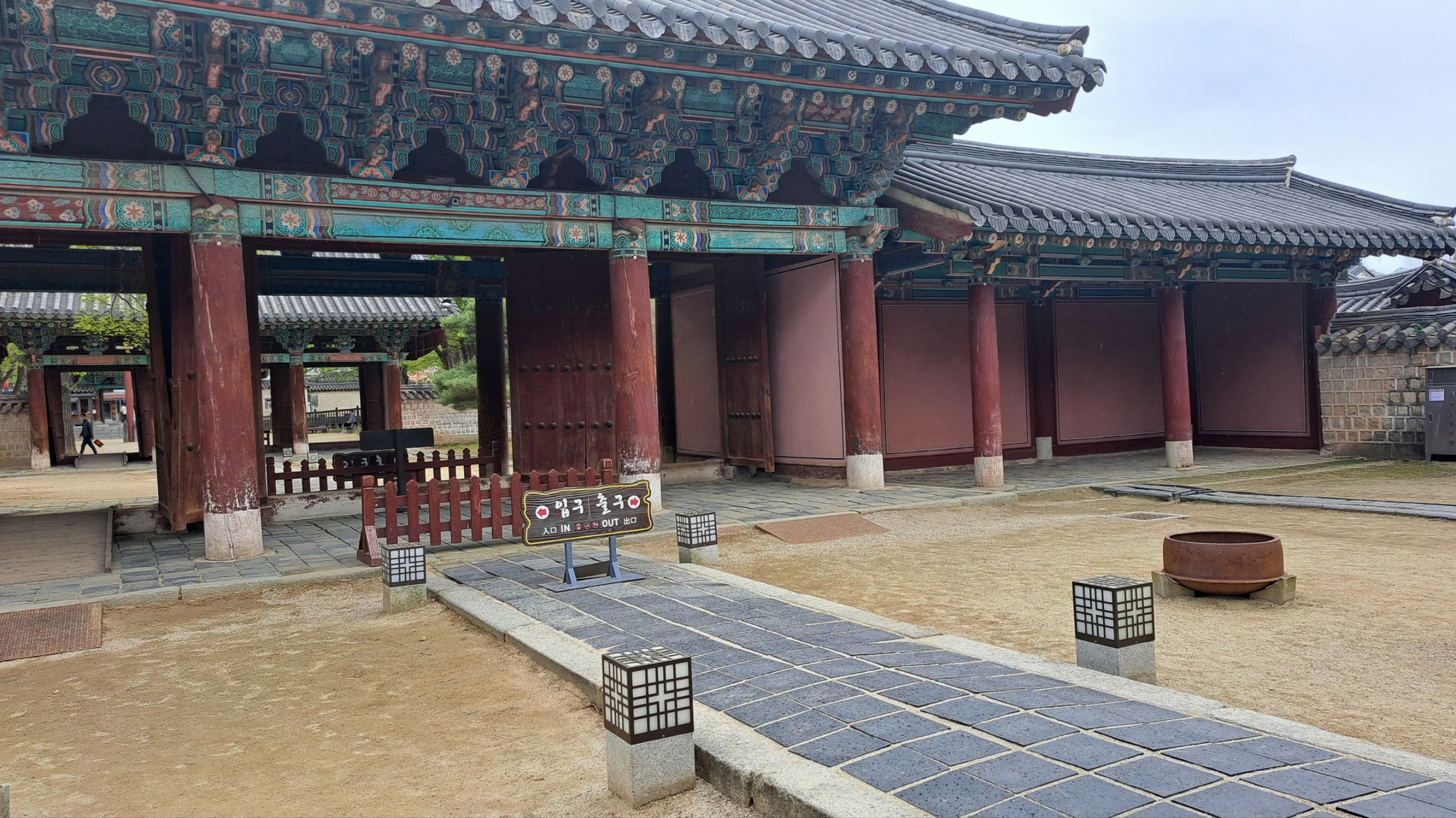
Photo: Hankook12 / Wikimedia Commons, CC0 1.0. Adapted with KIGNAL_SIGNATURE_V1; documentary content unchanged.

Plan a Jeonju visit around royal history, a cathedral, traditional streets, and local food—with practical rail, bus, and return-trip guidance.
Why Visit Jeonju Hanok Village?
Jeonju Hanok Village is more than a backdrop for photographs. The Korea Tourism Organization describes a neighborhood of around 700 hanok buildings, while the village’s official cultural-place guide highlights landmarks including Gyeonggijeon, Jeondong Catholic Cathedral, Jeonju Hyanggyo, Pungnammun, and Omokdae. The appeal is the combination: historic buildings, active religious and cultural places, walkable lanes, and Jeonju food traditions in one visit area.
Two nearby landmarks make a useful first visit. Gyeonggijeon was built in 1410 to enshrine King Taejo’s portrait. Jeondong Catholic Cathedral, built between 1907 and 1914, is an active church whose visiting hours exclude Mass times. Together they give the day a clear historical focus, while the village lanes and food stops leave room for a slower, self-guided afternoon.
Getting to Jeonju from Seoul
For a rail trip, take KTX from Yongsan Station in Seoul to Jeonju Station. Check KORAIL for trains, seat availability, and the return option on your exact date; do not assume that a convenient departure will still have seats later in the day. Jeonju Station and the Hanok Village are separate stops, so plan the local connection before leaving Seoul.
Official Jeonju directions list local buses from Jeonju Station toward Jeondong Cathedral and Hanok Village, with an approximate journey of about 25 minutes. The exact route and traffic can vary, so check the city’s current directions or a transit app for your date. Once in the village, a separate shuttle connects Hanok Village Public Parking Lot No. 4, Jaman Mural Village, and Taejo-ro Bus Stop; its weekday and weekend service differs, so verify the current operating times. It is an in-area option, not a replacement for the station-to-village trip.
A Walk Through the Village
A simple first route begins at Jeondong Cathedral, then follows Taejo-ro into the village. The official Hanok Village Alley Tour continues through local cultural sites and Hanji-gil before returning to Taejo-ro. Use that published sequence as a map reference for an independent walk, but check the current tour timetable and language before planning around a guided departure.
Add Gyeonggijeon as a separate visit along the route, then choose one or two further landmarks rather than trying to enter every site. Jeonju Hyanggyo, Pungnammun, and Omokdae are listed as distinct places within the broader visitor area. Let the official map guide the order and allow time for the lanes and cultural stops between them; the site list alone does not mean every venue is open for entry at the same time.
Gyeonggijeon is listed with visiting hours of 10 a.m. to 6 p.m. and an adult admission fee of ₩3,000 for visitors from outside Jeonju; youth and child rates are lower, and the official listing notes free entry on the last Wednesday of the month. Jeondong Cathedral is listed as open 9 a.m. to 5 p.m. excluding Mass times, with no admission fee. Confirm current details before your visit, and treat the cathedral as an active place of worship: do not enter during services or interrupt worshippers.
What to Eat in Jeonju
Choose a meal by dish and appetite rather than relying on a single “must-eat” stop. Official Jeonju tourism lists bibimbap, hanjeongsik, tteokgalbi, kalguksu, and dumplings at named businesses around the Hanok Village. Gogung Suragan Hanok Village Branch is listed for bibimbap, Damun for hanjeongsik, Gyodong Tteokgalbi for grilled patties, Veteran Kalguksu for noodle soup, and Daurang for dumplings. Menus, prices, and opening hours belong to each restaurant and should be checked directly; the official listings do not establish that every venue will be open during your visit.
Choose a Half-Day or Full-Day Visit
For a half-day visit, keep the plan compact: arrive at the village, see Jeondong Cathedral when services are not underway, visit Gyeonggijeon, then walk a section of Taejo-ro and the nearby lanes before choosing lunch or an early meal. If time is short, skip the farther cultural sites first rather than rushing through the two main landmarks. This is a suggested order, not a promise about walking time or venue access.
With most of the day, add the official Hanok Village Alley Tour route or use it as a self-guided sequence, then choose one additional stop such as Jeonju Hyanggyo, Pungnammun, or Omokdae. Build in time for a sit-down meal and neighborhood browsing. Use the shuttle only for its listed village-area stops, and check whether it is operating before depending on it. A useful plan leaves room for the specific places you want to enter, rather than treating every listed attraction as a required stop.
Hours, Access, and the Return to Seoul
The attraction information above is date-sensitive: check Gyeonggijeon admission, cathedral access around Mass, guided-tour availability, shuttle service, and restaurant hours shortly before travel. Bus routing between Jeonju Station and the village can also change with the date and traffic. These checks affect how many stops fit; they do not change the basic plan of using Jeonju Station as the rail arrival point and reaching the village by local transit.
For the trip back, return to Jeonju Station and use KORAIL’s date-specific timetable and booking information for Jeonju-to-Seoul service. Confirm the train before leaving the village and leave a transfer buffer for the local bus or another connection. This guide does not name a last train or promise a particular departure, because those details depend on the travel date. For another Korean heritage itinerary, see Kignal’s published Suwon Hwaseong day-trip guide and the Destinations index See the Jeonju destination hub and Jeolla regional hub..