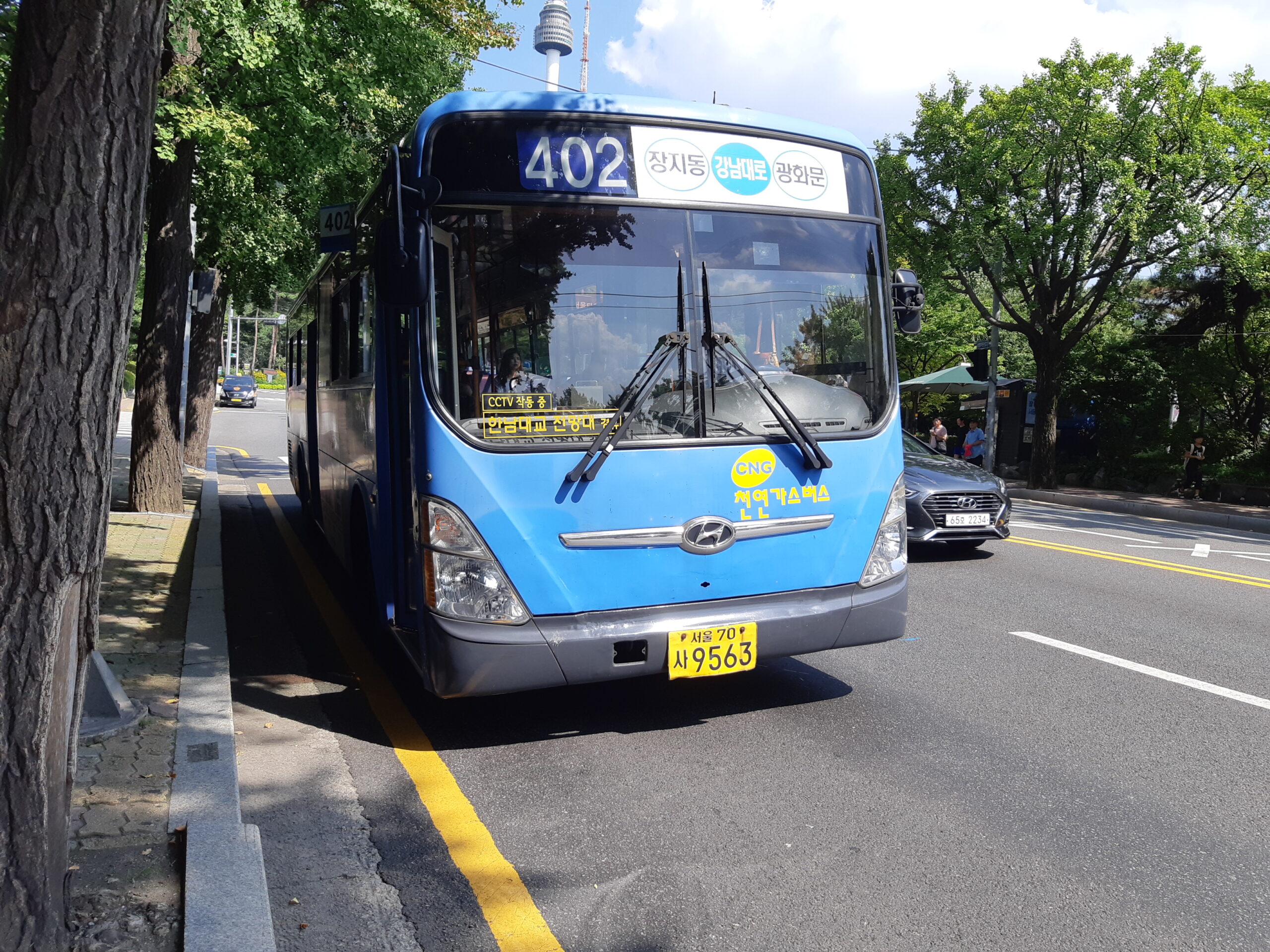
Photo: Wikiwater2020 / Wikimedia Commons, CC BY-SA 3.0. Original photograph; WordPress may resize for display. Adaptations retain CC BY-SA 3.0.

A clear, step-by-step guide to using city, express, and intercity buses in South Korea, with practical tips for first-time travelers.
Choose the right approach
First decide whether this is a trip within a city or a journey between cities. For a Seoul city ride, enter your destination in a route planner, then compare the bus number, direction and stop name with the sign at the actual stop. Seoul’s blue, green, yellow and red bus colors describe different route roles, but color alone does not identify the vehicle you need. A stop can serve routes traveling in different directions. Check the number on the arriving bus, then look at its destination display. If the display, stop or direction does not match your planned journey, wait and recheck rather than boarding on color alone.
For an intercity trip, search the destination in an express or intercity booking service first. A city transit card and a terminal ticket are different arrangements. Check whether the ticket is for an express or intercity bus, the exact departure terminal, and the arrival terminal. Seoul has multiple long-distance terminals; even two buses to the same region may not leave from the same building. Save the terminal name in Korean as well as English for the journey to the station. At the terminal, verify the departure platform shown on its display and whether an online purchase must be exchanged or printed before boarding.
How to do it
Load a usable transport card before going to the stop and check that it has enough balance for the trip. In Seoul, the published guidance is to board at the front and tap the reader. Find a place to stand clear of the doors. Follow the route in your map as the bus moves; compare the next-stop display or announcement with your chosen stop. Prepare to leave before the bus reaches it, then use the rear door and tap out. The second tap matters for the capital-area transfer calculation. For a straightforward bus-to-subway transfer, use an individual card and tap as directed. Seoul also permits conditional multi-passenger bus-to-bus transfers on one card; that exception does not extend to subway transfers. Check the city’s current conditions before relying on group payment.
If the card does not work, do not treat the failed beep as proof that you have paid. Check the displayed message or ask the driver how to pay on that vehicle. Reloading options and card coverage vary by product, and accepted methods can differ outside Seoul. Carry a backup payment method and check the local operator before relying on cash. For bulky luggage, inspect the specific bus operator’s policy; a long-distance coach and a crowded city bus are different travel situations. If the bus you need does not appear, confirm the direction and live route status rather than assuming the posted timetable is current.
What to verify and avoid
Use Seoul’s official bus and transfer guidance for capital-area rules, and check the current long-distance ticketing page and your actual operator for terminal, platform, baggage and payment details. The Seoul tap-and-transfer rules above should not be applied automatically to other cities.
For a group, decide on the payment arrangement before boarding. A separate card for each person simplifies mixed bus-and-subway travel. If one person pays for several bus passengers, ask the driver and check Seoul’s specific group-transfer conditions; do not assume the same discount applies after moving to a subway gate.