Discover Korea through places, culture, food, and more.

Author: Kignal Editorial Team

  • Duty-Free Shopping and VAT Refunds in Korea

    Duty-Free Shopping and VAT Refunds in Korea

    AI-generated illustration for Kignal. This image does not depict an actual airport duty-free store or official tax-refund procedure.

    Learn how duty-free shopping differs from Korea’s tax-refund programs, who may qualify, and what to check before paying or leaving the country.

    Quick answer

    A duty-free purchase is taxed under duty-free rules at the point of sale, while a tourist tax refund returns tax on eligible purchases from participating retailers; a duty-free item is not eligible for a refund. Non-Korean citizens staying in Korea less than six months can apply when a receipt is at least 15,000 won and the goods leave Korea unopened and unused within three months of purchase. An immediate in-store refund applied to a single payment of at least 15,000 won and less than 1,000,000 won, up to 5,000,000 won of total trip spending; a downtown refund booth accepted receipts of up to 6,000,000 won. For goods brought into Korea, the basic customs allowance was USD 800, with separate allowances for liquor (2 liters or less and USD 400 or less), perfume (100 milliliters), and cigarettes (200 sticks). These rules were checked on the Korea Customs Service, Korea Tourism Organization, and Incheon Airport pages on November 11, 2026 (Korea time).

    Duty-Free or Tax Refund: Which One Are You Buying?

    “Duty free” and “tax refund” describe different transactions. At an airport or downtown duty-free shop, the applicable taxes are handled at the point of sale under that shop’s rules. At a participating tax-refund retailer, an eligible traveler may receive an immediate deduction or claim a refund later. A duty-free purchase cannot receive a second Korean tax refund. Korea Customs Service listed a basic duty-free allowance of USD 800 in total taxable value for goods brought into Korea. Liquor has a separate allowance of 2 liters or less and USD 400 or less in total value; perfume has a separate allowance of 100 milliliters; cigarettes have a separate allowance of 200 sticks. These three allowances are apart from the USD 800 basic allowance. Check the customs rules for your destination country and the shop’s current terms.

    Option How it works and what to check
    Duty-free shop Applicable taxes are exempted at sale. Check shop rules, pickup arrangements, and customs allowance at your destination.
    Immediate tax refund A participating store checks eligibility and deducts eligible tax at sale.
    General tax refund Pay the tax-inclusive price, then claim later with store-issued refund documents.

    The Korea Tourism Organization (KTO) describes the refund system as applying to eligible goods bought at participating stores. Store participation and the transaction method matter: a department-store building may contain multiple retailers, and not every counter necessarily handles refunds. Look for the tax-refund sign, then ask the cashier which process applies before payment.

    Who Qualifies—and What Can Be Refunded?

    The Korea Tourism Organization’s guidance listed non-residents who do not earn income in Korea as eligible, including foreign visitors staying less than six months and overseas Koreans who had lived abroad for at least two years and stayed in Korea for three months or less. Diplomats in Korea, United States military personnel in Korea, and people employed in Korea were excluded. Purchases under a corporate name or made by an agent did not qualify. Cooked food and massage services were excluded because customs could not verify them; goods opened or used before leaving Korea and duty-free items were also excluded. Each receipt must be at least 15,000 won, and goods must be new, unopened, unused, and leave Korea within three months of purchase. The retailer or refund operator can confirm whether an unusual traveler or purchase meets the program terms.

    Immediate and Later Refunds: Compare the Limits

    The Korea Tourism Organization listed these channel limits: an immediate refund required a single payment of at least 15,000 won and less than 1,000,000 won, with total trip spending of no more than 5,000,000 won. A receipt at a downtown refund booth could not exceed 6,000,000 won. The Korea Tourism Organization’s comprehensive tax-refund guide was dated October 20, 2025.

    Refund channel Published limits
    Immediate refund One payment of at least 15,000 won and less than 1,000,000 won; total trip spending no more than 5,000,000 won.
    Downtown refund booth Each receipt no more than 6,000,000 won.
    Airport refund Minimum 15,000 won; the Korea Tourism Organization listed no upper transaction limit for this channel.

    Ask the retailer whether it offers an immediate refund or another refund channel, and follow the refund operator’s instructions for any documents.

    Keep the Goods and Paperwork Ready for Departure

    For refund goods carried on board, use the kiosk in the departures hall and, if customs inspection is required, present your passport, the list of purchased unopened and unused goods, and the receipt to customs. For refund goods in checked baggage, tell the airline staff at check-in, get the bag tagged, use the departures-hall kiosk, get customs approval if inspection is required, then place the bag on the large conveyor belt next to the customs desk. Airport procedures can change, so check the current instructions for your terminal.

    Before You Pay

    Before paying, confirm with the retailer whether it participates in a refund program, whether your purchase meets the applicable limits, and which refund channel it offers. Check your destination country’s customs and declaration rules separately.

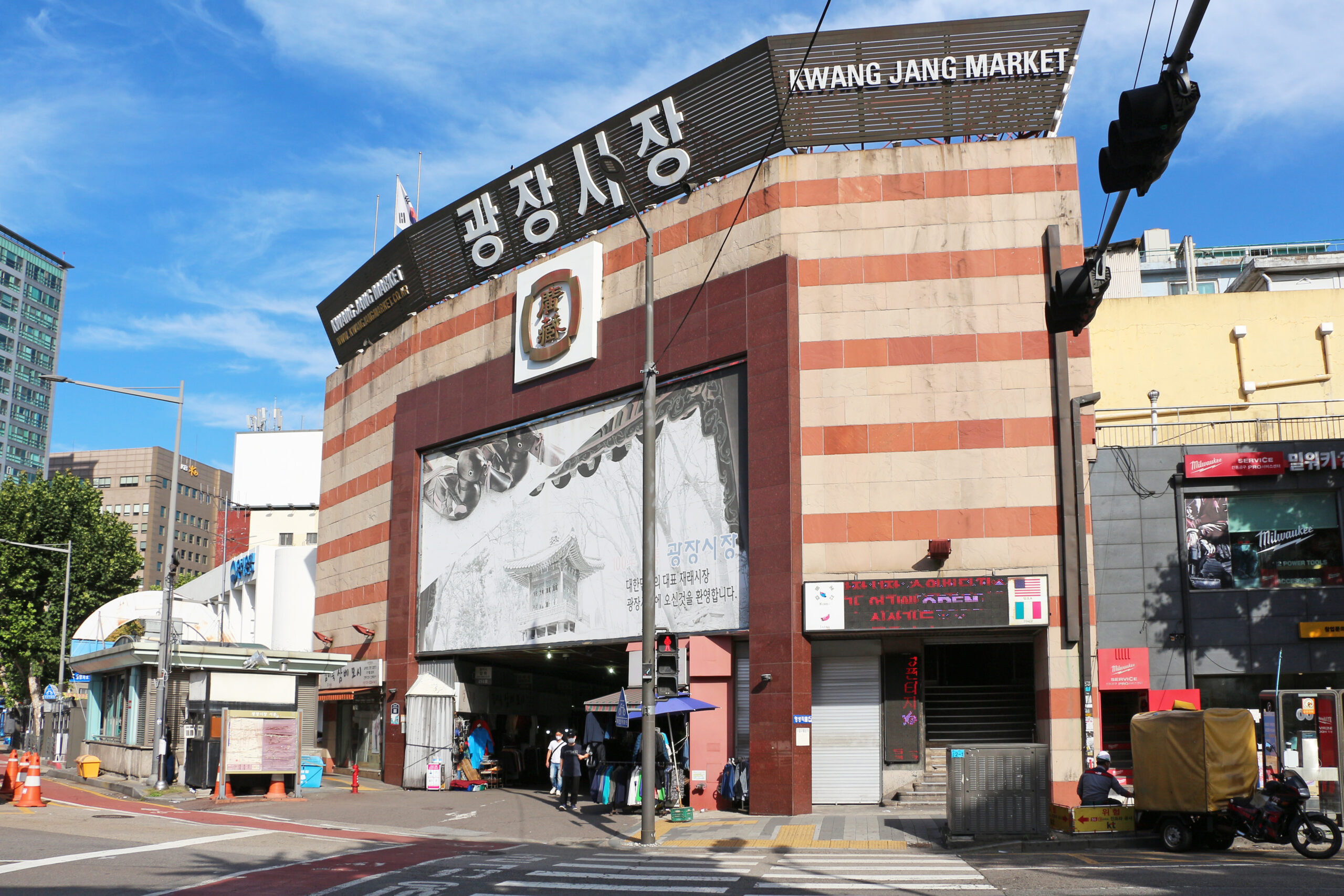
    A department-store building can contain participating and nonparticipating retailers. A downtown duty-free shop is not a second tax-refund transaction. At a traditional market, do not assume each stall participates; look for the refund sign and confirm before paying. Do not subtract a guessed refund from the shopping budget because the amount depends on the items and refund method.

    For current details, review the Korea Tourism Organization tax-refund guide, Korea Tourism Organization comprehensive tax-refund guide, Korea Customs Service traveler allowance guidance, and Incheon Airport tax refund instructions.

    Related guides

    The money and currency guide covers payment and cash options while shopping in Korea.

    The department-store shopping guide covers shopping information for department stores in Korea.

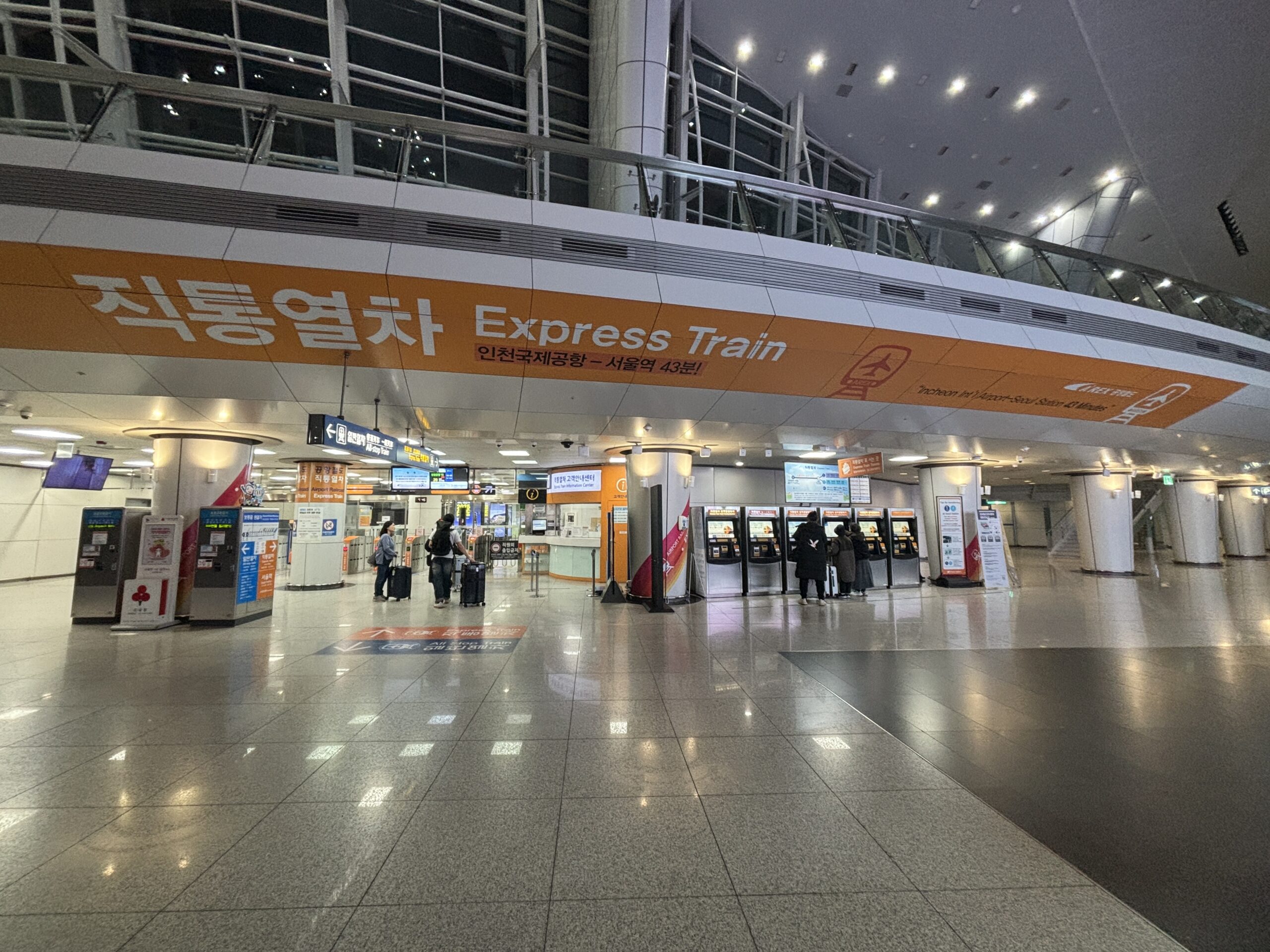
    The airport transportation guide covers ground transportation after arriving at a Korean airport.
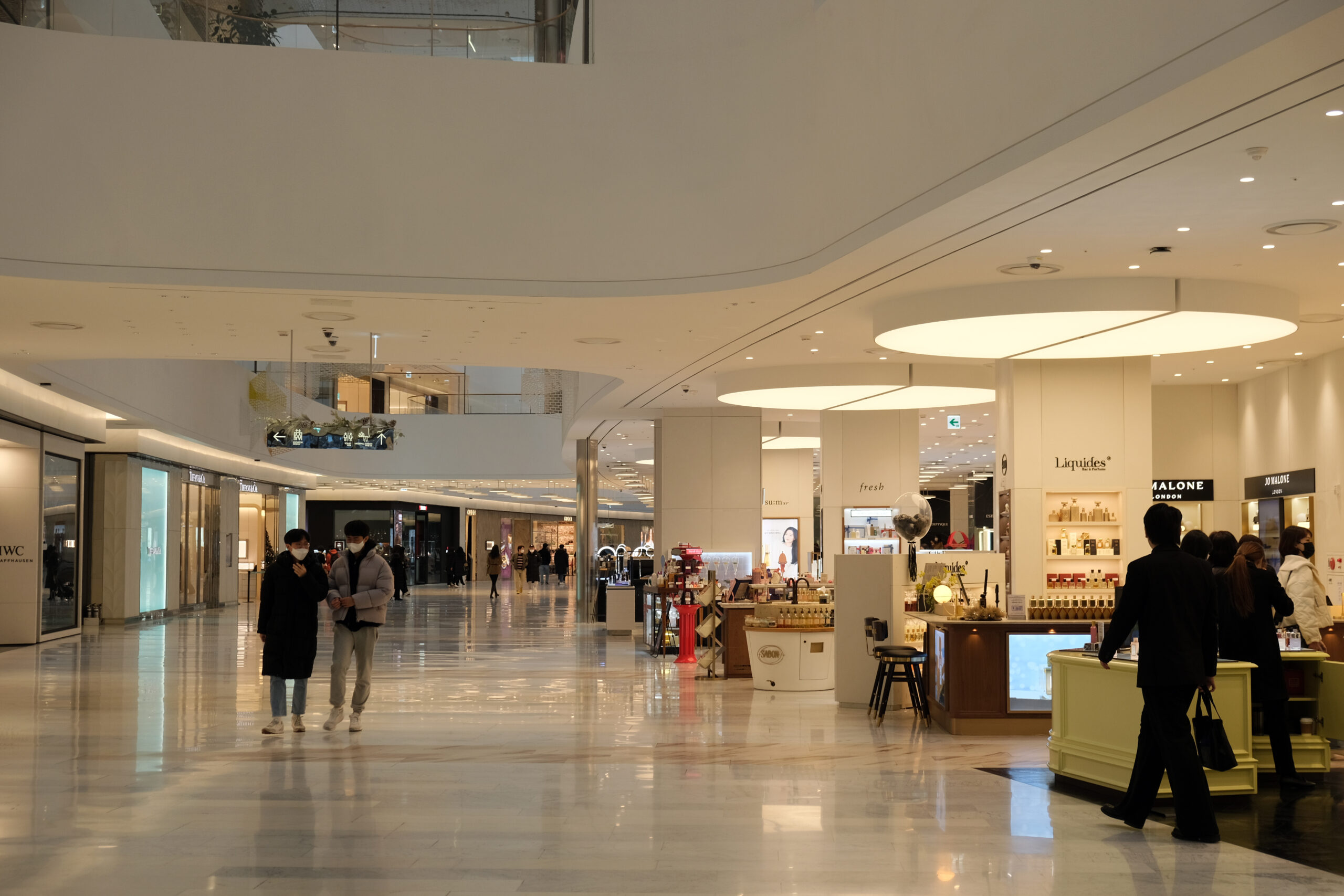
  • Department Store Shopping in Korea: A Visitor’s Guide

    Department Store Shopping in Korea: A Visitor’s Guide

  • Traditional Markets in Korea: Where to Go and How to Shop

    Traditional Markets in Korea: Where to Go and How to Shop

  • Airport Transportation in Korea: Incheon, Gimpo and Beyond

    Airport Transportation in Korea: Incheon, Gimpo and Beyond

  • KTX vs. Express Bus: Traveling Between Korean Cities

    KTX vs. Express Bus: Traveling Between Korean Cities

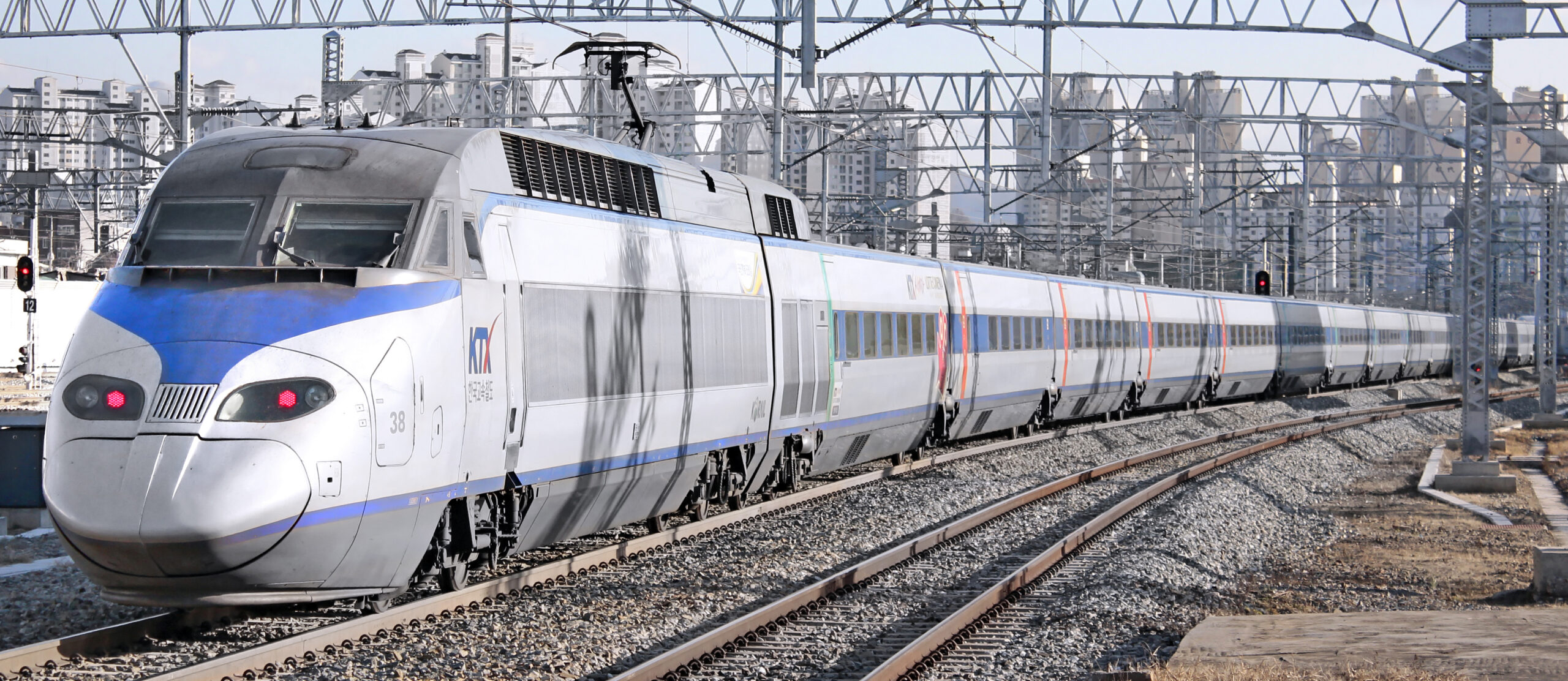
    Photo: Minseong Kim / Wikimedia Commons, CC BY-SA 4.0

    Compare the ticketed ride that fits your departure point and arrival plan. These three samples give a concrete starting point for Busan, Jeonju, and Gangneung. The searches were run on 6 Nov 2026 (Korea time) for travel on Monday, 9 Nov 2026. Klook is a commercial booking platform, not an operator-official fare source.

    At a glance

    Route (6 Nov 2026 Korea time search) KTX example Coach example: lowest of the displayed five Klook “From” prices Difference on the sampled results
    Seoul–Busan Train 031 · 11:58–14:42 · 2h44 · Economy ₩54,400 Seoul Express Bus Terminal → Busan Central Bus Terminal · 06:40–10:40 · displayed 4h · Klook From ₩43,300 The coach duration label was 1h16 longer; the KTX Economy fare was ₩11,100 higher than the Klook starting price.
    Seoul–Jeonju Train 513 · 12:19–14:01 · 1h42 · Economy ₩31,900; Korail labeled origin “Seoul” Dong Seoul Bus Terminal → Jeonju Express Terminal · 08:00–10:50 · 2h50 · Klook From ₩18,200 The coach listing was 1h08 longer; the KTX Economy fare was ₩13,700 higher than the Klook starting price. The displayed origins differed.
    Seoul–Gangneung KTX-EUM 813 · 12:55–14:56 · 2h01 · Economy ₩27,600 Seoul Express Bus Terminal → Gangneung Express Bus Terminal · 06:00–08:50 · 2h50 · Klook From ₩26,800 The coach listing was 49 minutes longer; the KTX Economy fare was ₩800 higher than the Klook starting price.

    For the 6 Nov 2026 (Korea time) search, the coach examples left early in the morning and the KTX examples around midday, so the two columns were not matched by departure time. On these selected rides, the KTX time advantage ranged from 49 minutes to about 1h16, while its Economy fare exceeded the coach “From” price by ₩800 to ₩13,700; these were ticketed ride comparisons, not door-to-door totals.

    Seoul to Busan: KTX 031 or a coach from Seoul Express Bus Terminal?

    For the 6 Nov 2026 (Korea time) search, Korail English booking site listed KTX 031 from Seoul to Busan at 11:58–14:42, a 2h44 ride, with Economy at ₩54,400 and First class at ₩78,900. The Korail result labeled the stations only “Seoul” and “Busan.” Among the seven KTX and KTX-Sancheon departures listed from 09:28 to 11:58, ride times ranged from 2h44 to 3h23; only train 031 had the Economy fare quoted here. Seoul TOPIS says Seoul Express Bus Terminal “is attached to the Subway Line 3 Express Bus Terminal” (Seoul TOPIS, checked 6 Nov 2026). For the coach, Klook listed a 06:40 departure from Seoul Express Bus Terminal to Busan Central Bus Terminal, arriving at 10:40; the page displayed 4h and “From ₩43,300” for the Excellent listing. All five displayed coach listings showed a 4h ride-time label, with “From” prices ranging from ₩43,300 (Excellent) to ₩53,900 (Premium). On the selected examples, the coach duration label was about 1h16 longer and KTX 031 Economy was ₩11,100 above the ₩43,300 Klook starting price.

    For the 6 Nov 2026 (Korea time) search, Bustago is a separate association booking network with different terminals: its route/class popup listed Nam Seoul → Busan Sasang, Premium Intercity, ₩30,000. This was a separate fare example from both the Seoul Express Bus Terminal Klook listing and the Korail trip.

    For an overview of the city, see the Busan destination page.

    Seoul to Jeonju: compare the named departure points

    For the 6 Nov 2026 (Korea time) search, Korail English booking site listed KTX 513, Seoul → Jeonju, at 12:19–14:01 (1h42), with Economy at ₩31,900 and First class at ₩46,300. The Korail result labeled the origin only “Seoul.” Among the three displayed KTX and KTX-Sancheon results, ride times ranged from 1h42 to 1h51; the Economy fare quoted here belonged only to train 513. Seoul TOPIS says Dong Seoul Terminal “is located in Gwangjin-gu, Seoul” (Seoul TOPIS, checked 6 Nov 2026). Klook’s coach listing started at Dong Seoul Bus Terminal: the 08:00 Economy listing to Jeonju Express Terminal showed 2h50 and “From ₩18,200.” All five displayed coach listings showed 2h50, with “From” prices ranging from ₩18,200 (Economy) to ₩24,500 (Excellent). The 08:00 Economy coach had the lowest of the five displayed starting prices; the other four were higher. For the selected examples, the coach listing was 1h08 longer and KTX 513 Economy was ₩13,700 above the ₩18,200 Klook starting price; the departure origins differed.

    For the 6 Nov 2026 (Korea time) search, Bustago’s separate route/class popup listed Nam Seoul → Jeonju, Premium Intercity, ₩19,000. Its displayed time was 0 minutes, so it provided no usable ride duration and was not the Dong Seoul Klook result.

    For what to do after you arrive, see the Jeonju Hanok Village guide.

    Seoul to Gangneung: a matched KTX-EUM fare and coach listing

    For the 6 Nov 2026 (Korea time) search, Korail English booking site listed KTX-EUM 813 from Seoul to Gangneung at 12:55–14:56 (2h01). The Korail result labeled the stations only “Seoul” and “Gangneung.” Among the displayed KTX-EUM results, ride times ranged from 1h51 to 2h11. The fare panel named train 813 and showed Economy ₩27,600 and First class ₩33,100; these fares applied to train 813. Klook listed the Seoul Express Bus Terminal → Gangneung Express Bus Terminal coach at 06:00–08:50, with a 2h50 listing and “From ₩26,800” for the Excellent option. All five displayed coach listings showed 2h50, with “From” prices ranging from ₩26,800 (Excellent) to ₩29,600 (Premium). For the selected examples, the coach listing was 49 minutes longer and KTX-EUM 813 Economy was ₩800 above the ₩26,800 Klook starting price.

    For the 6 Nov 2026 (Korea time) search, Bustago’s separate route/class popup listed Dong Seoul → Gangneung, Premium Intercity, ₩24,300. It was a different network and terminal pair from the Klook listing.

    For onward travel in Gangwon Province, see the Gangwon transportation guide.

    Choosing for your trip

    Priority (6 Nov 2026 Korea time search) What the displayed results support
    Lower listed ticket price In the selected examples, the Klook coach “From” price was ₩11,100 below KTX 031 Economy for Busan, ₩13,700 below KTX 513 Economy for Jeonju, and ₩800 below KTX-EUM 813 Economy for Gangneung. Compare the final seat price before booking.
    Less time on the vehicle The selected KTX rides were about 1h16 shorter than the Busan coach’s displayed duration, 1h08 shorter than the Jeonju coach listing, and 49 minutes shorter than the Gangneung coach listing. Access time is excluded.
    A convenient starting point The Jeonju coach left Dong Seoul Bus Terminal while Korail labeled the train origin “Seoul.” The displayed Busan and Gangneung coaches left Seoul Express Bus Terminal. Compare these departure points with your own starting location.

    How to read these numbers

    For the 6 Nov 2026 (Korea time) search, these were selected results only, with no station or terminal access time included. Klook’s search time window started at 00:00, while the Korail searches shown started at 09:00, so the lists covered different time windows. Klook’s amounts were “From” prices, not guaranteed prices for every seat; Bustago amounts were route/class popup fares without a named departure, and its Busan and Jeonju 0-minute fields were not usable ride times. This guide does not establish luggage allowances or step-free access for these services; check the relevant rail, express-bus, or intercity-bus operator directly before booking.

    Related guides

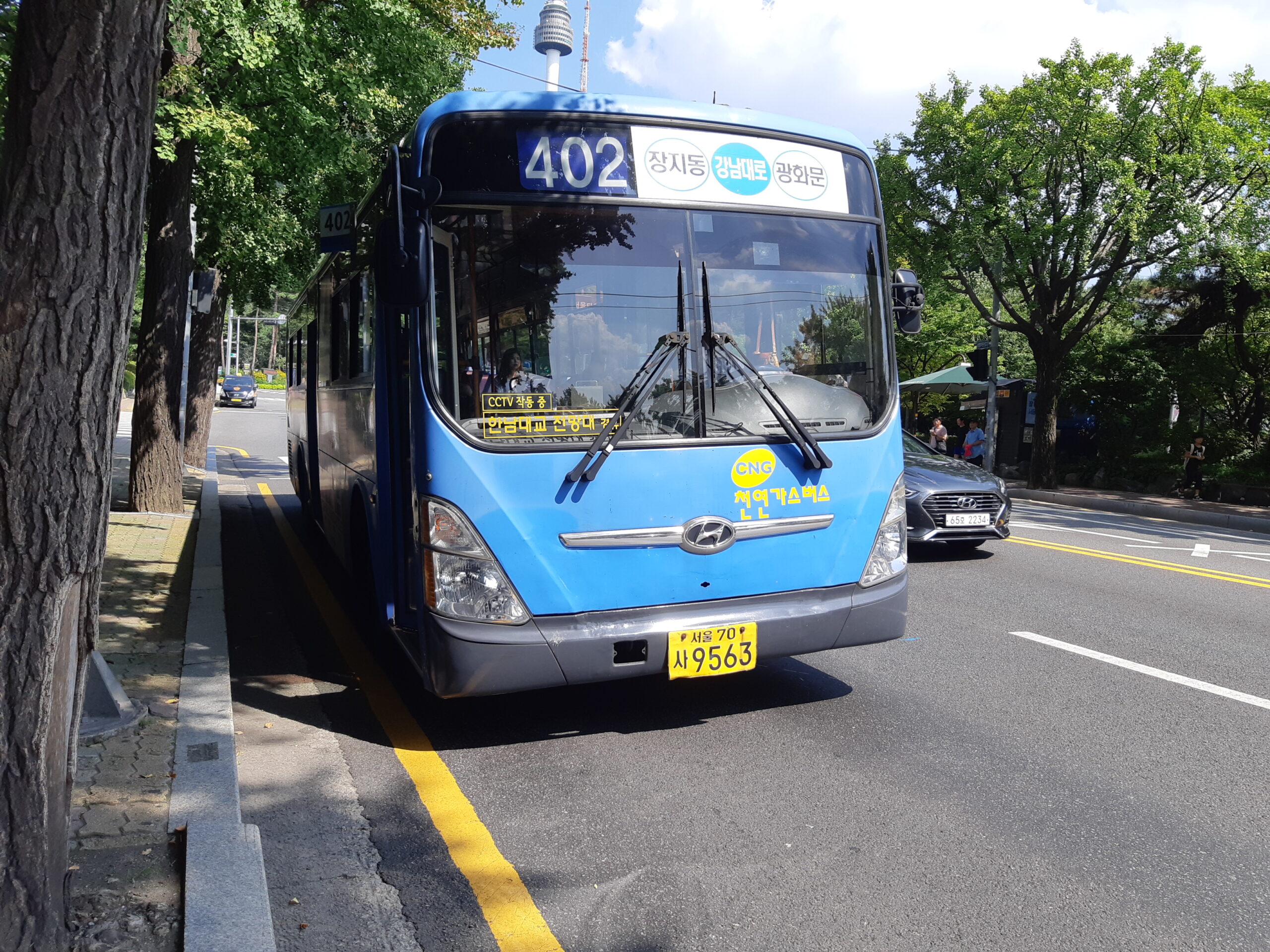
    Starting from an airport? See the airport transportation guide. For general bus tips, see the bus guide.

  • How to Take Taxis in Korea: Apps, Fares and Payment

    How to Take Taxis in Korea: Apps, Fares and Payment

  • How to Use Buses in Korea: A Visitor’s Guide

    How to Use Buses in Korea: A Visitor’s Guide

  • Concert Venues in Korea: Transportation and Where to Stay

    Concert Venues in Korea: Transportation and Where to Stay

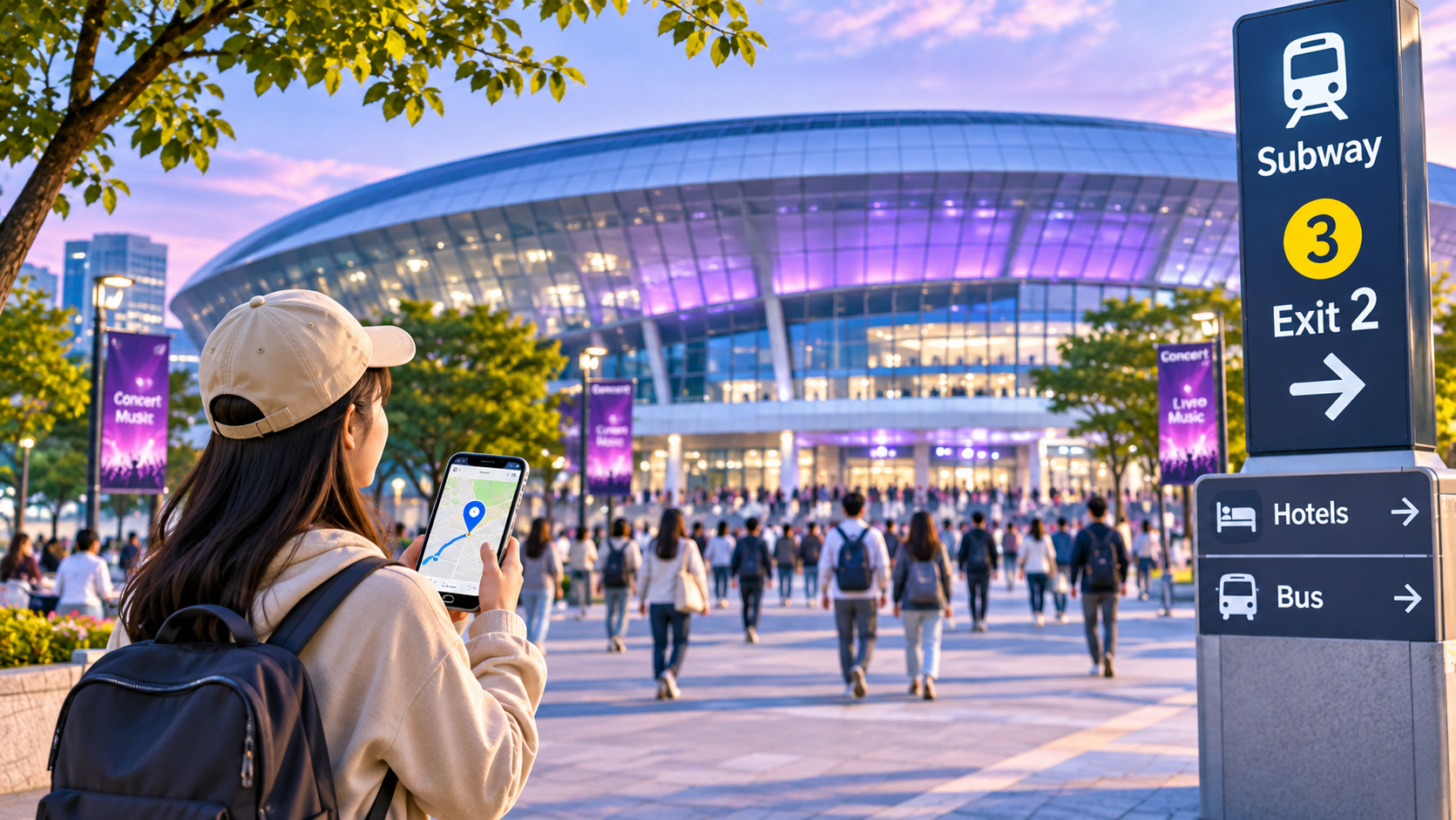
    AI-generated illustration for Kignal. Venue, map, subway signs, and directions are illustrative and do not represent an actual location.

    A practical guide to comparing transport and lodging for major Korean concert venues, with concrete steps for arrival, navigation, and event-specific planning.

    How to Compare Transport and Lodging Around Major Korean Concert Venues

    International visitors planning a concert trip to Korea should begin by identifying the main venues and their public transit connections. KSPO DOME is inside Olympic Park in Seoul, with Olympic Park Station on Subway Lines 5 and 9 as its closest stop. Gocheok Sky Dome is accessible from Guil Station and Gaebong Station on Line 1. COEX Artium is near Samseong Station on Line 2 and Bongeunsa Station on Line 9. In Busan, BEXCO is close to Centum City Station on Metro Line 2, and bus routes also serve the area. These venues are integrated into city transit networks, making subway and bus travel the most reliable options for event days.

    When comparing lodging, use a venue’s transit options as a primary filter. Staying near a subway line that serves your concert venue can reduce travel stress and help you avoid late-night transit uncertainties. Kignal’s Where to Stay in Korea guide provides an overview of accommodation types and locations, which you can cross-reference with your event’s nearest stations. This approach helps you balance convenience, cost, and the likelihood of catching your return train or bus after the concert.

    Arrival, Navigation, and Return Planning

    For KSPO DOME, use Olympic Park Station on Lines 5 or 9. The venue is inside Olympic Park, and the operator recommends public transportation for large events, as parking is often difficult. The park’s access information details several subway lines and park entrances, so check which station is closest to your gate or seating area.

    To reach Gocheok Sky Dome, board Line 1 and alight at Guil Station or Gaebong Station. The Seoul government’s access page lists these stations, but you should check the route duration from your starting point and confirm that a return train is available after your event. Last train times and transfer options can vary, so verify your outbound and return journeys for your specific concert date.

    COEX Artium is accessible via Samseong Station on Line 2 or Bongeunsa Station on Line 9. Confirm your event’s ticketing and access instructions, as some concerts may have specific entry rules or identity checks. Check for any updates from the organizer before your visit.

    For BEXCO in Busan, use Centum City Station on Metro Line 2 or check local bus routes. Event hours and fees at BEXCO are not standardized, so always consult the event listing for details. Busan Metro’s first and last train times differ by station and route, so confirm your return trip based on your concert’s end time.

    What Varies by Event, Venue, or Date

    Many access details and policies depend on the specific event, venue, and date. KSPO DOME’s operator advises public transit during large events due to limited parking. Event-specific rules may apply for admission and identity verification, and these can change between concerts. Always check the official event page or ticketing platform for the latest requirements.

    At BEXCO, event hours and fees are set by each event, not by the venue itself. The tourism listing also marks accessible facilities, but you should confirm accessibility and any special requirements with the event organizer. Do not assume a common schedule or entry process.

    Busan Metro’s first and last train times, as well as route connections, vary by station and line. Travelers must check the specific outbound and return options for their concert date and location. The same applies to Seoul’s subway system, especially for late-night events.

    Concert ticketing platforms and organizers set their own access, identity, and cancellation rules, which can differ by event and change at short notice. For example, the 2026 TXT concert at KSPO DOME and the 2026 Ryeowook concert at COEX Artium both list show-specific admission and identity requirements. Always plan your venue access and lodging around the exact event’s published rules.

    Lodging suitability depends on your event’s timing, venue, and transit options. Kignal’s Where to Stay in Korea guide is a starting point, but you should check the latest accommodation details and compare them with your planned route to the venue. For more options, see Kignal’s guides to guesthouses, hanok stays, and pensions.

  • Korean Musicals in Korea: A Visitor’s Guide

    Korean Musicals in Korea: A Visitor’s Guide

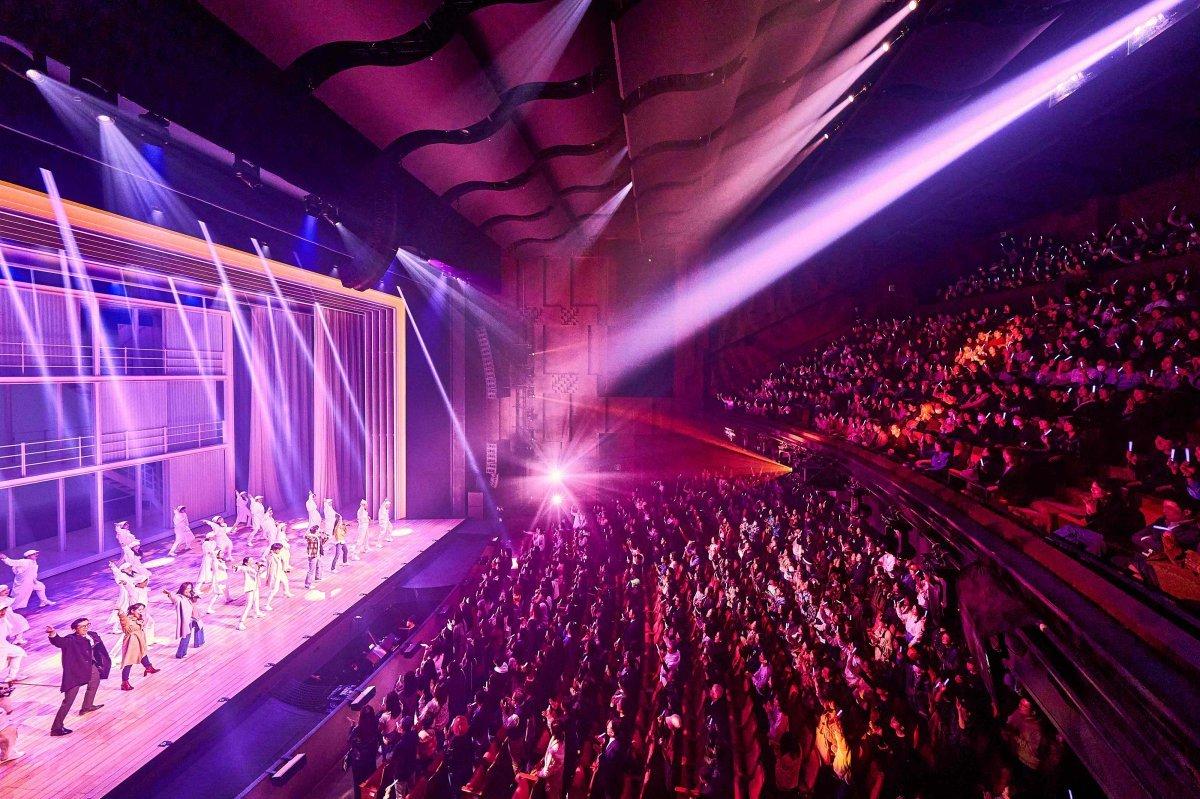
    AI-generated illustration for Kignal. Not an actual event, venue photograph, or ticketing interface.

    A practical guide to finding, booking, and attending Korean musicals and theater performances in Seoul, with essential steps and limitations for international visitors.

    Where to Find Korean Musicals and How to Check Listings

    Korean musicals and theater performances are concentrated in Seoul’s Daehak-ro district, which is recognized by the city’s official travel guide as a hub for theaters of various sizes. Visitors seeking current show listings should consult the Sejong Center and National Jeongdong Theater, both of which publish their own up-to-date performance schedules online. For broader information, the Seoul Theater Center offers details on shows, venues, and visitor guidance, including multilingual resources.

    How to Choose a Show, Book Tickets, and Plan Your Visit

    To select a Korean musical or theater show, start by reviewing listings from the Seoul Theater Center, which provides multilingual information and visitor support for Daehak-ro and other venues. The Sejong Center and National Jeongdong Theater also list their current and upcoming performances directly on their official websites.

    Once you have chosen a performance, tickets can be booked through the official YES24 English ticket site. The platform includes a booking guide that walks users through selecting a date and time, choosing seats, and completing the purchase. Note that Global YES24 Ticket requires a separate membership from other YES24 services.

    After booking, check the performance page for ticket collection instructions and required documents, as these can differ by show. The Sejong Center notes that late arrivals may face entry restrictions, and both cancellation deadlines and collection methods are specified in each performance’s guidance. The Jeongdong Theater’s ticket-opening notices list available ticketing channels and sale timing, but do not guarantee current availability.

    For transport, Daehak-ro is accessible from Hyehwa Station on Seoul Subway Line 4. According to the city’s official guide, Exit 2 is approximately 127 meters from the main Daehak-ro address. For detailed subway navigation, refer to the Seoul Subway Guide.

    What to Verify: Subtitles, Access, and Show Policies

    Not all Korean musical performances offer multilingual subtitles. Some Daehak-ro theaters provide subtitle screens or smart glasses, but this is not standard for every production. Always check the official show or venue page to confirm subtitle availability before booking.

    For specific productions, such as the National Jeongdong Theater’s 2026 staging of Arirang, Korean and English subtitles are confirmed. However, visitors should always review the current production page for the latest details on language support and show features.

    Accessibility provisions, including wheelchair access, vary by venue. The Sejong Center publishes accessibility information for its theaters and directs visitors to venue-specific details. It is important to check the relevant venue’s page to confirm access arrangements for your chosen performance.

    Ticket collection methods, required documents, and entry policies such as late arrival restrictions are determined by each performance and venue. The Sejong Center and YES24 both state that these details, along with cancellation deadlines and refund policies, are shown on the specific performance page. Always verify these requirements before finalizing your booking.

    Schedules, cast lists, and other show details can change. The National Jeongdong Theater’s official page for Arirang, updated for December 2026, lists the performance schedule, duration, age rating, and other specifics. However, these are subject to updates, so always check the current production page for the latest information before purchasing tickets.

    For accommodation planning, consult the Where to Stay in Korea guide. For detailed subway and transport planning, use the Seoul Subway Guide.

  • How to Buy K-pop Concert Tickets in Korea: A Visitor’s Guide

    How to Buy K-pop Concert Tickets in Korea: A Visitor’s Guide

    AI-generated illustration for Kignal. Not an actual event, venue photograph, or ticketing interface.

    A step-by-step guide for international visitors on finding, booking, and understanding the rules for K-pop concert tickets in Korea.

    How to Find Official K-pop Concert Ticket Information

    To find reliable ticket-sale information for K-pop concerts in Korea, always check the official booking notice released by the concert organizer. These notices specify which ticket platforms are used, the sale procedures, and any special requirements for that event. For example, TOMORROW X TOGETHER’s November 2026 Seoul concert and Ryeowook’s November 2026 Seoul concert both published official notices detailing separate presale windows for Korean and global fan-club members, followed by general sale dates. The organizer’s announcement is the primary source for accurate, up-to-date details. Before making any plans or purchases, verify the latest information directly from the official notice or the event’s detail page on the ticketing platform.

    Steps for International Visitors: Accounts, Presales, Payment, and Pickup

    Start by reading the official booking notice for your chosen concert. This will outline the ticket platforms, sale procedures, and any presale requirements. For some events, such as TOMORROW X TOGETHER and Ryeowook in November 2026, there are separate presale verification and sale windows for Korean and global fan-club members, followed by a general sale. Confirm these details on the official site before proceeding.

    Create the correct account for the ticketing platform specified in the official notice. For example, Global YES24 Ticket requires a separate membership; an existing YES24 account does not work on the global site. Set up your account in advance to avoid delays when tickets go on sale.

    Prepare your payment method according to the platform’s requirements. Global YES24 accepts credit cards and PayPal, but both have eligibility constraints and global card payments require 3D authentication. Check the platform’s payment guide to confirm your method is accepted and ready.

    Have your identity documents ready. For will-call pickup on YES24, you must present valid physical identification, such as a passport, along with your booking confirmation. However, always check the specific event’s detail page for any additional or different pickup rules, as these can vary by show.

    If you are booking through a platform that requires passport verification, such as Ticketlink’s ‘Verified Members Only’ products or the TXT NOL product, prepare your passport in advance. Note that some global flows do not accept Korean passports for verification. Always check the product’s instructions before booking.

    For ticket delivery, YES24 states that overseas delivery options and procedures vary by performance. Always confirm delivery or pickup instructions on the specific event’s detail page before completing your purchase.

    Key Limitations and What to Recheck Before Booking

    Account, payment, and identity requirements are platform-specific and may differ for each event. For example, Global YES24 requires its own membership and does not share accounts with the domestic YES24 site. Payment is limited to credit cards and PayPal, with 3D authentication required for global cards. Identity verification may be required for certain products, such as Ticketlink’s ‘Verified Members Only’ or NOL World’s global flow, which does not accept Korean passports. Always review the event’s detail page for the exact requirements.

    Ticket pickup and delivery rules are set by the platform and may vary by event. YES24 typically requires a passport and booking confirmation for will-call pickup, but the specific show’s detail page takes precedence. Overseas ticket delivery is not guaranteed for every event and must be confirmed on the event’s detail page.

    Cancellation and refund policies are determined by the event and platform. YES24’s cancellation deadlines and fees depend on the show date and the event’s policy, so check the detail page for each booking. NOL World also requires that cancellation requests meet the product’s deadline, and some bookings may be non-cancellable or have fees. Always review the product’s terms before paying.

    Inventory and availability are not guaranteed at general sale. For example, Ryeowook’s organizer notice specifies that general-sale tickets are limited to seats remaining after fan-club presale, so the start of general sale does not mean tickets are still available. Suspicious or fraudulent purchasing methods, such as macro use, can result in ticket cancellation, as warned by the TXT ticket product.

    Many sale details are time-sensitive and must be rechecked before booking. Presale and general sale windows, as seen with TOMORROW X TOGETHER and Ryeowook’s 2026 concerts, are announced in advance but may change or sell out quickly. Always confirm the latest sale dates and availability on the official notice or ticketing platform immediately before booking.

    For planning your trip around a concert, use Kignal’s published guides for transport and lodging. The Seoul Subway Guide provides verified information for navigating the city, and Where to Stay in Korea offers advice on accommodation options near concert venues.