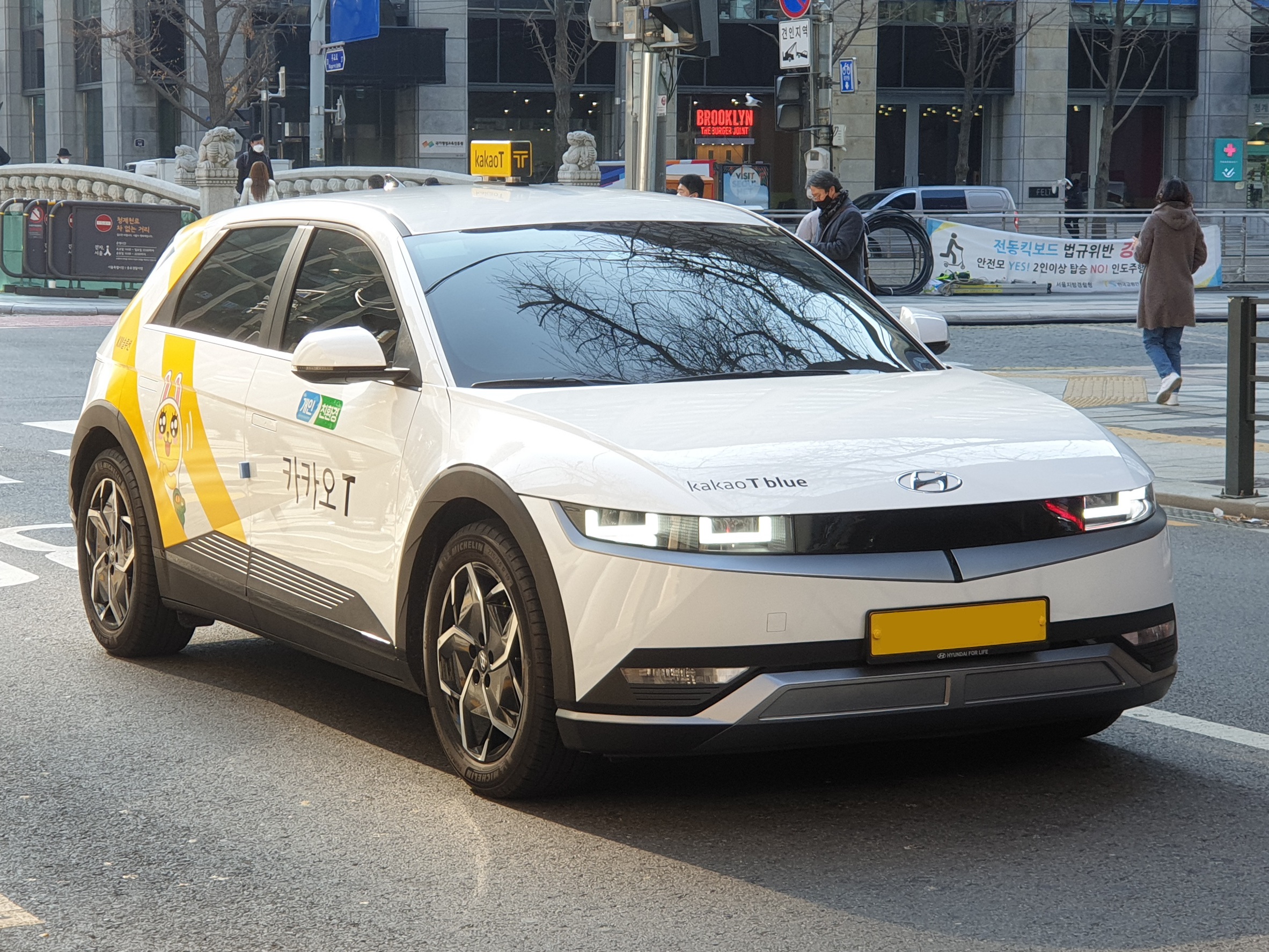
Photo: Damian B Oh / Wikimedia Commons, CC BY-SA 4.0. Adaptations retain CC BY-SA 4.0.

A practical guide to using taxis in South Korea, including app options, fare conditions, and what to check before you travel.
Choose the right approach
For a straightforward city ride, compare two choices: a marked taxi at a stand or an app dispatch to a precise pickup point. A legitimate regular taxi should carry a taxi roof sign and taxi registration markings; the available classes and fares differ by city.
If you book through an app, confirm the pickup pin before requesting the ride. Save the Korean address or place name for your destination. Compare the arriving car and its plate with the booking details before entering. An app estimate is a planning figure, not a guaranteed final meter total.
Kakao Mobility’s k.ride is designed for foreign visitors and its published description includes English and overseas-card registration. Uber Taxi is another option, but check coverage and payment setup in your intended city before depending on it. Set up the app while you have a stable connection; do not assume a newly downloaded app will accept every overseas card. Street hailing remains a useful fallback where available. At a large terminal or airport, use the signed taxi queue rather than accepting an unsolicited ride offer.
How to do it
Confirm the taxi class before choosing it; deluxe service is priced differently from regular service. Ask whether you will pay through the app or to the driver. Visit Korea lists cash, credit card and transportation-card payment as common options, but your specific vehicle, card and app must be checked.
After the ride, keep the receipt or app trip record. It helps if you need to identify the vehicle, verify the charged amount, or explain a lost-item problem. A late-night or out-of-area ride can involve a surcharge. Check the rules for the city, time and route rather than applying a Seoul figure nationwide.
For Incheon Airport, open the airport’s current taxi guide for your terminal and destination. Its taxi categories and surcharges are not interchangeable with a city-center street ride. Compare an airport taxi with a rail or bus connection if cost matters. If a route, charge or driver interaction is disputed, retain the receipt and the displayed trip details; the Korea Tourism Organization’s 1330 helpline and complaint center provide a visitor channel for assistance. For a late arrival, verify that your intended rail or bus still operates before treating a taxi as the only choice.
What to verify and avoid
Before getting out, check that you have your phone, wallet and bags, and save the trip record. If you used an app, its support channel may help identify the vehicle. If you hailed on the street, the receipt is especially useful for a lost-item or fare inquiry. At an airport, use the signed rank for your terminal and confirm the vehicle class before loading luggage.