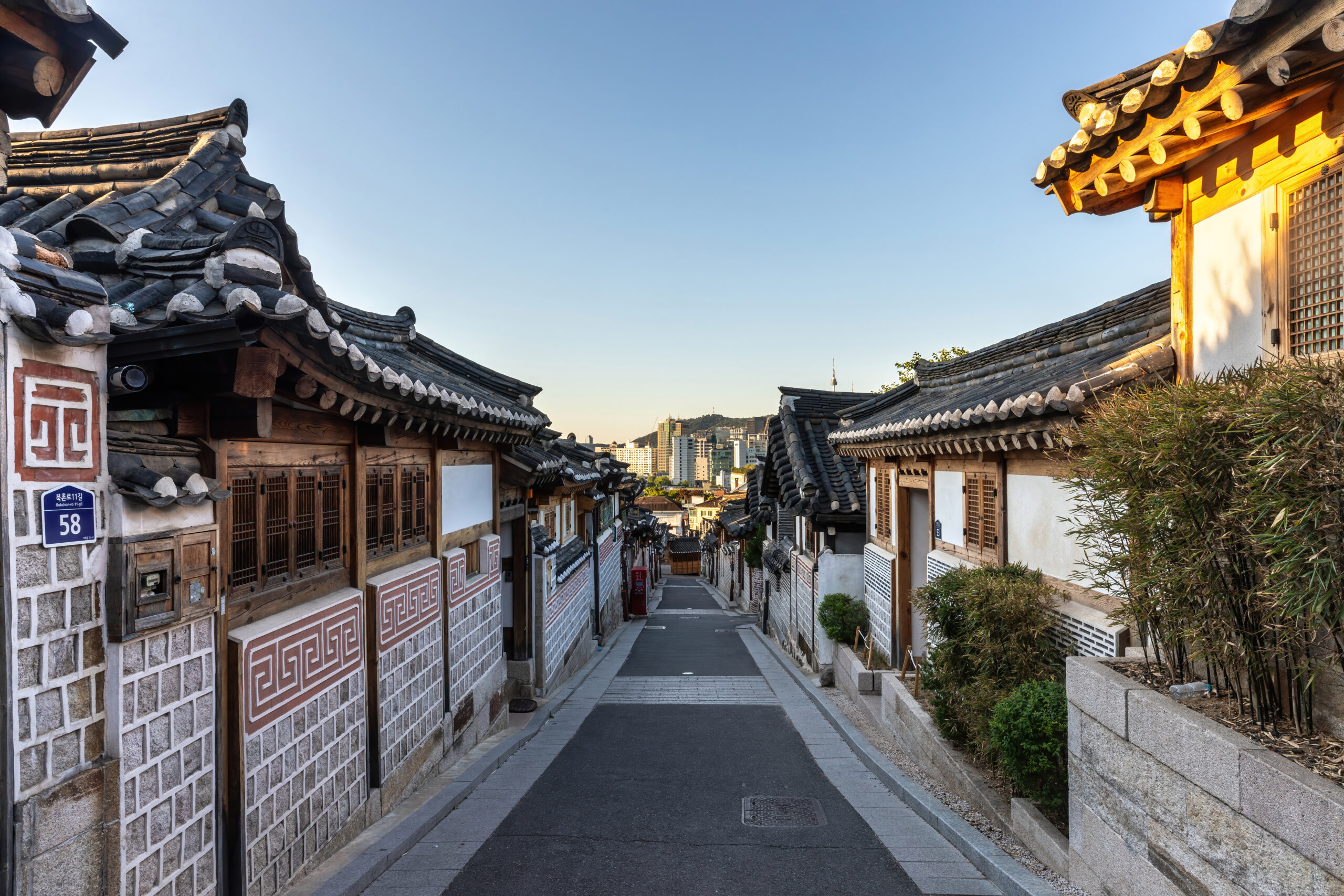
A village people still live in
Bukchon Hanok Village is a historical and cultural village between Gyeongbokgung Palace and Changdeokgung Palace, with clusters of traditional hanok houses. Residents live with the tourism, which is why the visit has limits. Walking the lanes, joining a craft session, sitting in a tea house, or staying in a hanok are different ways to use the same streets.
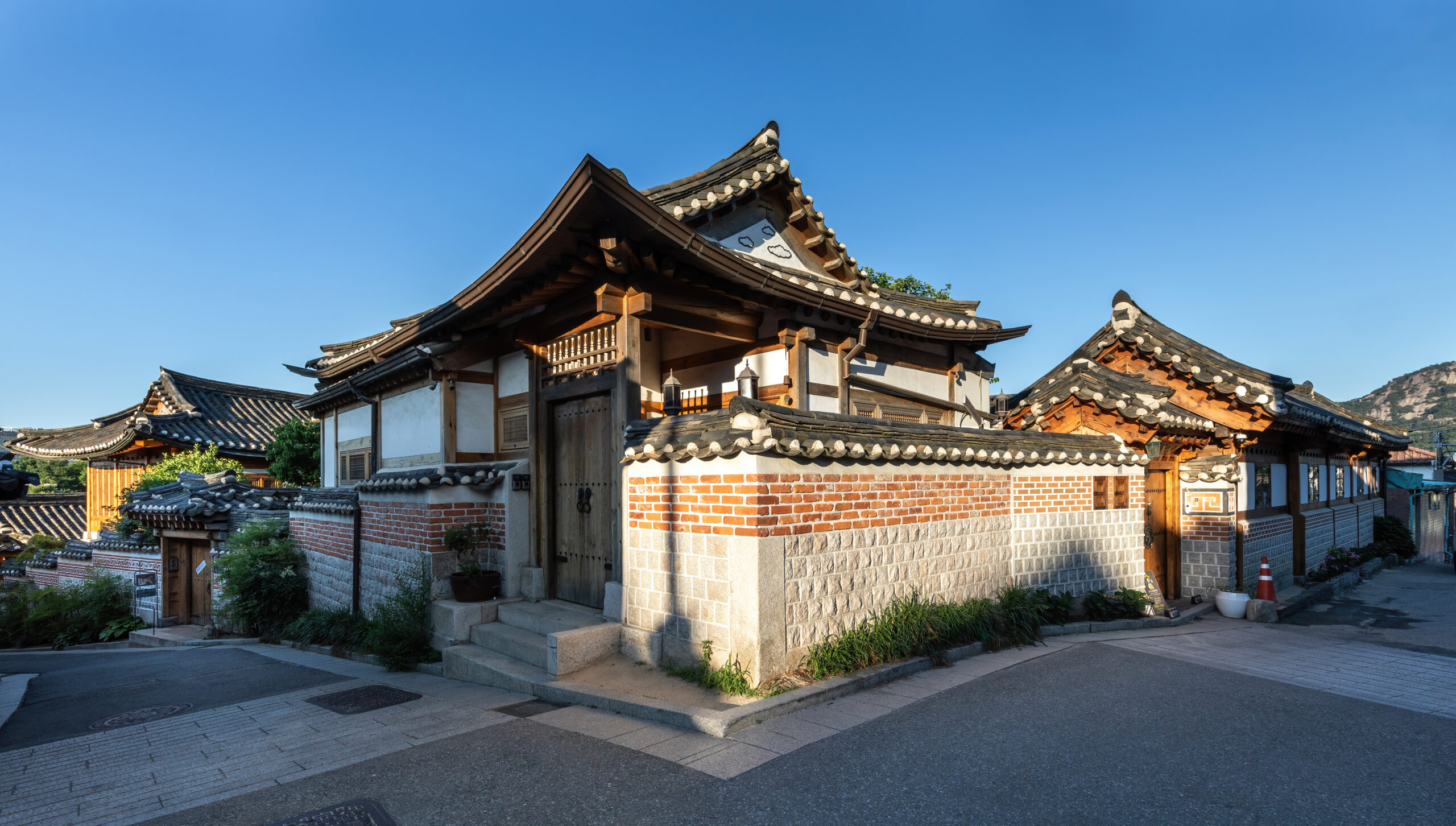
When the lanes are open to visitors
Tourist visits to the red zone around Bukchon-ro 11-gil are restricted from 17:00 until 10:00 the next day, and Sunday is a rest day for the alleyways. A separate listing gives 10:00-17:00 for the road along Bukchon-ro 11-gil. Use the red-zone rule to time the walk; the craft center and the tea house keep their own clocks.
Make something, or study one house
Bukchon Traditional Crafts Center, at 24-5 Bukchon-ro 12-gil, offers hands-on work such as hanji and accessories. The day's program changes. Admission is free, activities are charged on their own, and no reservation is required.
Baek In-je House, at 16 Bukchon-ro 7-gil, is a modern hanok from the Japanese administration period, with a garden, annex buildings, and a hallway connecting the main building to other rooms. You can view the outside on your own. Going inside needs a reserved guided tour. Hours are 09:00-18:00, last entry 17:30, closed on January 1 and on Mondays except public-holiday Mondays.
Tea inside a hanok
Many hanoks operate as restaurants and tea houses, and the village notes also mention restaurants converted from hanok. At OSULLOC Tea House Bukchon, 45 Bukchon-ro, the first floor has tea, snacks, and souvenirs, the second has rooftop views, and the third hosts a seasonal tasting that requires a reservation. The tea house lists Monday-Thursday 11:00-20:00 and Friday-Sunday 11:00-21:00. Those hours are for this venue, not for the red-zone lanes.
From Anguk, seven minutes
Seoul Metro places the village on Line 3, 7 minutes on foot from Anguk Station Exit 2. The palaces on either side frame that walk; they are not one combined stop.
If you want to build a day around these lanes, Traditional Seoul in One Day connects Bukchon with Gyeongbokgung, optional Insadong, and Gwangjang Market.
Sleeping in a hanok
Bukchon Maru is a two-storey hanok guesthouse in Jongno, close to Anguk station, with the royal palaces and Insa-dong among nearby attractions. Breakfast is available. It is one example of staying in the house type you came to see, with its own check-in at 14:00, separate from the visitor window on the lanes.
If you are choosing a Seoul base rather than this one guesthouse, compare areas in where to stay in Seoul.
Map and Key Locations
The cards cover the crafts center, OSULLOC Tea House Bukchon, and Baek In-je House.
Photo credits
Bukchon-ro 11-gil street with hanok houses at sunrise in Bukchon Hanok Village Seoul.jpg by Basile Morin, CC BY-SA 4.0. File page.

Traditional hanok houses at golden hour in Bukchon Hanok Village in Seoul.jpg by Basile Morin, CC BY-SA 4.0. File page.

Diagram: Kignal planning card. Not a photograph.
Comments
One response to “Bukchon: hanok lanes between two palaces”
[…] Bukchon Hanok Village, red-zone lanes only. Core. Allow about 45–75 minutes for the lanes if you want to keep the full-day route comfortable. […]