How Sewoon Arcade became Geumga Plaza in Vincenzo, what the real building offers today, and what to check before visiting.
Sewoon Arcade as Vincenzo’s Geumga Plaza
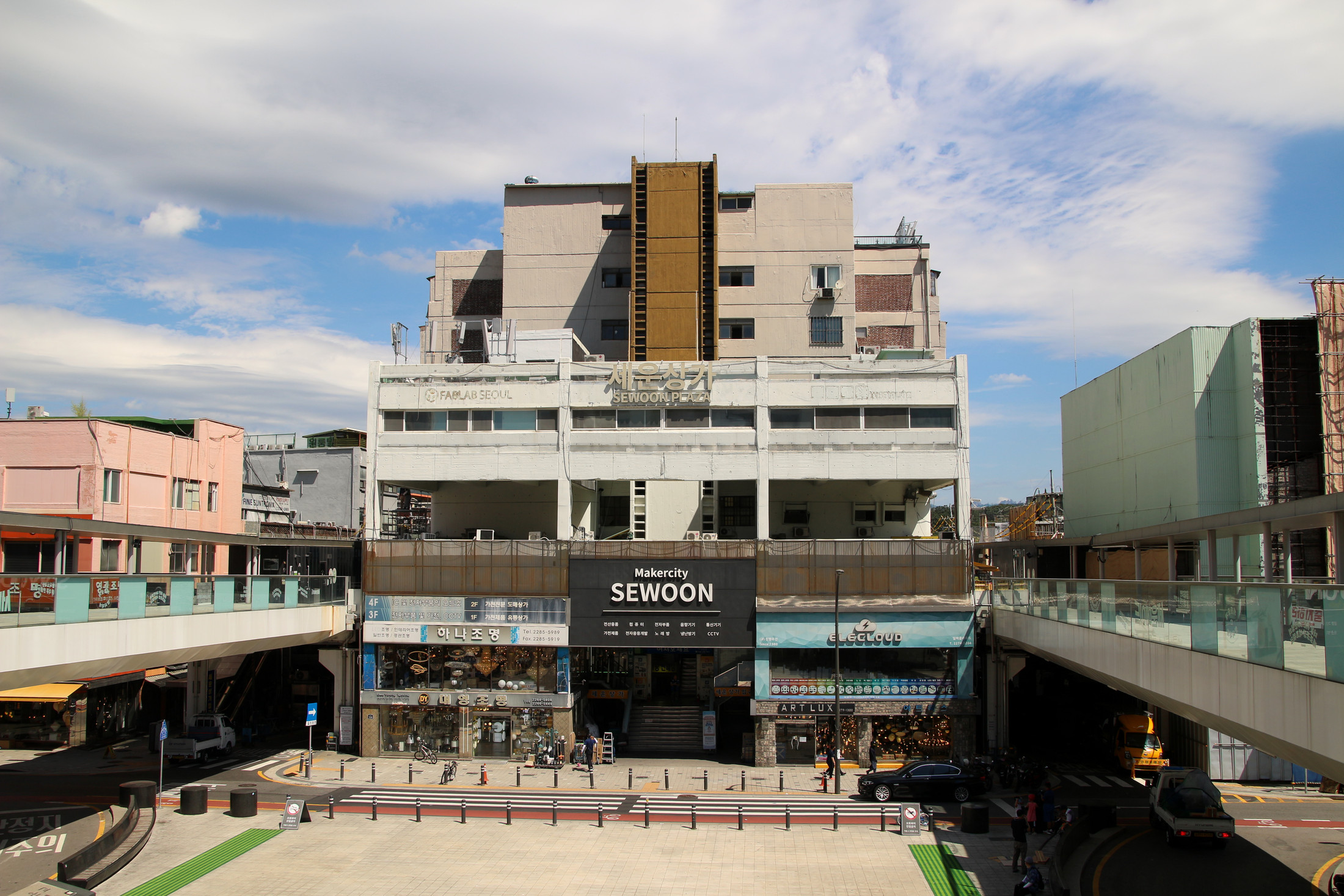
Sewoon Arcade, also known as Sewoon Plaza or Sewoon Electronics Plaza, is identified by the Korea Tourism Organization as the filming location for the fictional Geumga Plaza in the 2021 drama Vincenzo. The source does not establish where every interior scene was filmed, so the full extent of filming inside the building is not confirmed. The real building’s signage and appearance differ from the drama, so visitors should look for Sewoon Arcade at its actual address rather than expecting a Geumga Plaza sign.
Sewoon Arcade’s Real History and Character
Constructed in 1968 as a mixed-use high-rise, Sewoon Arcade originally combined commercial lower floors with residential upper levels. The building was renewed through the re:Sewoon project in 2017. Its ongoing identity is shaped by its electronics and lighting trade, as described in recent city and tourism updates. This commercial focus and architectural history define the real place, not its fictional role in Vincenzo.
What to Check: Shops, Decks, and Rooftop
The lower floors of Sewoon Arcade are described as active with electronics and lighting shops. Historical accounts mention cafes, galleries, and workshops along the walking deck, but these do not confirm current operation. The rooftop is noted for its view of Jongmyo Shrine, with a Visit Seoul listing updated July 16, 2026 describing weekday rooftop hours of 10:00–20:00. These details reflect the building’s character and amenities as of their publication dates, but do not guarantee that specific businesses or the rooftop will be open on your visit.
Arrival and Neighborhood Context
Sewoon Arcade is located at 159 Cheonggyecheon-ro, Jongno-gu, Seoul. The Korea Tourism Organization describes it as approximately a four-minute walk from Jongno 3-ga Station exit 12. This is an orientation estimate, not a step-free or timed guarantee.
Ideas for a Practical Visit
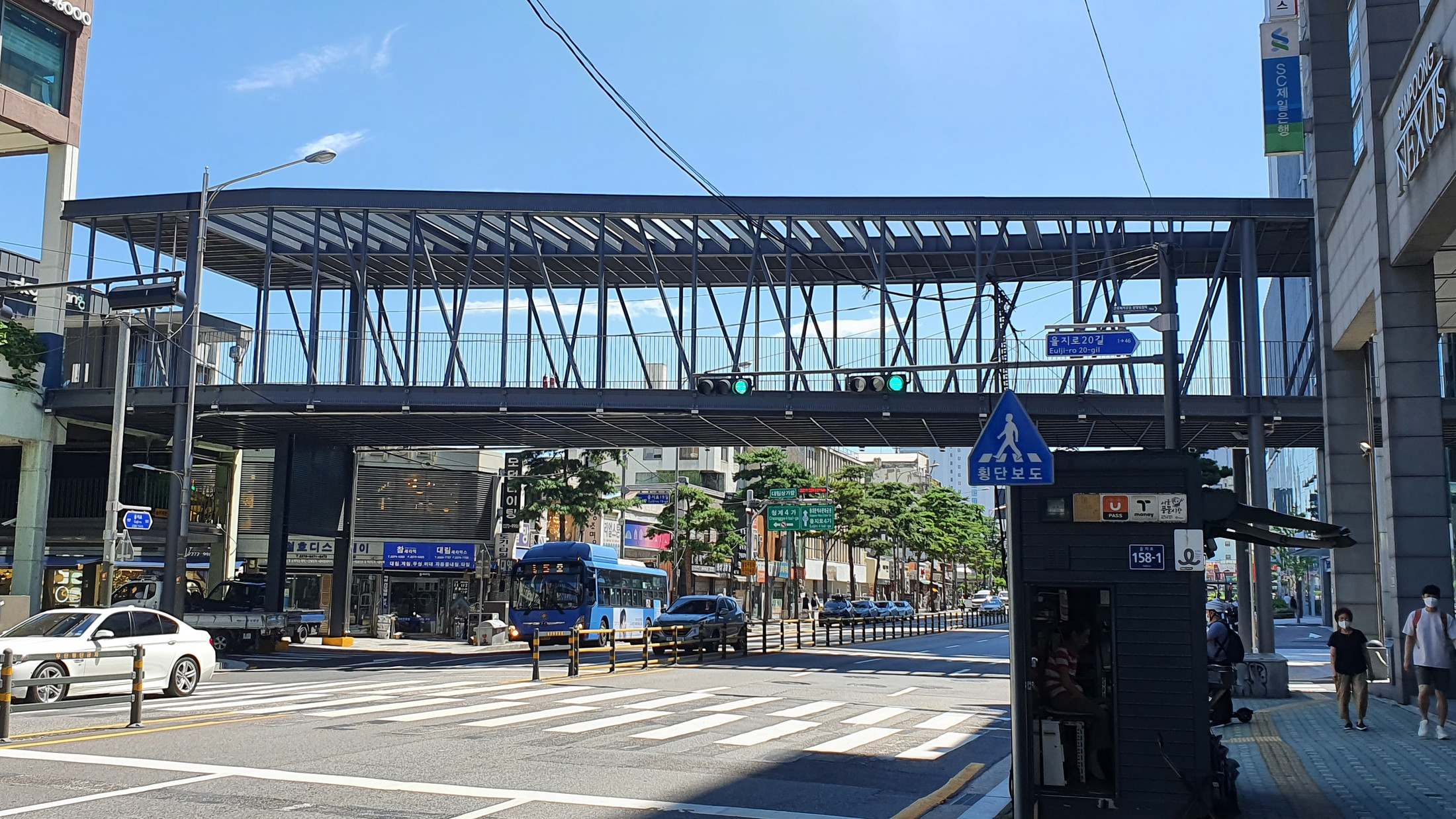
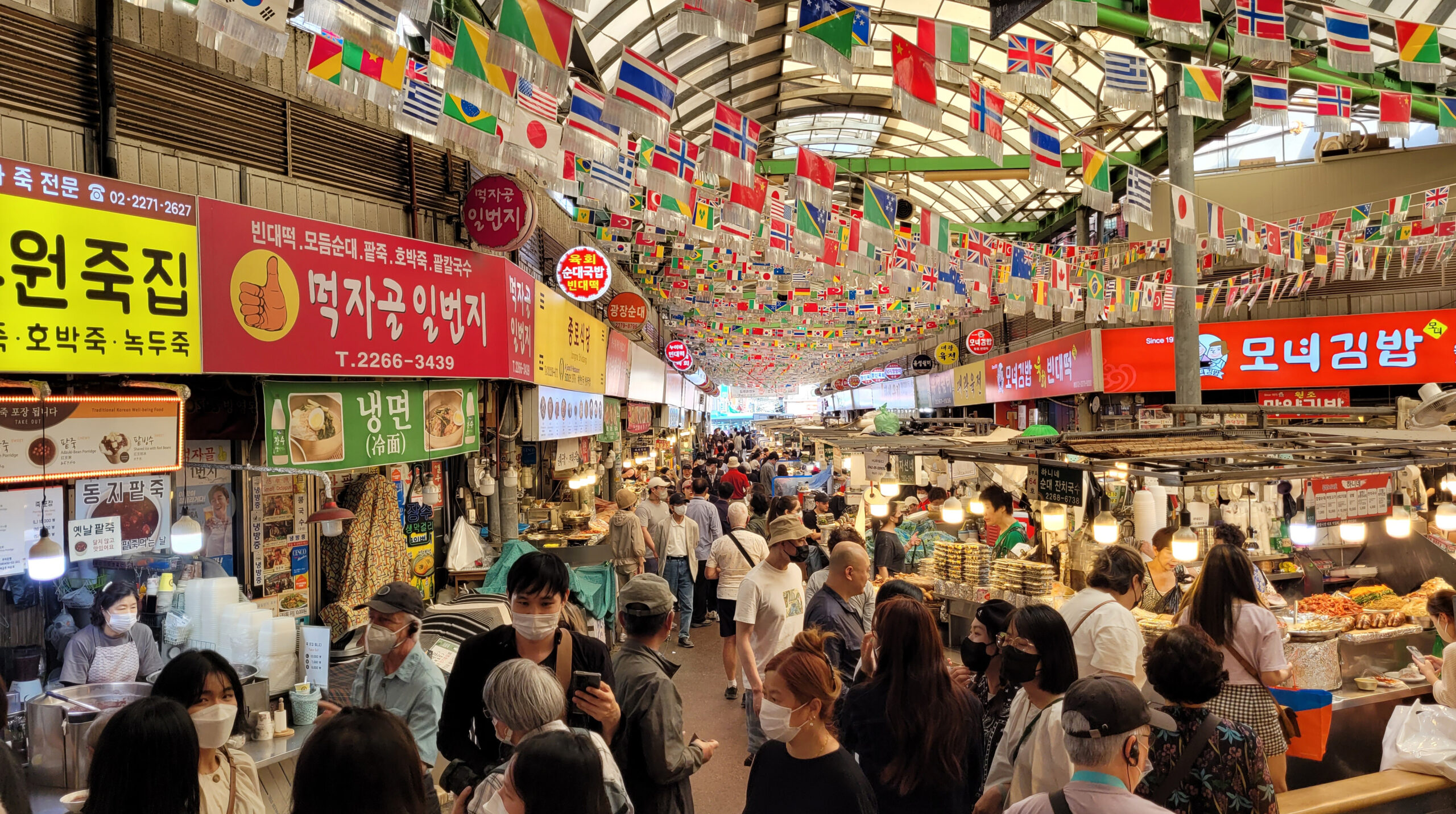
For an architecture-focused visit, use the pedestrian connections between Sewoon, Cheonggye, and Daelim arcades as your starting point; the Dasi Sewoon Bridge offers a view over Cheonggyecheon Stream. Then choose a nearby stop that suits your interests: Jongmyo Shrine, Ikseon-dong, or Gwangjang Market. These are optional neighborhood pairings, not verified Vincenzo filming locations or a timed itinerary.
Pedestrian bridge near Sewoon Arcade (July 2022). Photo: UniCon / Wikimedia Commons, CC BY-SA 4.0. Adapted image (resize and color preset). Licensed CC BY-SA 4.0.
Access and Opening Hours
General arcade hours are listed as 09:00–19:00 or 09:00–20:00, with Sundays and public holidays closed, but these times vary by shop and source. No single schedule covers all businesses, and individual shops may keep different hours. The rooftop hours come from Visit Seoul’s July 16, 2026 listing, rechecked online for this review; opening on your visit date has not been independently confirmed. Confirm access before making the rooftop a required stop. For a specific store, check its own opening times directly. Sundays and holidays are generally poor choices for browsing shops. The Vincenzo filming connection does not guarantee access to private interiors or specific amenities.
Navigate Seoul’s subway in 2026: plan your route, select the right ticket or pass, and understand fare, access, and coverage details.
Plan Your Subway Route
Begin by identifying your destination station and the correct exit, as this can affect your walking distance and final approach. The Seoul Subway app provides route planning, in-station directions, and exit information. Visit Seoul links to the official subway map and Seoul Metro’s Cyber Station route tool for trip planning. Confirm your planned route and exit on the day of travel, as service changes or station layouts may affect your journey.
What to Check Before You Go
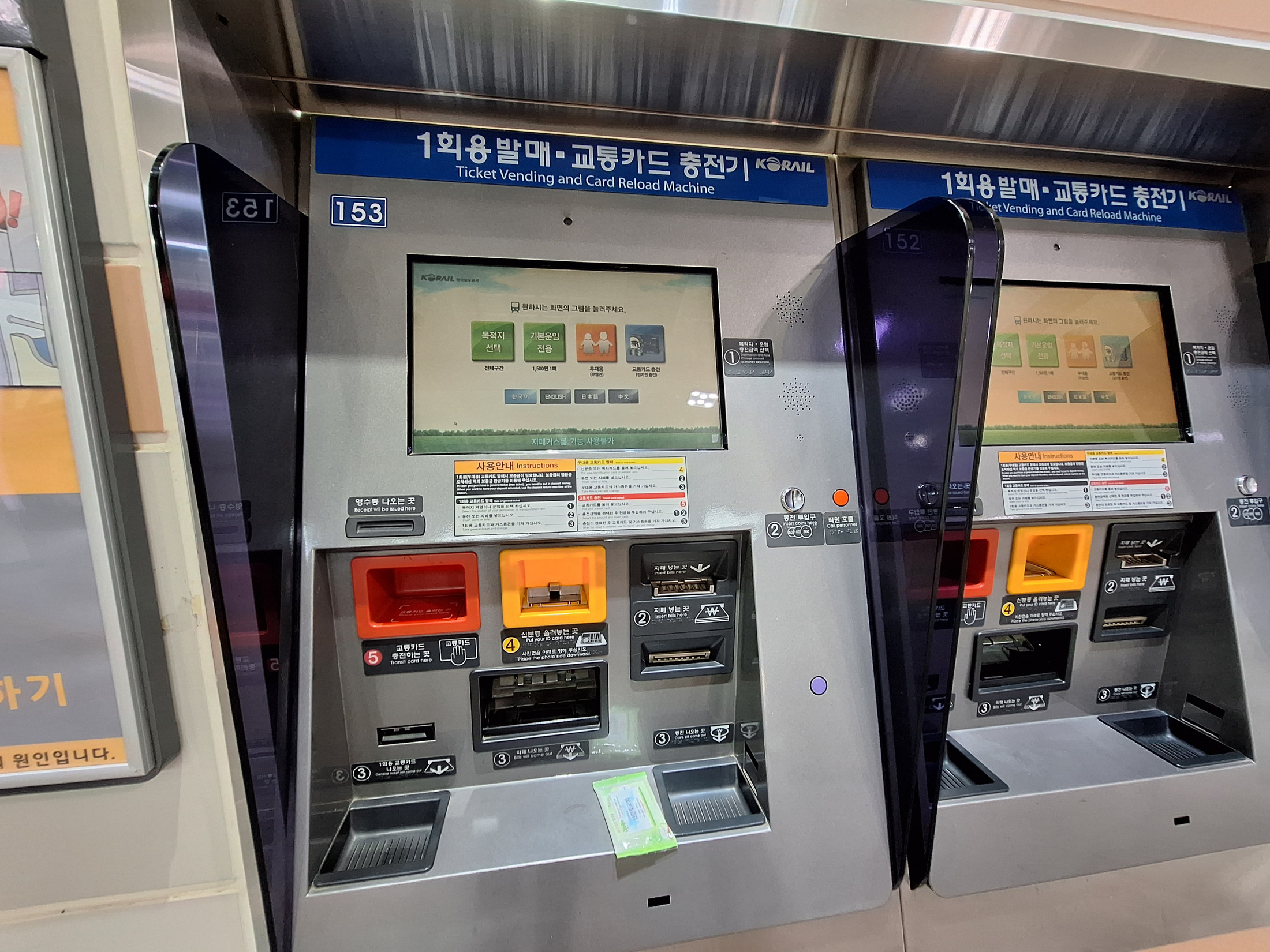
For payment, visitors can choose between a T-money card and a single-journey ticket. As of June 2026, the adult base fare for trips within 10 km is ₩1,550 with T-money and ₩1,650 for a single-journey ticket; longer journeys cost more. T-money cards are sold at airports, subway vending machines, and convenience stores such as CU, GS25, and 7-Eleven. Single-journey tickets are purchased at station machines, require a ₩500 refundable deposit, and must be kept until you claim the deposit at your destination. If your card or ticket balance is too low at the gate, use the fare adjustment machine near the ticket gate to add money for that trip.
Ticket and card reload machines at a Seoul Metropolitan Subway station (Soraepogu, July 2024). Photo: LandAndTree / Wikimedia Commons, CC BY 4.0. Adapted image (resize and color preset). Licensed CC BY 4.0.
Entering the Subway System
At the entry gate, tap your T-money card or single-journey ticket on the reader and wait for approval. This process is required at both entry and exit gates to record your journey and calculate the correct fare.
Navigating Platforms and Exits
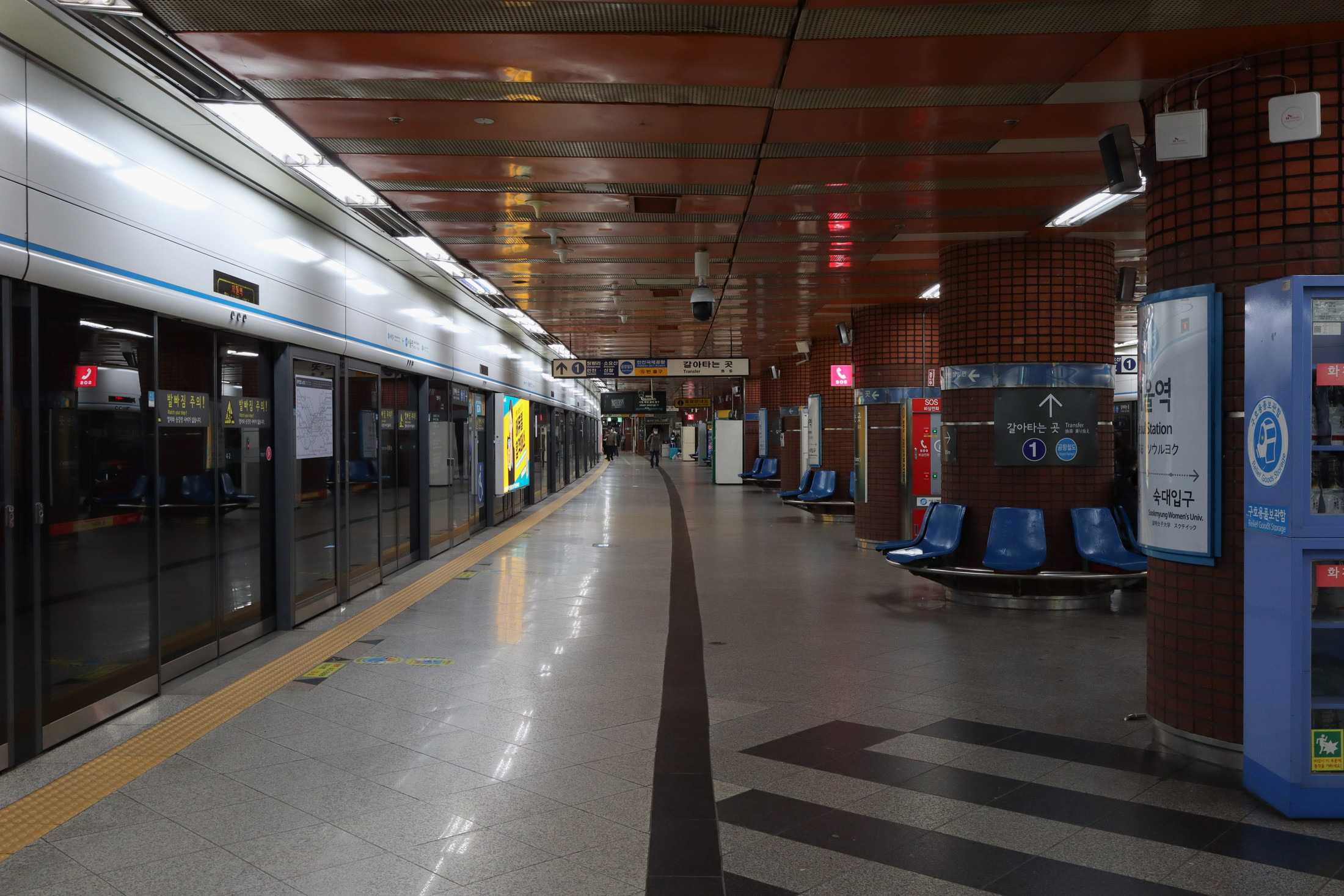
Station signs are in Korean, English, and Chinese. Use platform direction signs to confirm you are heading the right way, and match the numbered exit to your destination. The Seoul Subway app offers in-station guidance for platforms and exits, but always check physical signs for the most current directions.
Transfers and Fare Calculation
When transferring between subway lines, follow the signs for your next line. For integrated bus and subway transfer discounts, tap your transport card when boarding and alighting. Transfers must occur within 30 minutes after exiting the previous service, or within 60 minutes between 21:00 and 07:00. Distance and travel mode can increase the fare, so check the displayed fare for your route rather than assuming the base fare applies to all trips.
Exiting and Accessibility
At your destination, tap your T-money card or single-journey ticket at the exit gate. If you used a single-journey ticket, insert it into the separate deposit refund machine after exiting to reclaim your ₩500 deposit. For step-free access or luggage, consult the city’s published station-level information on elevators, ramps, and accessible restrooms. The presence of a facility does not guarantee it is working or serves your specific platform or exit. If step-free access is essential, verify the relevant entrance or platform route with station staff before travel.
Passes and Coverage Limits
Short-term Climate Card passes for 1, 2, 3, 5, and 7 days remain available for tourists. These passes cover Seoul subway stations and Seoul-licensed city and town buses, but exclude Sinbundang, GTX, subway stations outside Seoul, express and airport buses, and other regions’ buses. There is an exception for alighting at Incheon Airport terminals from a covered station, but not for boarding there. Always compare both your boarding and alighting stations with the current coverage list. The 30-day prepaid product is discontinued for tourists, and the Climate Pass is a separate resident program.
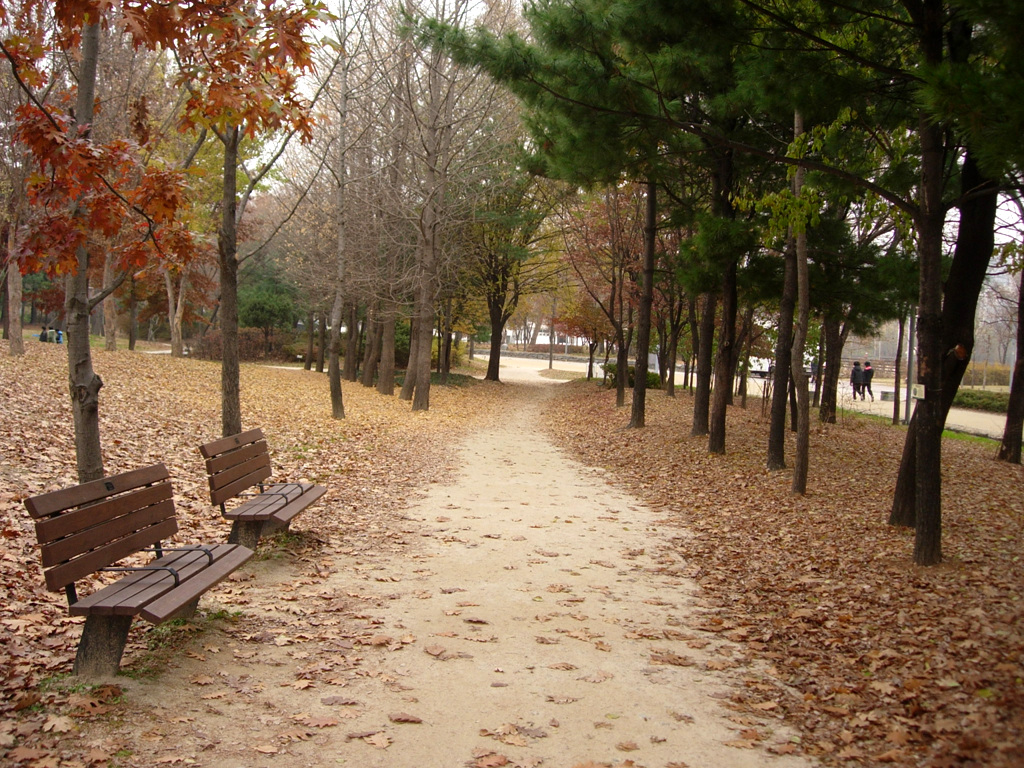
Seoul Forest in November 2009. Photo: Enigma7seven / Wikimedia Commons, CC BY-SA 3.0. Source · License
Autumn color in Seoul can fit into an afternoon: a wooded path, an open park or a stroll beside a palace wall—without a long bus ride or a summit climb.
Choose your Seoul autumn walk
Choose Namsan for a wooded walk and city views, Seoul Forest for flexible park time, or Deoksugung Stone Wall Road for a short historic stroll near City Hall. Each is a separate outing, so you can pick one that fits your time and walking comfort.
All three are within Seoul and reachable by subway. You can enjoy a casual autumn walk without planning a mountain-summit hike.
When do fall colors peak in Seoul?
Colors vary by tree, weather and location, so treat late October into early November as a planning window rather than a promise for any one city path. The 2026 Korea Tourism Organization forecast puts Bukhansan, a mountain in Seoul, around November 4. That is a forecast for Bukhansan, not a confirmed peak date for Namsan, Seoul Forest or Deoksugung. Check recent location-specific photos before choosing a day.
Namsan: forest scenery without the summit climb
For a wooded walk without climbing to N Seoul Tower, choose the pedestrian-only North Ringway. Seoul’s park map rates the full 3.5 km path as low difficulty and gives a walking time of about 42 minutes. You can follow a shorter section and turn back. Allow extra time for the approach, which may slope; do not assume the whole journey is level or step-free.
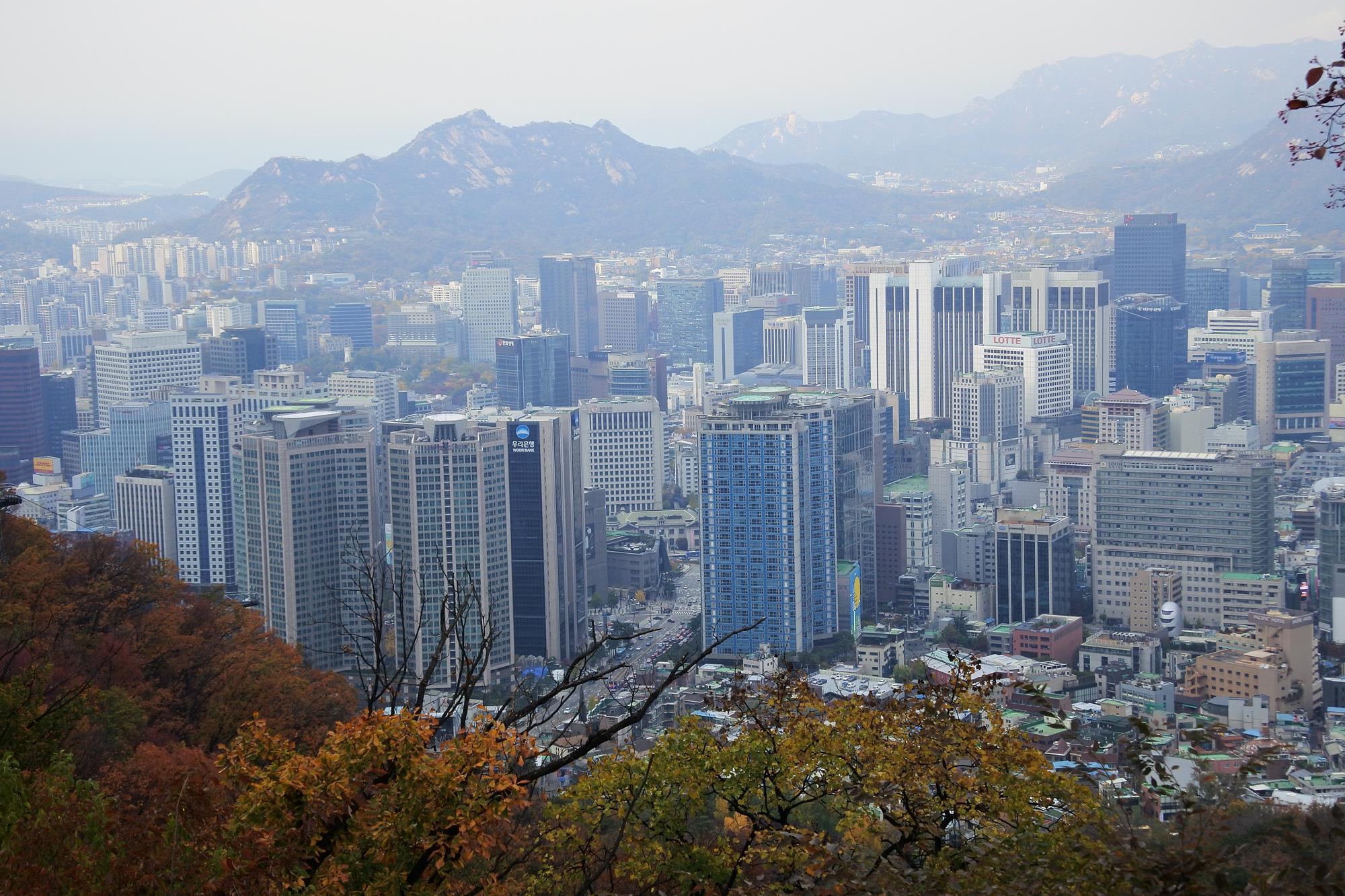
A practical approach is Dongguk University Station on Line 3 to the National Theater, about 10–15 minutes on foot according to the theater. From there, use the official Namsan park map to locate the North Ringway entrance. Follow the ringway rather than signs or stairs toward the tower, and turn back whenever you wish. The city-view photo here shows Namsan Park; it does not show the recommended ringway itself.
View from Namsan Park in October 2018. Photo: Ken Eckert / Wikimedia Commons, CC BY-SA 4.0. Source · License
Seoul Forest: a relaxed park visit near Seongsu
Come here if you would rather set your own pace than follow a fixed route. From Seoul Forest Station on the Suin–Bundang Line, use Exit 3 or 4 and head into the general park. Wander the tree-lined paths and open spaces, pause for photos, and loop back whenever you are ready. Allow about an hour for a relaxed visit, or linger longer.
The general park is free and listed as open around the clock, but individual areas such as Eco-Forest have different hours. Autumn color depends on the trees and the date you visit, so check recent photos. Seongsu cafés are an optional stop if you want a break afterward.
Deoksugung Stone Wall Road: a short historic walk
Start near City Hall Station, Exit 1, and follow the public stone-wall road by Deoksugung toward Jeongdong. The palace wall and older neighborhood buildings make this an easy city walk with places to pause or turn around. Allow roughly 30–60 minutes for a short stroll.
Walking the road is free and open year-round. Entering Deoksugung Palace is optional, costs admission and is normally unavailable on Mondays. Check current palace hours if you plan to go inside. You can stay longer to explore Jeongdong’s historic streets.
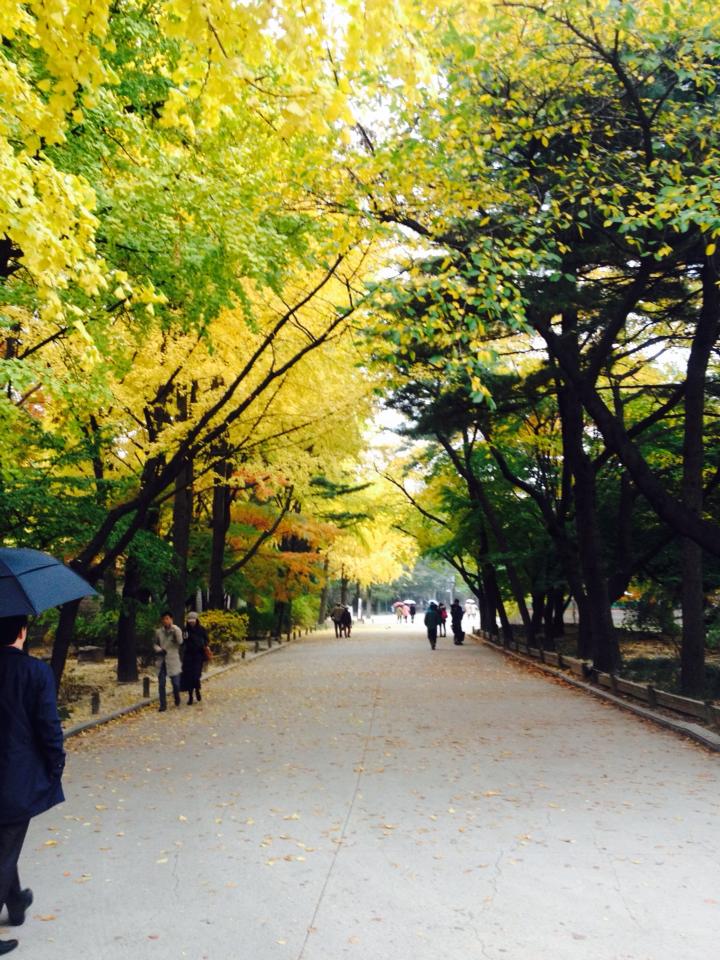
Deoksugung area road in November 2013. Photo: Byung do jung / Wikimedia Commons, CC BY-SA 3.0. Source · License
Which spot fits your day?
Location
Best for
Suggested visit
Cost
Namsan North Ringway
Wooded path and city views
1–2 hours
No trail admission
Seoul Forest
Relaxed park time and photos
About 1 hour
General park free
Deoksugung Stone Wall Road
Short historic walk
30–60 minutes
Public road free
Visit times are editorial planning estimates, not official trail times, and exclude travel to and from each place. Namsan time varies with your approach and how far you walk. Transport, food, palace entry and other optional attractions may cost extra.
If slopes are a concern, Seoul Forest or the shorter Jeongdong street walk may be simpler than reaching Namsan’s ringway. Choose Namsan when you have more time for the approach and want a wooded path.
Practical autumn tips
Go in daylight for easier navigation and check recent photos of the place you choose. A mountain foliage forecast cannot tell you whether a particular city path is at peak color. Wear comfortable shoes, leave time to turn back, and confirm special-area hours at Seoul Forest. At Namsan, keep to the North Ringway if you want to avoid the steeper summit routes.
Want a bigger autumn adventure?
If you want a mountain landscape and have more travel time, read the published Seoraksan autumn guide. For more choices around Korea, browse the Korea fall foliage guide. If you have only part of a day in Seoul, choose one of the city walks above and leave the rest of your schedule open.
A walkable one-day food route through Jongno, combining a market stop, sit-down meals, an optional cafe, and practical timing tradeoffs.
Route at a glance
Start around 09:30 on a Wednesday. Route: Soonheenae Bindaetteok (순희네빈대떡) → Songam Onban → Seoul Coffee Ikseon Branch → HANOK Seosunragil. Allow roughly 9.75–11.5 hours; the planning finish range is 19:15–21:00. Walking level: moderate.
The practical answer
Start at Soonheenae Bindaetteok, a bindaetteok vendor in the Gwangjang Market food street area, open 09:00–21:00 with last order at 20:30. Open from 09:00, it fits a route that starts around 09:30.
Next, Songam Onban is a hanok restaurant serving onban and related dishes, open 11:30–22:00. Reservation links are listed on booking platforms; mandatory reservations are not documented—plan optional reservation at peak times.
If time allows, Seoul Coffee Ikseon Branch is a walk-in cafe in the Ikseon-dong area, open daily 11:00–22:00 with last order 21:40. Consider skipping the cafe for the lower-effort three-stop version; it remains optional between sit-down meals.
Finish at HANOK Seosunragil, with weekday dinner service 17:00–22:00. Reservations are recommended for dinner. Weekday dinner service starts at 17:00, so expect an afternoon gap or a later finish after earlier stops.
What to check
The total walking time between the four stops is estimated at 26 to 39 minutes, making it a moderate walking day. You will not need paid transit for this itinerary, allowing you to enjoy the sights and sounds of Jongno as you travel between locations.
Plan to start your food day at 09:30 and aim to finish between 19:15 and 21:00, giving you approximately 9.75 to 11.5 hours for the entire experience. If you choose to skip the cafe, the three-stop version of this itinerary can be completed in about 8 to 9 hours.
The judgment
Best for: first-time visitors wanting one walkable Jongno food day without cross-city hops. Key tradeoff: weekday HANOK dinner begins at 17:00, creating an afternoon gap or a later finish.
Skip first: the cafe if you only want two sit-down meals plus a market bite. Lower-effort option: a three-stop route—Soonheenae → Songam Onban → HANOK—without the cafe.
This day is for a first visit that stays in one traditional district. Start at Gyeongbokgung, walk to Bukchon while the red-zone lanes are open, use Insadong only if the morning stayed on time, and eat at the Gwangjang food alley.
It is a manageable traditional Seoul day of about five to seven hours, not an all-day marathon. Start at 09:00 on a day other than a regular Tuesday. Allow 304–412 minutes, finishing around 15:52. If you start later, cut a stop rather than stretching the plan.
Closed: Gyeongbokgung on a regular Tuesday. Bukchon’s red zone to tourists outside 10:00–17:00. Gwangjang shops on Sunday. The food alley does not use that Sunday closure.
Walking: moderate, across the palace grounds, the Bukchon lanes, and one short subway hop if you keep the market.
This route is mostly outdoors at the palace and in Bukchon. Kignal has not verified a dedicated rainy-day alternative.
The route at a glance
09:00GyeongbokgungCore
walk
BukchonCore
walk
InsadongOptional
Line 1
Gwangjang food alleyRecommended
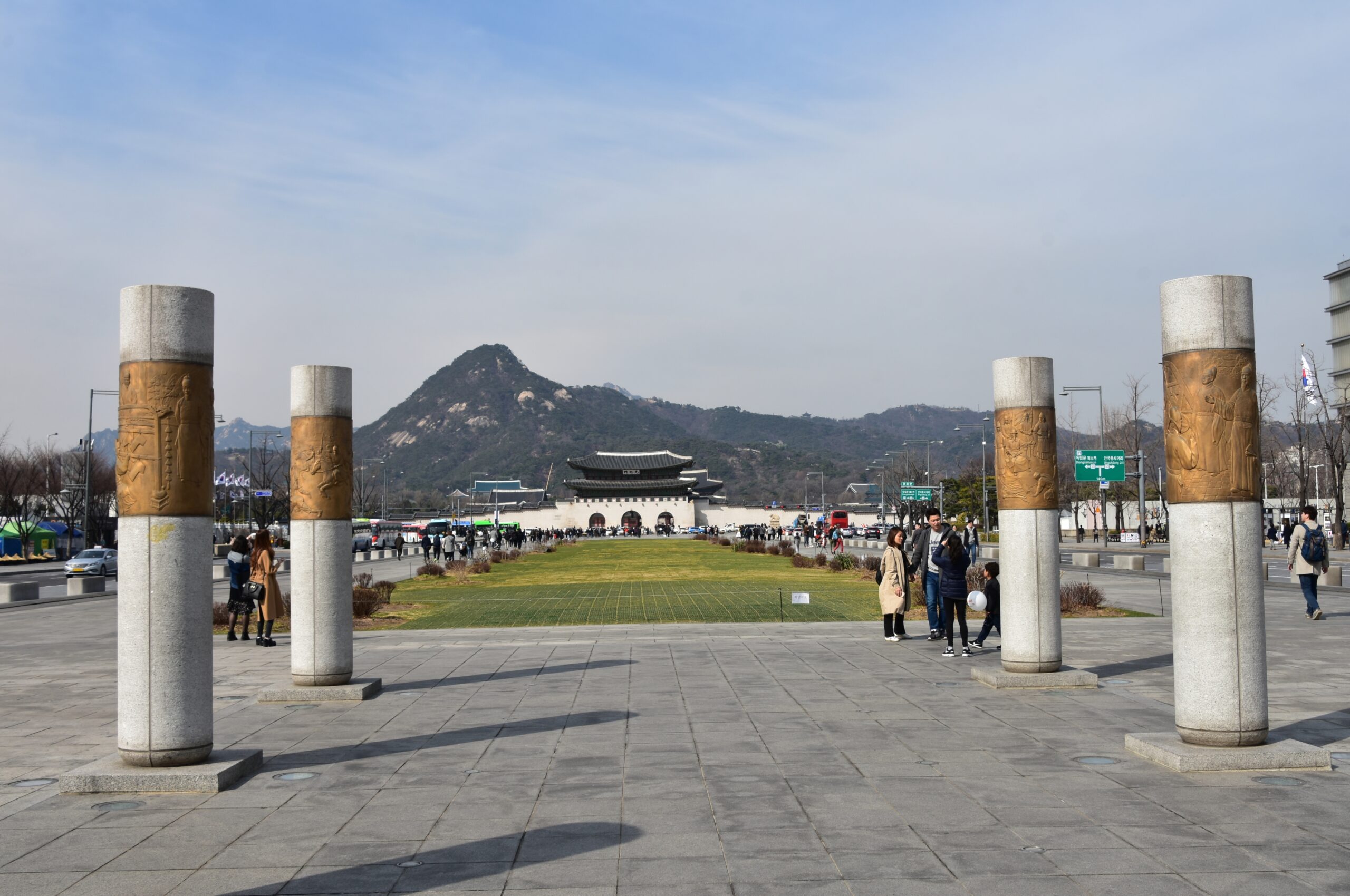
Gyeongbokgung Palace, from the Gwanghwamun gate. Core. Plan 2 hours, which is the length of the official Seoul walking route from the gate to Hyangwonjeong.
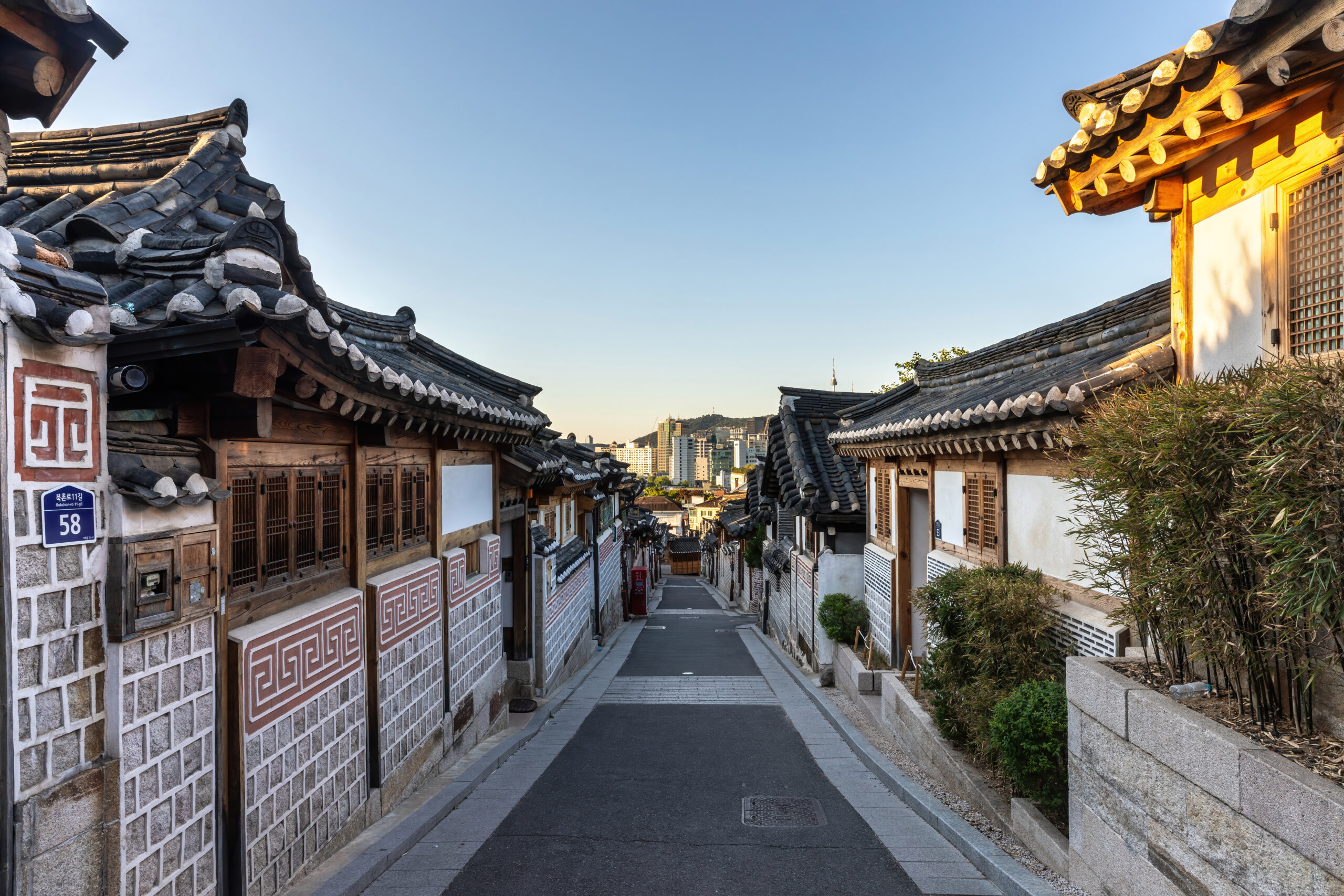
Bukchon Hanok Village, red-zone lanes only. Core. Allow about 45–75 minutes for the lanes if you want to keep the full-day route comfortable.
Insadong, a main-street pass. Optional. Allow 30–45 minutes. Drop this before you shorten the palace.
Gwangjang Market food alley. Recommended meal stop. Allow 40–60 minutes to eat and 10–15 minutes to find a stall.
Go in that order. The palace opens at 09:00. Bukchon’s tourist window on Bukchon-ro 11-gil starts at 10:00 and ends at 17:00. Doing the palace first uses the earlier opening and still reaches Bukchon after 10:00. Insadong sits at the Anguk and Jongno 3-ga end of the same area. The food alley is one Line 1 stop east of Jongno 3-ga, so the meal does not send you back to the palace.
Kignal already has a Gwanghwamun guide. Use it for the square and the south-gate approach. This day does not give the square its own timed stop.
Morning
Gyeongbokgung Palace
Be at the Gyeongbokgung ticket booth at 09:00. In September and October the palace is open 09:00–18:00, with last admission at 17:00. The official walking route takes 2 hours and covers Gwanghwamun, the inner gates, Geunjeongjeon, Sajeongjeon, Gyeonghoeru, the royal quarters, and Hyangwonjeong. You can follow that sequence on your own. Individual daytime entry does not require a reservation.
The individual fee for a foreign adult aged 19–64 is 3,000 won. Visitors in hanbok are on the free-entry list; the budget below still uses 3,000 won, because hanbok is a choice, not the default. From 29 October through 15 November 2026, entry is free except on closed days. That is a temporary exception, not the normal price. Outside those dates, plan on 3,000 won.
Do not plan the palace on a regular Tuesday. It is closed that day. A 30 September 2026 notice lists a few holiday openings in October, so check it for the week you go.
Stroller and wheelchair rental is offered at Heungnyemun, and the supply can run out. The palace route is a 2-hour walk through the grounds.
Leave about 20–30 minutes after the palace for the ticket line, photos, and the way out.
Midday
Bukchon Hanok Village
Bukchon comes next. It is the hanok neighborhood between Gyeongbokgung and Changdeokgung, and people live there. Tourist visits to the red zone on Bukchon-ro 11-gil are allowed from 10:00 to 17:00. Outside those hours the city can fine a tourist visit 100,000 won. The orange zone does not use that clock, but the lanes people come to see are the restricted ones. Be quiet, skip the doorway photos, and keep groups small. Groups of about 10 are the requested size.
The palace is a 5-minute walk from Gyeongbokgung Station Exit 5, and Bukchon is a 7-minute walk from Anguk Station Exit 2. Allow 15–25 minutes for the walk between the two stops.
Stay in the lanes. Allow about 45–75 minutes there. The official Bukchon course is 2–3 hours and adds Unhyeongung, the culture center, and other stops, which will not fit after the 2-hour palace walk.
No separate Bukchon admission cost is included in this itinerary.
Insadong is optional, and it is the first stop to drop if the morning runs long. It is a street of galleries, crafts, and tea houses, reached from Anguk Station Exit 5 (418 m) or Jongno 3-ga Station Exit 5 (438 m). The street has no single gate and no single set of shop hours. Allow 30–45 minutes for a main-street pass. The official Insadong course is 2–3 hours and includes Tapgol Park, Jogyesa, and a long list of shops. That course is a different day.
If the palace or Bukchon runs long, skip Insadong and keep the meal. You can still reach the market from Bukchon: Line 3 from Anguk to Jongno 3-ga, then Line 1 to Jongno 5-ga. Allow 15–30 minutes, including one transfer and waiting time.
Allow 12–20 minutes to walk from Bukchon toward Insadong.
Last stop
Gwangjang Market food alley
Eat at the Gwangjang food alley. The alley is open 09:00–23:00 every day, including Sunday. The wider market, including many shops, is open 09:00–18:00 and closed on Sunday. If you want hanbok shops or the vintage arcade, Sunday is the wrong day. If you want the meal, Sunday still works.
After Insadong, this timing reaches the market in the mid-afternoon and finishes around 15:52. The alley stays open until 23:00, so a later meal still fits those hours. This plan does not add an evening stop.
From Jongno 3-ga, Gwangjang Market is one stop east on Line 1. Jongno 5-ga Station Exit 8 is 62 m from the market. Allow roughly 12–22 minutes, including the walks to and from the stations and waiting time.
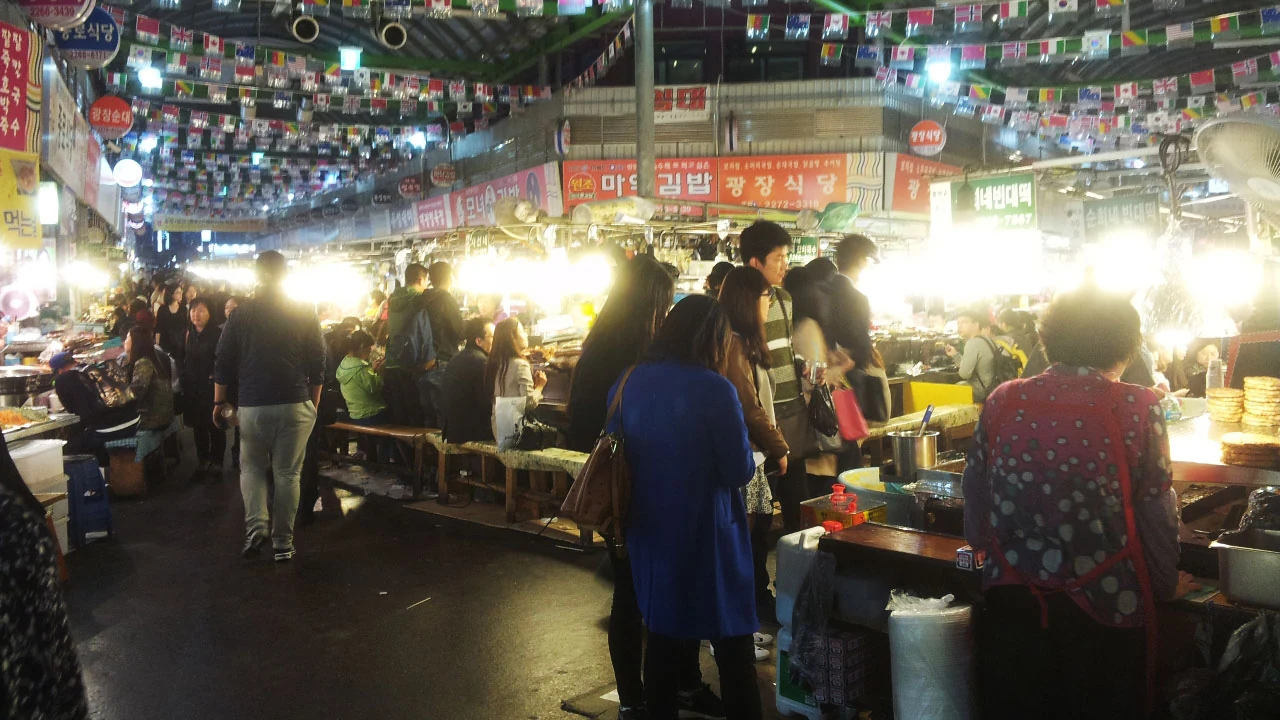
A Bakgane Bindaetteok board photographed on 2 September 2026 lists a meat or seafood pancake at 10,000 won and a pancake-and-fritter set at 17,000 won. The meal range is based on that one stall, so treat it as a planning example rather than a market-wide average. The 6,000 won plain pancake and 5,000 won gimbap on the same board are not the meal budget. Read the board in front of you before you order. Allow 40–60 minutes to eat and 10–15 minutes to find a stall.
If time is short
If the morning runs long, skip Insadong first and keep the market meal. It is the only optional stop. Keep Gyeongbokgung and Bukchon.
If you start late, cut a stop rather than rushing the palace below the 2-hour route and then adding the other stops back in.
If you have four hours
If you only have four hours, keep Gyeongbokgung and then Bukchon. Use the same 2-hour palace route, the same 45–75 minute lane allowance, a 10–15 minute buffer, and the 15–25 minute connection. That is 190–235 minutes, ending around 12:55.
Insadong and Gwangjang come off. They are not squeezed into shorter visits. There is no subway leg on this version, so the in-route fare also comes off. You still pay the 3,000 won palace ticket unless the temporary free-entry rule applies.
What to budget
Budget estimate
Palace admission₩3,000
In-route subway₩1,550
Gwangjang meal₩10,000–₩17,000*
Buffer₩0–₩3,000
Estimated total for the items above₩14,550–₩24,550
*The meal range is based on one currently documented stall, so treat it as a planning example rather than a market-wide average. The total covers the items above, not every purchase in the day.
This is a partial budget. It is not the cost of every purchase in the day.
Known fixed costs per adult, checked 15 October 2026:
In-route subway, transportation card, first 10 km: 1,550 won. The ride on this route is within the first 10 km. A single-journey ticket is 1,650 won. The ride from a hotel to the palace is not included. Add another base fare only if that trip is also within 10 km.
Gyeongbokgung, foreign adult 19–64: 3,000 won.
Those two lines are 4,550 won before food or buffer.
Food: 10,000–17,000 won for one adult at Bakgane Bindaetteok, from a board photographed on 2 September 2026. The meal range is based on that one stall. A meat or seafood pancake is 10,000 won, and the pancake-and-fritter set is 17,000 won. Drinks, yukhoe, and every other stall are excluded. Check the board before you order.
Keep a small buffer of 0–3,000 won for incidental costs.
The estimated total for the items above is 14,550–24,550 won. Shopping, lodging, hanbok rental, drinks, and the hotel transfer stay outside it.
The four-hour walk drops the subway and the meal. Its known fixed cost is the 3,000 won ticket. With the same buffer, the items on that version come to 3,000–6,000 won. Food is not on that version.
A combined palace ticket exists for people visiting more palaces on other days. It is not part of this day’s cost.
Walking and access
Expect a moderate amount of walking, especially inside the palace grounds and through the Bukchon lanes. The full route also includes the walks between stops and one short subway hop if you keep the market.
The palace visit is a 2-hour walk. Stopping after the palace, or using the four-hour version, leaves out the later stops.
Plan around the red-zone fine and the ban on chartered buses in Bukchon. Wheelchair and stroller rental at the palace is limited.
Before you go
Closed: Gyeongbokgung on a regular Tuesday. Bukchon’s red zone to tourists outside 10:00–17:00. Gwangjang shops on Sunday. The food alley does not use that Sunday closure.
Seasonal hours: January–February and November–December 09:00–17:00, last admission 16:00. March–May and September–October 09:00–18:00, last admission 17:00. June–August 09:00–18:30, last admission 17:30. This plan enters at 09:00 and leaves the palace around 11:00, which also clears the winter last-admission time. A later start in winter needs its own timing check.
No reservation is needed for this self-guided version. The official guided walk is a separate booked tour.
This route is mostly outdoors at the palace and in Bukchon. Kignal has not verified a dedicated rainy-day alternative.
Temporary free palace entry ends 15 November 2026 and does not apply on closed days. Outside that window, plan on the normal 3,000 won ticket.
Kignal has not yet field-tested the full route. Walking times and stop durations are planning ranges based on published information and editorial estimates.
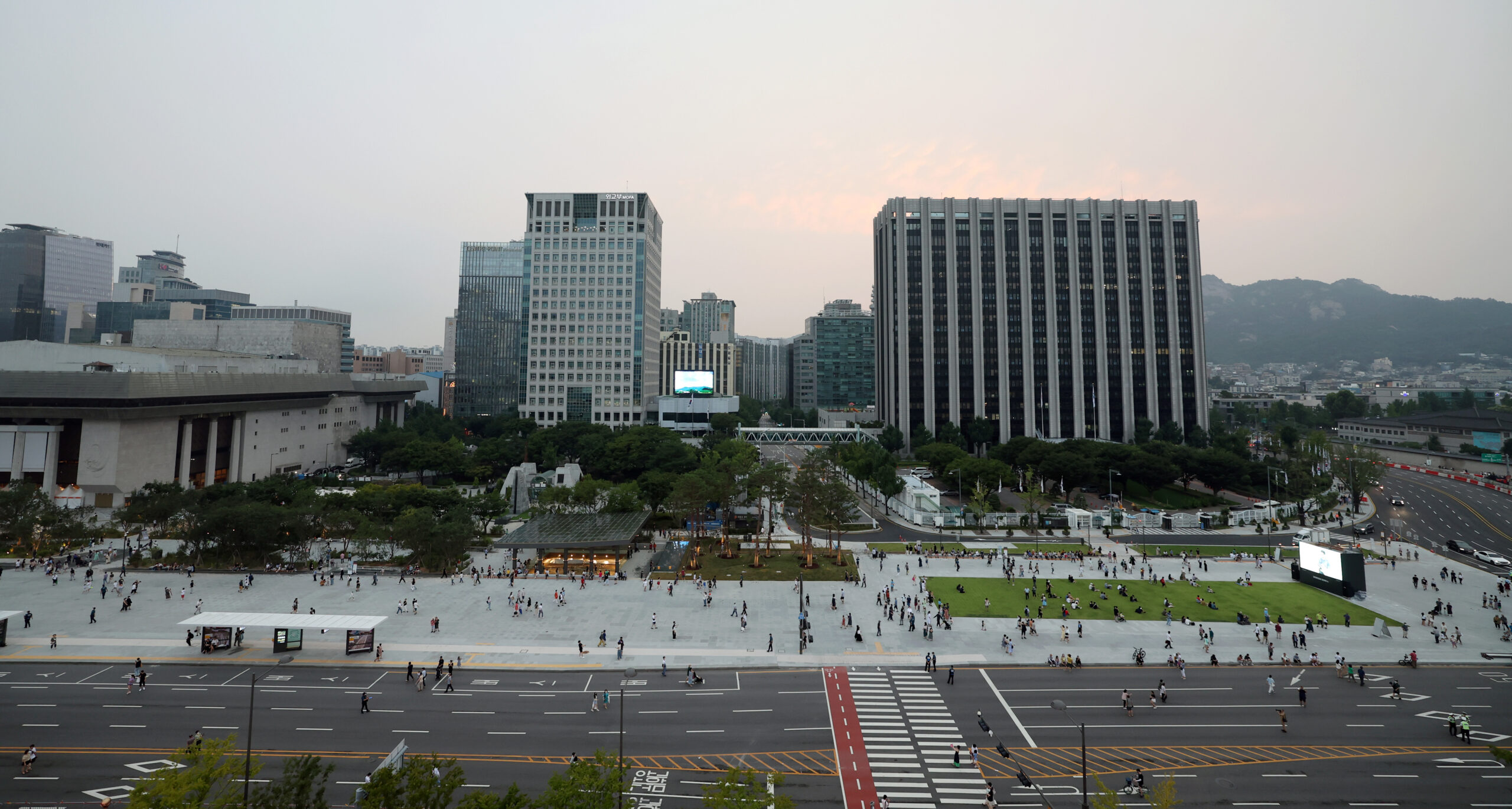
Gwanghwamun Square occupies ground where Joseon government offices stood, and the visit centers on King Sejong and Admiral Yi Sun-sin. Their statues share the open space with ponds, fountains, a Haechi statue, and a grass plaza. Underground, the Story of King Sejong explains his achievements with storytelling and touch screens. Entrances are behind the Sejong statue, on the Sejong Center side, and at KT Hall, and the listing places the exhibition at B 175 Sejong-daero, Jongno-gu.
The square at night, the palace next door
The square is listed as open 24 hours throughout the year. That statement is about the outdoor square, not an exhibition timetable. Gyeongbokgung is the related visit. The official route starts at Gwanghwamun, the main south gate, and includes Geunjeongjeon, the throne hall, and Gyeonghoeru, the banquet pavilion. Geunjeongjeon hosted coronations, meetings with officials, and receptions for foreign envoys. Gyeonghoeru hosted royal banquets and foreign guests. Participants on the walking-tour page pay their own admission, cultural-experience, and transportation costs, so the palace is a separate plan from standing in the square.
For a full-day route from the palace area through Bukchon, optional Insadong, and Gwangjang Market, see Traditional Seoul in One Day.
A wide plaza with a lawn, paths, and surrounding office buildings.
Two meals with different clocks
Gwanghwamun Jip, at 12, Saemunan-ro 5-gil, is the kimchi jjigae stop, listed from 09:00 – 21:00 and closed on Seollal and Chuseok. Ilpumdang, at 25 Sejong-daero 23-gil, serves shabu-shabu and sukiyaki in a bonito-and-kelp broth, with rice porridge or noodles. Service runs 11:30-15:00 and 17:00-22:00, and it also closes on Seollal and Chuseok. The break between Ilpumdang's sittings is why those windows matter. Neither restaurant address is the square.
Line 5, then a choice of doors
Gwanghwamun Plaza is listed at Gwanghwamun Station on Line 5, exits 1 and 2. A separate note gives a 10 minute walk from Exit 2 to Gyeongbokgung. Exit 2 is the palace connection. The exhibition entrances remain the statue, the Sejong Center side, and KT Hall.
Sleeping at the intersection
Koreana Hotel sits at the Gwanghwamun fourway intersection, at 135, Sejong-daero, Jung-gu. The listing includes Western-style rooms and Korean-style ondol rooms. That intersection is the area cue. The hotel and the underground exhibition use different Sejong-daero addresses.
Map and Key Locations
The cards cover the Sejong exhibition, Gwanghwamun Jip, Ilpumdang, and Koreana Hotel.
Bukchon Hanok Village is a historical and cultural village between Gyeongbokgung Palace and Changdeokgung Palace, with clusters of traditional hanok houses. Residents live with the tourism, which is why the visit has limits. Walking the lanes, joining a craft session, sitting in a tea house, or staying in a hanok are different ways to use the same streets.
Hanok houses along a sloping Bukchon lane.
When the lanes are open to visitors
Tourist visits to the red zone around Bukchon-ro 11-gil are restricted from 17:00 until 10:00 the next day, and Sunday is a rest day for the alleyways. A separate listing gives 10:00-17:00 for the road along Bukchon-ro 11-gil. Use the red-zone rule to time the walk; the craft center and the tea house keep their own clocks.
Make something, or study one house
Bukchon Traditional Crafts Center, at 24-5 Bukchon-ro 12-gil, offers hands-on work such as hanji and accessories. The day's program changes. Admission is free, activities are charged on their own, and no reservation is required.
Baek In-je House, at 16 Bukchon-ro 7-gil, is a modern hanok from the Japanese administration period, with a garden, annex buildings, and a hallway connecting the main building to other rooms. You can view the outside on your own. Going inside needs a reserved guided tour. Hours are 09:00-18:00, last entry 17:30, closed on January 1 and on Mondays except public-holiday Mondays.
Tea inside a hanok
Many hanoks operate as restaurants and tea houses, and the village notes also mention restaurants converted from hanok. At OSULLOC Tea House Bukchon, 45 Bukchon-ro, the first floor has tea, snacks, and souvenirs, the second has rooftop views, and the third hosts a seasonal tasting that requires a reservation. The tea house lists Monday-Thursday 11:00-20:00 and Friday-Sunday 11:00-21:00. Those hours are for this venue, not for the red-zone lanes.
From Anguk, seven minutes
Seoul Metro places the village on Line 3, 7 minutes on foot from Anguk Station Exit 2. The palaces on either side frame that walk; they are not one combined stop.
If you want to build a day around these lanes, Traditional Seoul in One Day connects Bukchon with Gyeongbokgung, optional Insadong, and Gwangjang Market.
Sleeping in a hanok
Bukchon Maru is a two-storey hanok guesthouse in Jongno, close to Anguk station, with the royal palaces and Insa-dong among nearby attractions. Breakfast is available. It is one example of staying in the house type you came to see, with its own check-in at 14:00, separate from the visitor window on the lanes.
If you are choosing a Seoul base rather than this one guesthouse, compare areas in where to stay in Seoul.
Map and Key Locations
The cards cover the crafts center, OSULLOC Tea House Bukchon, and Baek In-je House.
The Red Road runs through Hongdae in Mapo-gu, and the street changes as you walk it: R1 mixes flea markets with caricature drawing, traditional games, and busking, R2 is the pedestrian stretch for music, dance, magic, and mime, and R3 turns to clothing and cosmetics shops. You can watch a performance and then browse. The R2 description mentions spring and autumn visitor events and does not give an everyday show time, so check the program if a particular act is why you came.
Where to stand, and where to shop
R2, at 347-20 Seogyo-dong, is music, dance, magic, and mime. Performers register beforehand; that is how the street is run, not a ticket a visitor books. R1, at 348-24 Seogyo-dong, is the wider mix of markets and busking. R3, at 365-9 Seogyo-dong, is the retail end.
A pedestrian shopping street with storefronts and people walking.
Dakgalbi or a late pub
Shin Migyeong Hongdae Dakgalbi serves vegetable dakgalbi and cheese fondue dakgalbi on a cast-iron griddle, with snowflake cheese fried rice also listed. English and Chinese service and a multilingual website are part of that listing. Miro is a Korean-style pub at 1F, 80 Wausan-ro 30-gil, with braised beef short ribs, grilled ribs, beef tartare, stir-fried squid, and Korean liquors. Miro opens Wednesday-Saturday 18:00-23:00, last order 22:00, and is closed Sunday-Tuesday, so it is an evening plan rather than a pattern for every Hongdae meal.
Two stations, two errands
Hongdae Street is listed at Hongik Univ. Station on Line 2 and the Airport Railroad. The Hongdae Flea Market is listed at Sangsu Station on Line 6, Exit 1. Use Hongik University Station for the Red Road and Sangsu when the flea market is the stop.
A hotel with a late check-in
Hongdae and Yeonnam-dong are described as close to Hongik University Station, which connects with the Airport Railroad. Hyooshik Aank Hotel Hongdae is at 162-7 Donggyo-ro and lists Standard, Movie, and Premium Twin rooms. Check-in is 20:00 and check-out is 12:00. That evening check-in is the arrival detail that matters; the station note describes the area and does not give a walk from the hotel door.
Yeonmujang-gil is a street in Seongdong-gu that still shows traces of former shoe factories, now mixed with cafes, galleries, clothing boutiques, and brand pop-up stores. Handmade shoe businesses took root on this alley in the 1970s. Former factories and workshops now sit alongside cafes, beauty experiences, retail spaces, and galleries, and the pop-ups change rather than staying as a fixed list.
Daelim Changgo
Daelim Changgo makes that change concrete: a cultural complex converted from a red brick warehouse, still carrying a 1970s rice-mill structure with a gabled roof, brick walls, and steel columns. A cafe, bar, and dining room share the building with a gallery, and the exhibitions are viewable during cafe hours. The warehouse is at 78 Seongsui-ro and lists daily hours of 11:00-22:00. The street listing at 1 Yeonmujang-gil is a different reference. Use 78 Seongsui-ro when you are looking for the warehouse.
Cafes, including one glasshouse
Cafes are part of the street, and Daelim is the place where coffee, a bar, and a meal share the old mill. CafeCite, at 71 Seongsui-ro, is a different room: a greenhouse-style glass roof and a signature drink menu inspired by a different city each month. A feature describes a Seongsu Brick Latte and a Kouign Berry pastry as examples from that menu. CafeCite lists daily hours of 10:00-22:00. Other shops on the street set their own hours.
Beauty counters and the boutiques
Clothing boutiques and brand pop-ups are the shopping along the street. AMORE Seongsu, at 7 Achasan-ro 11-gil, is where you test products and can book a custom foundation or lipstick. AMORE lists Tuesday-Sunday 10:30-20:30, is closed on Mondays, and recommends a reservation for the custom sessions.
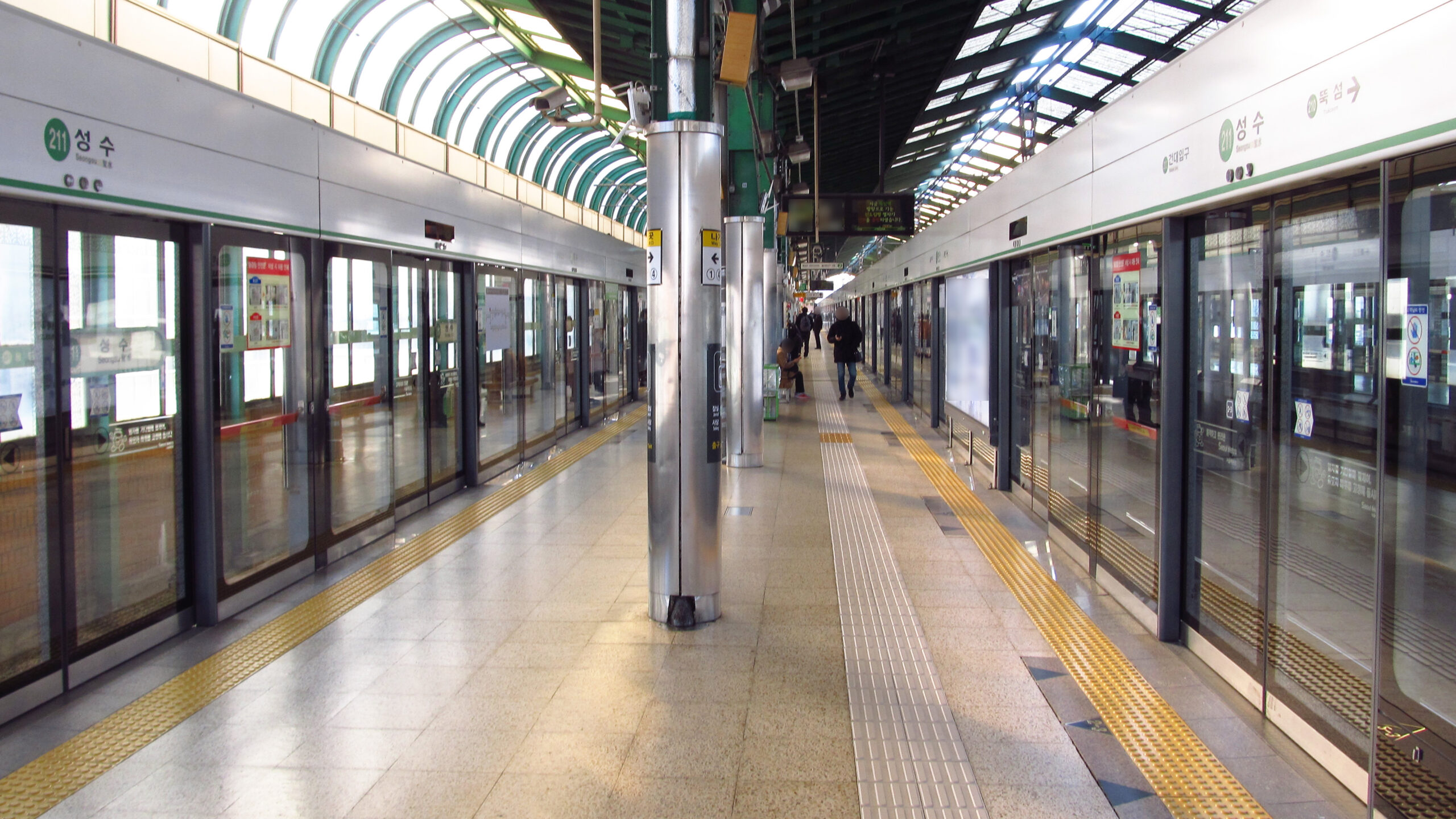
A Seongsu Station platform, with the station name on the screen doors.
Arriving on Line 2
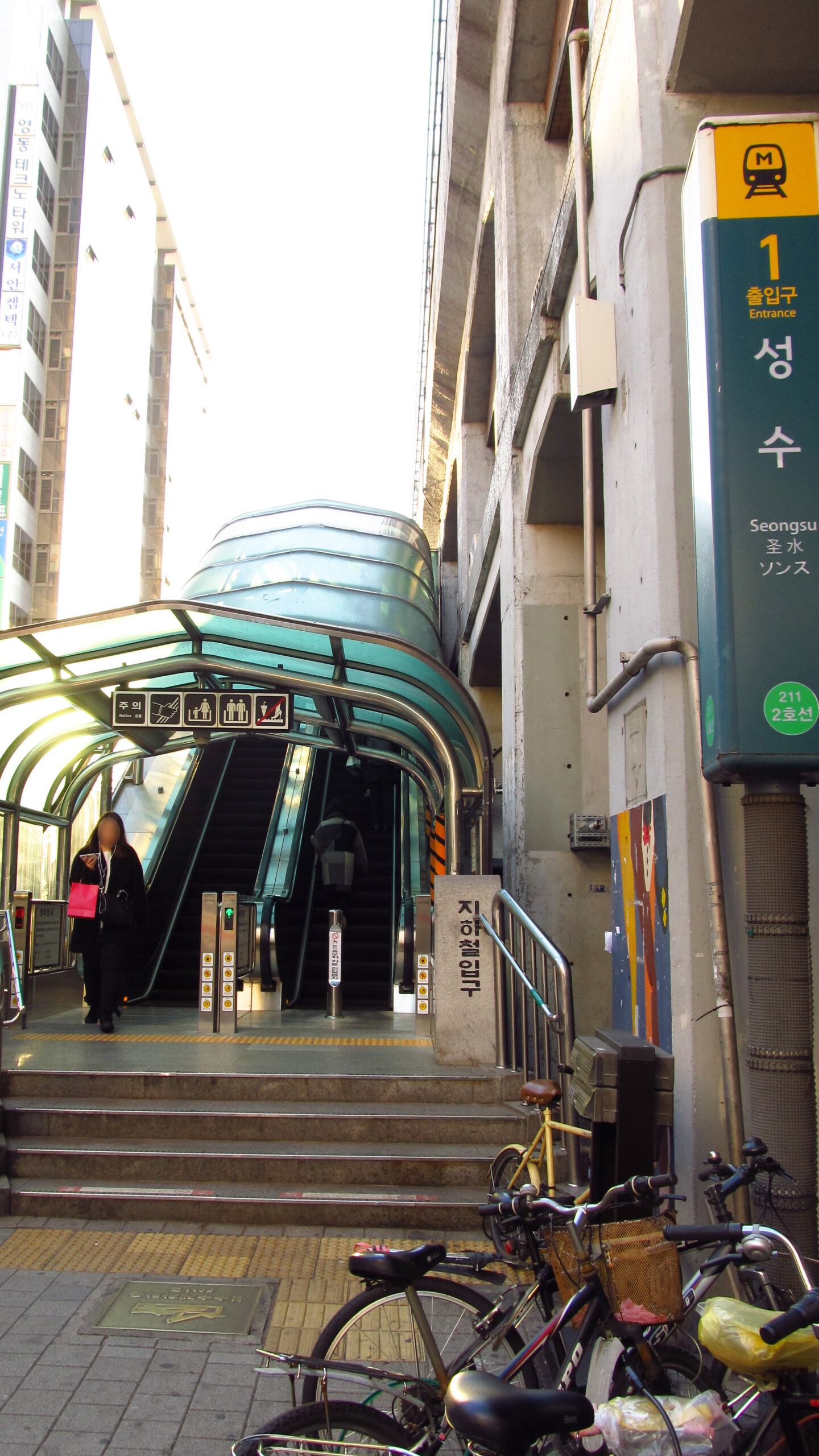
Seongsu Station is on Line 2. The city describes Yeonmujang-gil running from Ttukseom Station on Line 2, past Seongsu Station, toward Seongsu Sageori, so the street is a line of stops rather than one door at the station. Daelim Changgo and AMORE Seongsu use different street addresses, so choose the place before the last part of the walk.
Staying nearby, not on the cafe street
Guesthouses are documented in Seongsu-dong, with dormitories and 1- to 2-person rooms among the types. Namu Hotel is a separate base, at 12 Achasan-ro 76ga-gil in Gwangjin-gu. Guests are pointed toward Seongsu-dong pop-up stores, so the hotel suits an outing to the street rather than a room on Yeonmujang-gil.
Map and Key Locations
The cards cover the street reference, Daelim Changgo, CafeCite, AMORE Seongsu, and Namu Hotel in Gwangjin-gu.
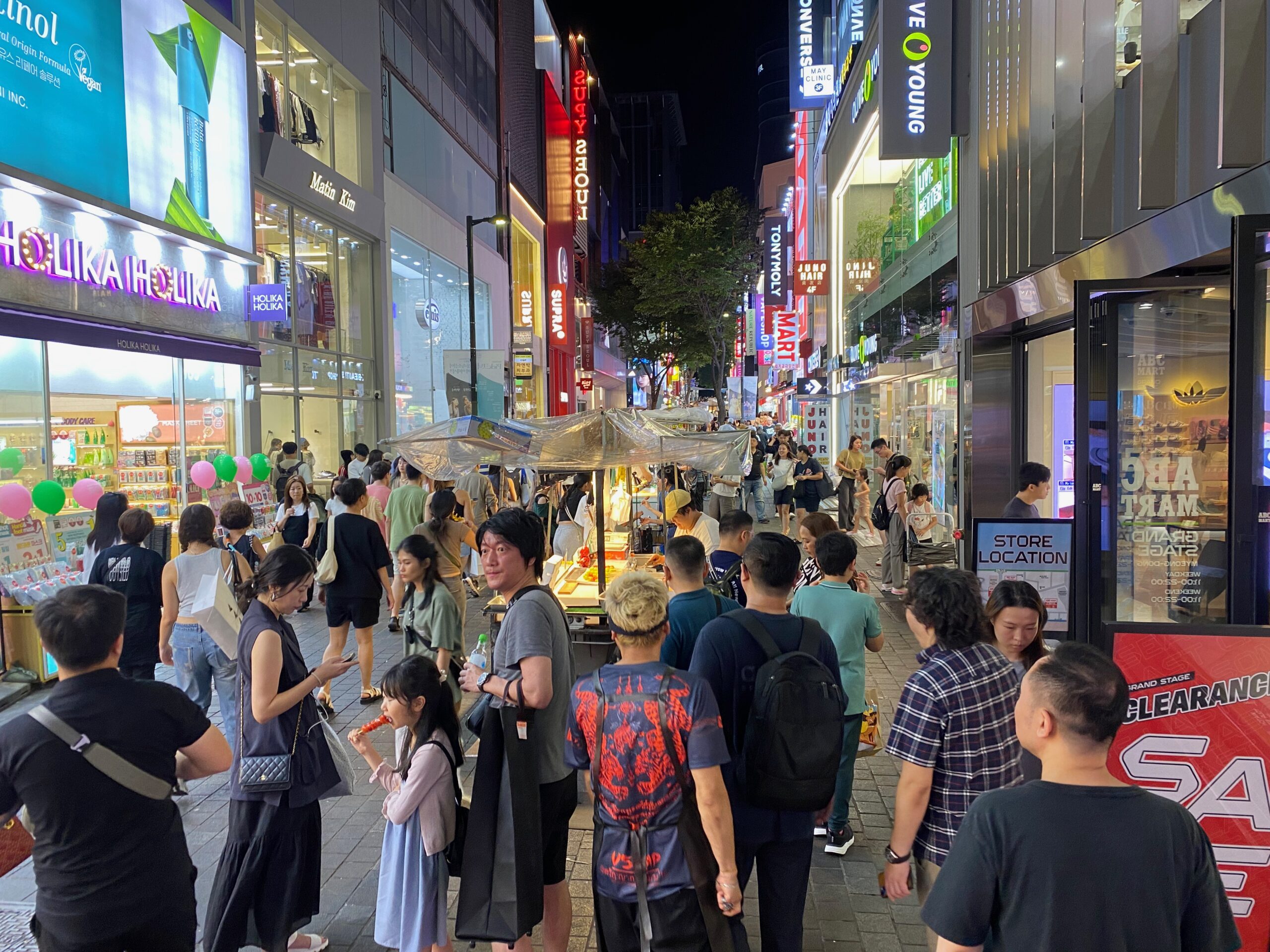
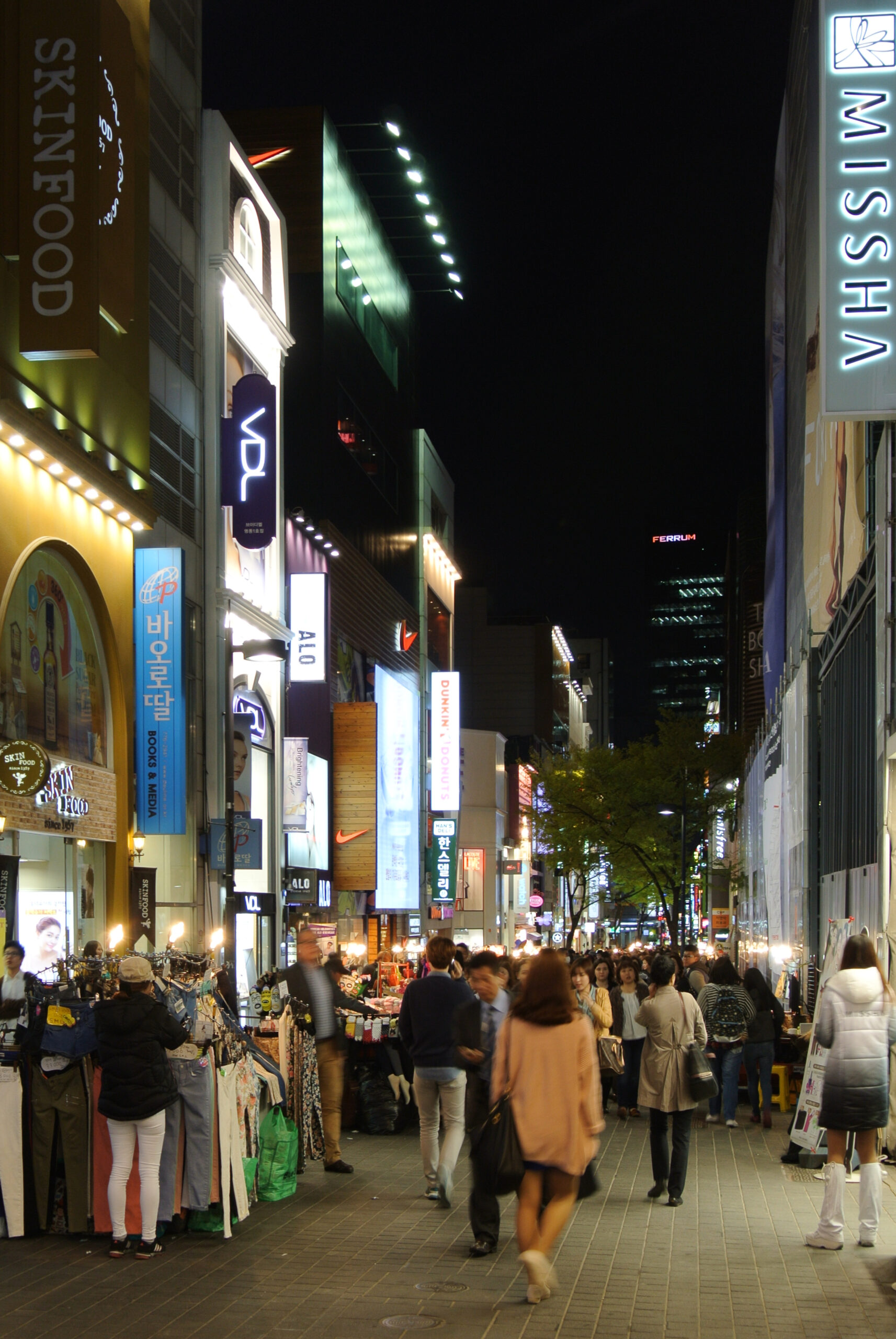
Myeongdong is in Jung-gu, and the streets are built for browsing: stalls next to retail shops, clothing from casual wear to high fashion, and Korean cosmetics stores in the same mix. It is also described as a hub of commerce, banking, and culture, with a daytime population of 1.5-2 million, which helps explain how full the pavements get. The other reason to stop is Myeongdong Cathedral, the church of the Archdiocese of Seoul and a place connected with the origins of the Korean Catholic community.
A Myeongdong street at night.
How the shopping streets work
There is no single shop timetable. The area is listed as open daily, and hours vary by store, so check the counter you actually want. The shopping-area listing uses 27, Myeong-dong 8-gil. That is the district address, not the cathedral door.
The cathedral and the rooms beneath it
Use 74 Myeongdong-gil for the cathedral. Under it, the public 1898 complex has drinks and refreshments, music and books, flowers and souvenirs, so you can pause on the same site. The church houses remains of Catholic clergy and martyrs, including Bishop Laurent Joseph Marie Imbert, and admission is free.
Noodles, and a winter street snack
Myeongdong Kyoja serves wheat-flour noodles in chicken broth at 29 Myeongdong 10-gil, with daily hours of 10:30-21:00. Those hours belong to Kyoja. A December 2025 winter-food note describes gyeranppang, sweet batter baked with a whole egg on top, and says street-food hours vary by store.
Line 4 and a place to ask
Myeong-dong station is on Line 4. With luggage, the T-luggage desk is on B1, around exits 9 and 10; those exits mark the desk, not a route to every shop. Once you are on the street, the city-run Myeong-dong Tourist Information Center can help with travel information, accommodation questions, and medical-tourism questions. It is on 1F of the annex at the Hana Financial Group Myeongdong Office, 66 Euljiro, open 09:00-18:00 daily except Lunar New Year and Chuseok, with free admission.
Three different stays
ibis Ambassador Myeongdong is in the downtown business and shopping district, at 78 Namdaemun-ro. 57 Myeongdong Hostel is in Myeong-dong and lists single rooms with ensuite bathrooms. Hotel Prince Seoul is described at the front of the shopping district, at 130, Toegye-ro, with a shuttle bus between Incheon International Airport and the hotel.
If the day runs long
The cathedral introduction names Namsangol Hanok Village for traditional houses, N Seoul Tower for a view over Seoul, and Namdaemun Market for food and goods.
Map and Key Locations
The cards below are the cathedral, Kyoja, the information center, and Hotel Prince.