Prepare for payments in Korea with the right mix of cash, cards, and practical steps for currency exchange, ATMs, and transit. Know where limitations may apply and what to recheck before your trip.
The practical answer
First-time visitors to Korea should plan to use a combination of cash and credit cards. The Bank of Korea issues four banknote denominations—₩1,000, ₩5,000, ₩10,000, and ₩50,000—and coins are also in circulation. Credit cards are widely accepted at major hotels, department stores, and general shops, but some smaller stores may not provide card service, so check before making a purchase. For exchanging foreign currency, use banks or authorized exchange service centers. Bank hours and service availability vary by bank and region, so confirm details in advance. For a broader overview of Korean destinations and practical travel planning, see the Kignal destination guides.
How cash, ATM withdrawals, and transit payments work
Keep some cash available for specific tasks: foreign-issued credit cards cannot buy or top up Tmoney at convenience stores, where cash is required for these transactions.
On Seoul subway Lines 1–8, new single-use ticket machines accept foreign-issued credit cards. However, this does not guarantee acceptance at all machines or on other transit systems, so carrying cash as a backup is recommended.
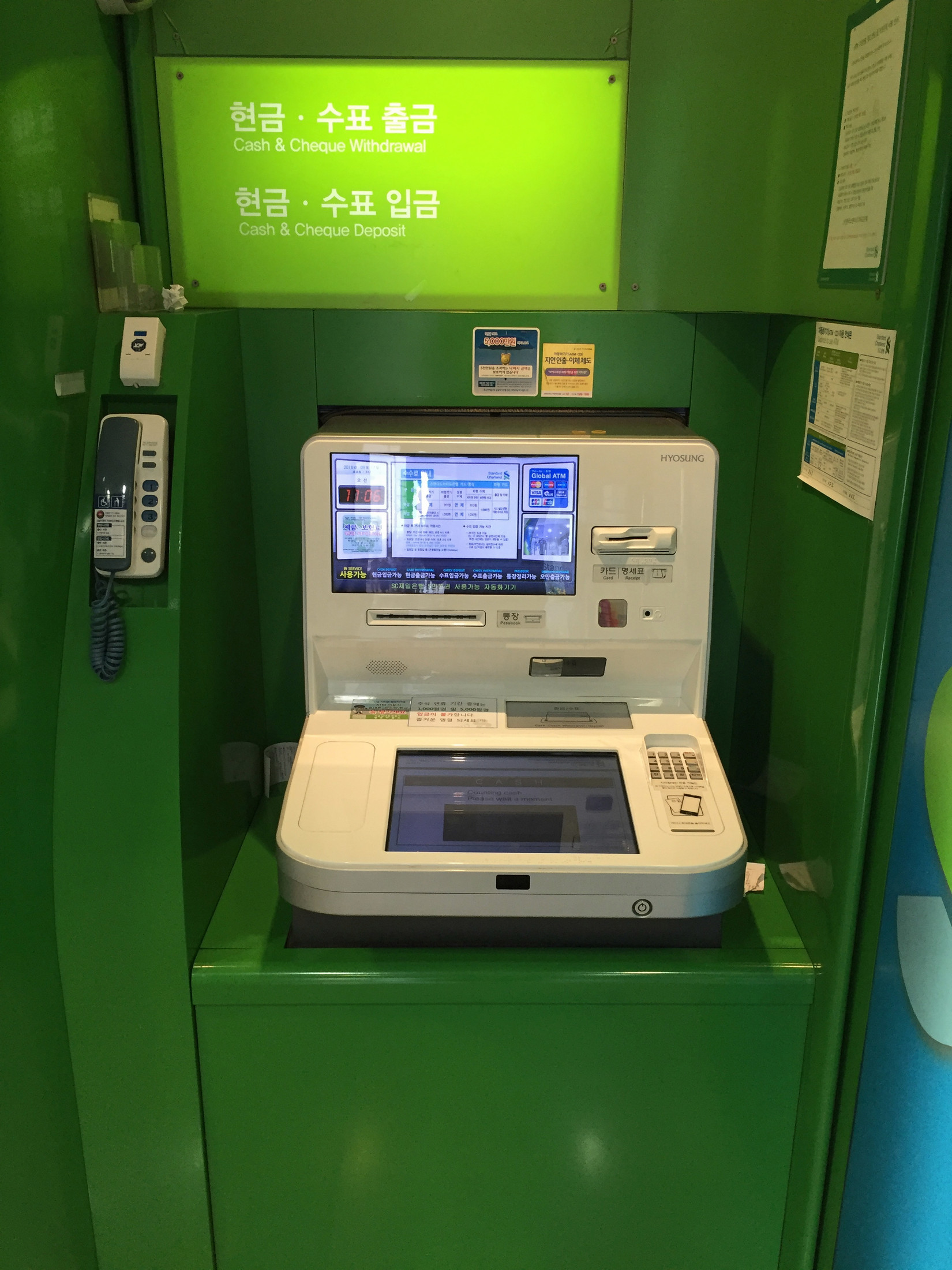
ATMs for cash withdrawals are available in major cities and at Incheon Airport, where banks, exchange services, and commercial ATMs are located in public terminal areas. ATMs are not installed in the duty-free area after immigration clearance. Before departure, check with your card issuer about overseas ATM access, as acceptance and fees depend on both the card and the machine.
Limitations and what to recheck before travel
Credit cards, while widely accepted at major hotels, department stores, and general shops, may not be usable at some smaller stores. Always check card acceptance before making a purchase. Foreign-issued credit cards cannot be used to buy or top up Tmoney at convenience stores, so cash is necessary for these transactions.
ATM acceptance and fees vary by card and machine. Global ATMs are found in major cities, but travelers should confirm with their card issuer that their card will work in Korea. Some ATMs may offer dynamic currency conversion, showing the transaction in both local and cardholder currency with the exchange rate and fees. The cardholder can decline conversion, and issuer fees may differ.
Before traveling, recheck exchange and payment details, especially for bank hours and services, as these can differ by location and provider. At airports, the availability of exchange services and ATMs depends on your terminal and arrival time. For the most current information, consult the airport and provider listings before your trip.
Gangneung and Sokcho are both major gateways to Gangwon State, but they use different transport networks. Gangneung has KTX service; Sokcho is reached by road from Seoul, followed by a separate local connection for places such as Seoraksan. The right route depends on your exact date, destination, and onward plan. There is no reliable one-size-fits-all answer about which city makes the easier day trip.
KTX to Gangneung
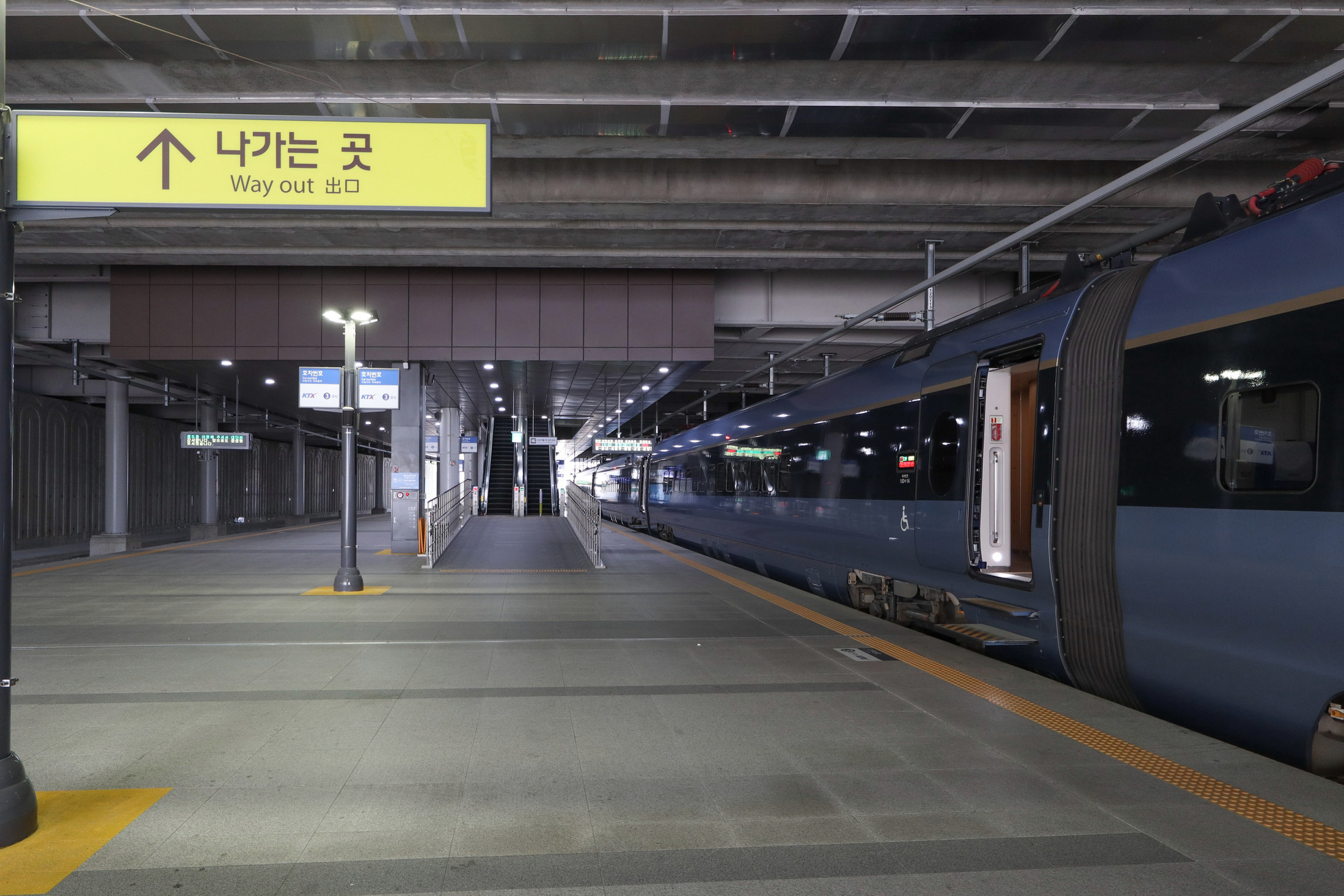
Search the date you plan to travel in Korail’s live ticket system or the Korail mobile app. Enter the departure station and Gangneung as the destination, then compare the trains actually offered for that date. Available stations, departure times, seats, and fares are date-specific; do not assume every KTX to Gangneung departs from the same Seoul station or runs at a fixed interval. Book a return at the same time if your return date is fixed, and confirm the departure station shown on each ticket.
Express and intercity buses
Both Seoul Express Bus Terminal and Dong Seoul Terminal serve destinations in Gangwon, including Gangneung and Sokcho, but express and intercity routes to the same city can use different terminals. Search the exact destination and date before choosing a departure point.
Departure station, Gangneung arrival, train, date, fare, and return service
The national tourism guide to express and intercity buses identifies Seoul Express Bus Terminal and Dong Seoul as terminals serving Gangneung, Sokcho, and other Gangwon destinations. It also warns that express and intercity buses for the same destination may leave from different terminals. Treat a city name alone as insufficient: match the terminal printed on the ticket to your location in Seoul and your onward connection.
Continuing from Sokcho toward Seoraksan
For Seoraksan Sogongwon, VisitKorea lists local buses 7 or 7-1 from Sokcho Intercity Bus Terminal to the park entrance. Check the live route display and destination variant before boarding; a bus number alone does not guarantee that a particular departure reaches Sogongwon. Sokcho’s express and intercity terminals are distinct, so if your coach arrives at the express terminal, verify the transfer to the intercity terminal and allow for it in your plan. Check current park access and trail closures separately from the bus journey. Kignal’s Seoraksan visitor guide covers park planning separately.
Plan the return before you go
Search the return trip for your actual date before committing to a long day outdoors. For a bus, confirm whether the return leaves from Sokcho Express or Sokcho Intercity Bus Terminal; for rail, confirm the Gangneung departure station and the Seoul-area arrival station on the ticket. Leave enough time to travel from the attraction back to that terminal, buy or retrieve the ticket if required, and handle delays. Do not rely on an assumed “last bus” or train from a general guide.
If you are traveling with a wheelchair or powered wheelchair, check the specific train and seat availability with Korail; a bookable accessible seat does not guarantee an accessible end-to-end journey. For bus accessibility, luggage limits, and terminal facilities, confirm details with the relevant operator before booking.
A simple way to choose
Start with the place you actually want to visit: search KTX for Gangneung or buses for the exact Gangneung/Sokcho terminal. Then check the local transfer, return departure, and total door-to-door plan for your date. If the return options leave too little time for your planned activity, change the date, choose a different departure, or stay overnight. This is a planning check, not a claim that one destination is inherently easier.
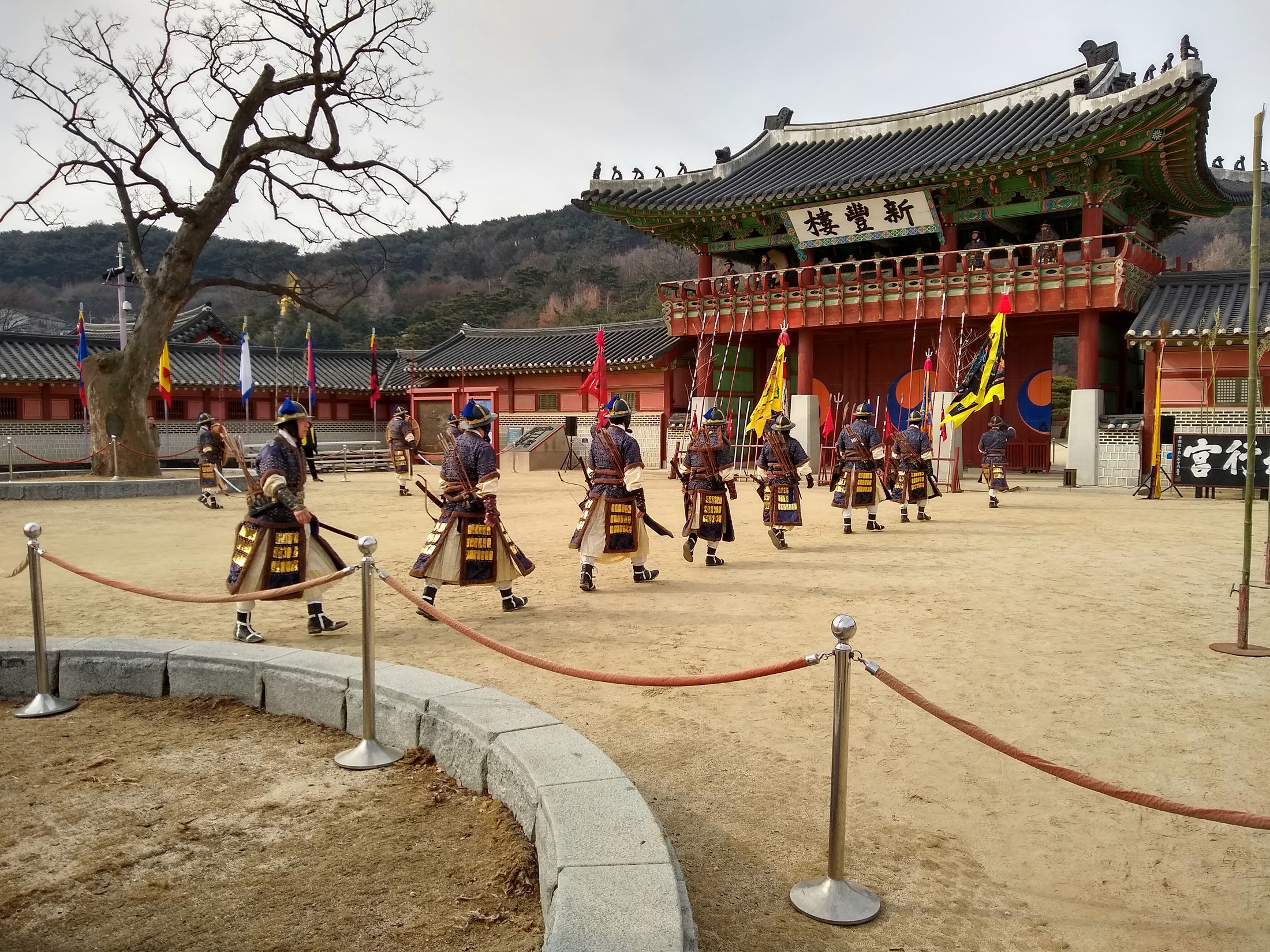
Suwon makes a rewarding day trip from Seoul for travelers interested in Joseon-era history, fortress architecture, and a walk that can be shortened or extended to suit the day. The UNESCO-listed Hwaseong Fortress is an urban defensive wall with four main gates; Hwaseong Haenggung, the royal temporary palace inside the fortress, is a separate attraction with its own hours and admission.
What makes Suwon worth the trip
King Jeongjo initiated the construction of Hwaseong in 1794 as part of a broader plan for Suwon. The fortress was completed in 1796. Jeong Yak-yong contributed engineering designs and devices, including the geojunggi lifting apparatus, as described in the National Museum of Korea’s construction-record overview. The four principal gates mark the cardinal directions: Janganmun to the north, Paldalmun to the south, Hwaseomun to the west, and Changnyongmun to the east. Their different settings, along with the ramparts and pavilions, make the fortress more than a single monument.
The route also pairs well with a palace visit and Suwon’s food neighborhoods. You can walk a selected section of the wall without buying a palace ticket, then choose whether to add Hwaseong Haenggung, Haengnidan Street, or Suwon Chicken Street.
Getting from Seoul to the fortress
Take Line 1 or the Suin–Bundang Line to Suwon Station. Visit Suwon’s transit directions list local buses 11 and 13 from the Novotel stop by the station to Hwaseong Haenggung or Suwon Seongji, followed by a short walk. From Gangnam, the same guide lists bus 3000 to the Paldalmun area. Check the live route and stop before boarding because bus service and stop names can change. If you need a refresher before crossing Seoul to the station, see Kignal’s Seoul subway guide.
For a first visit, the station-to-palace bus is a straightforward start. If you arrive at Paldalmun instead, begin at the south gate and adjust the walking order. Suwon Station is also the practical point to return to Seoul: check the next train or bus before leaving the fortress area, especially on weekends and holidays.
A comfortable morning-to-afternoon sequence
9:00–10:30 a.m. (planning estimate): Hwaseong Haenggung and Hwaryeongjeon. Start at the palace when it opens, then visit nearby Hwaryeongjeon. Visit Suwon’s suggested course gives this visit as approximately one hour; the extra half-hour is a practical allowance for entry and moving between the sites, not an official visit duration. The palace gives context for the royal and administrative side of the historic city. It is not the fortress wall itself.
10:30 a.m.–12:30 p.m. (planning estimate): choose a wall section. For a manageable walk, follow the official suggested course covering Seojangdae, Hwaseomun, and Janganmun. It is listed as about one hour; the longer block allows time for hills, photos, rest, and detours. You do not have to complete the entire circuit. Another option is to focus on the northern stretch around Janganmun and nearby defenses, then turn back when you have had enough.
12:30–1:30 p.m. (planning estimate): lunch on Haengnidan Street or at a nearby market. Haengnidan Street is close to the palace and has cafes and restaurants; menus and opening hours vary by business. For a more local market stop, Nammun Market is another option. Check individual businesses on the day rather than planning around a particular shop.
1:30–3:30 p.m. (planning estimate): add a second neighborhood or finish the wall. If you still have energy, head toward Suwoncheon and Suwon Chicken Street for the city’s well-known fried-chicken restaurants. Haengnidan and Chicken Street can be combined with a scenic wall-side walk, but they are separate areas; use a current map and allow time for the walk between them. If you prefer a shorter day, finish after lunch and return to Suwon Station. These blocks describe a flexible afternoon plan; they do not include the Seoul–Suwon journey or promise a particular return time.
Optional walking plans
Short visit: Hwaseong Haenggung and Hwaryeongjeon, then a short nearby wall section.
Half-day walk: choose the official Seojangdae–Hwaseomun–Janganmun course and pause for lunch.
Longer day: add a second wall section and either Haengnidan Street or Suwon Chicken Street. Avoid treating a full fortress circuit plus multiple neighborhoods as a fixed-time itinerary.
These are sightseeing choices, not step-free routes. The wall follows varied terrain and includes slopes and stairs. If mobility, heat, rain, or fatigue is a concern, use the palace and a short accessible-by-condition section as the core plan, and confirm current access arrangements with the venue before setting out.
Tickets, hours, and practical access
The fortress wall is generally open without an admission fee; access to Hwaseong Haenggung is ticketed separately. The current Visit Suwon visitor guide lists the palace as open daily from 9 a.m. to 6 p.m.; its listed admission is ₩2,000 for adults, ₩1,500 for youth and military visitors, and ₩1,000 for children. Recheck the official visitor page before travel for holiday exceptions, current fees, and any event closures.
The 2026 palace night program runs Fridays, Saturdays, Sundays, and holidays from 6–9:30 p.m., with last admission at 9 p.m., through November 1, 2026. Do not assume night entry is available outside its published dates or that palace night hours apply to every fortress facility. The wall and palace are separate experiences with different access rules.
Before you return to Seoul
Choose your final stop with the return journey in mind. From the palace area, use the current local bus directions back toward Suwon Station; from the Paldalmun side, check which station bus or local connection serves your location. Confirm the last practical departure for your date in Korail or the bus operator’s booking service before you begin a long walk. If the weather changes or the wall feels strenuous, shorten the route rather than rushing to fit every gate into one day.
Photo: Mobius6 / Wikimedia Commons, CC BY-SA 4.0. KIGNAL_SIGNATURE_V1 adaptive exposure/color correction and resize; documentary objects unchanged. Adapted image distributed under CC BY-SA 4.0.
Incheon’s Chinatown and Open Port district make a compact, history-rich walk from Incheon Station. The route combines Chinatown’s food streets, the Jjajangmyeon Museum, Jayu Park, and the former port district’s museums and historic buildings. Plan roughly half a day, with more time if you want a sit-down meal or several museum visits.
Why the neighborhood matters
Incheon Port opened to international trade in 1883, and a Qing settlement followed in 1884. The port’s history brought Chinese, Japanese, and other international communities into close proximity. The streets today reflect that layered history, although many surviving buildings have later uses and should not be mistaken for unchanged nineteenth-century sites.
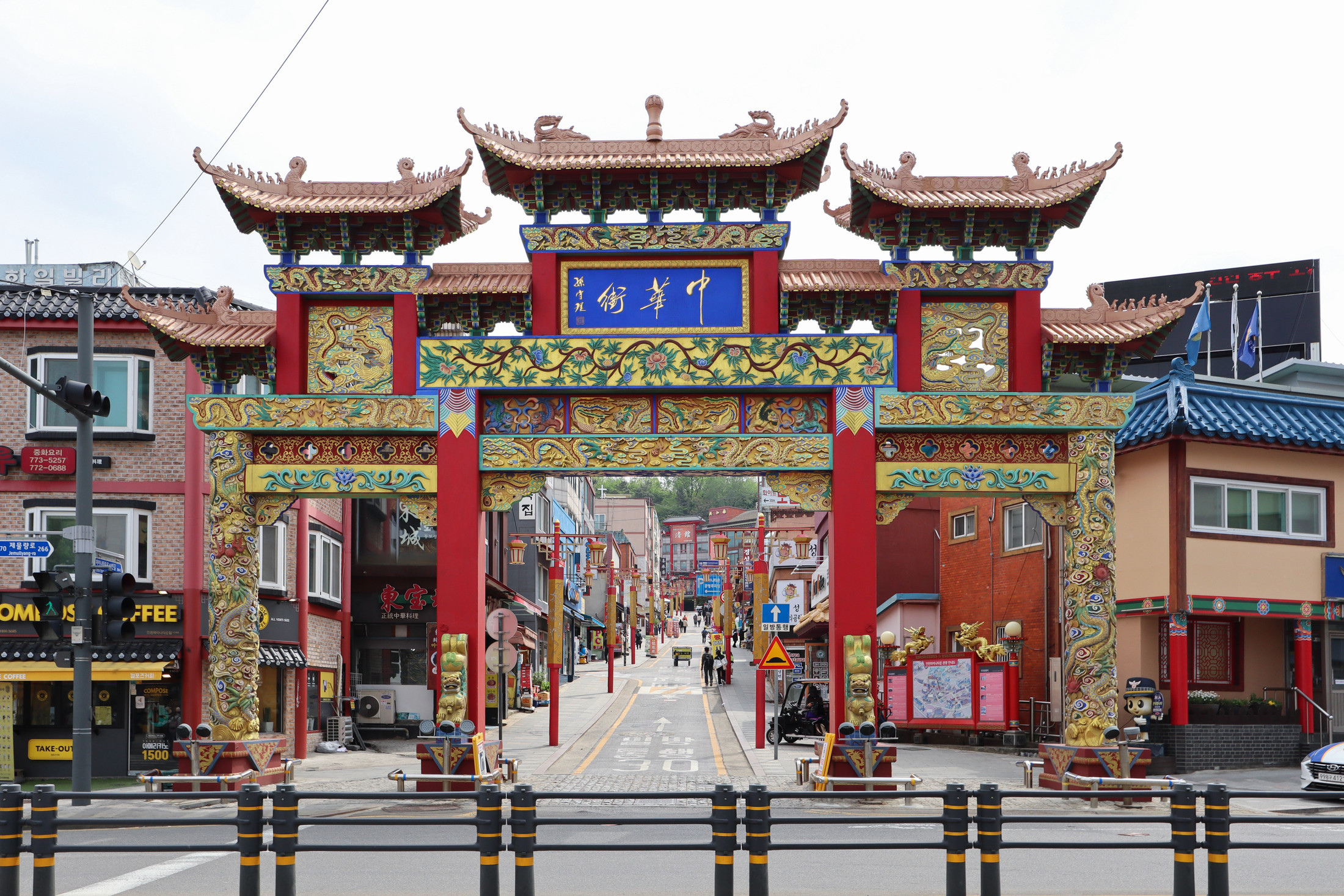
1. Enter Chinatown and follow the main uphill streets. Pass through the prominent Chinese-style gate and explore Chinatown-ro and its side lanes. The neighborhood is built on a slope, so wear shoes suitable for inclines and steps. Treat the walk as a choose-your-own loop rather than trying to cover every lane. The city’s current Chinatown and Open Port route also connects Chinatown, Jayu Park, and the historic port district.
2. Visit the Jjajangmyeon Museum. The museum is in the former Gonghwachun building at 56-14 Chinatown-ro. Its exhibits explore the history of jajangmyeon and the restaurant’s place in that story. The current operator visitor leaflet lists Tuesday–Sunday hours of 9 a.m.–6 p.m., with last admission at 5:30 p.m.; it is closed Mondays, January 1, and on Lunar New Year and Chuseok days. If Monday is a public holiday, the following day is listed as the closure day.
The operator’s current visitor leaflet lists individual adult admission at ₩1,000, and Incheon City’s tourism listing gives the same adult price. The listings differ on youth and child categories, so verify the applicable age and rate with the museum before buying a youth or child ticket. The Jjajangmyeon Museum and Open Port Museum are separate venues.
3. Climb to Jayu Park. From Chinatown, continue uphill to Jayu Park for a green-space break and views over the port area. The park sits above the Chinatown streets, so budget time for the climb and return descent. If the slope is not suitable for your group, skip the park and continue at street level toward the Open Port district.
4. Walk down into the Open Port historic district. Follow the pedestrian streets toward Gaehangnuri-gil and the historic port area. The Incheon Open Port Museum is at 89 Sinpo-ro 23beon-gil, in the former Japanese First Bank Incheon Branch. It covers the port’s opening and related modern history. The city lists adult admission at ₩500, youth and military admission at ₩300, and free entry for children. Its hours are Tuesday–Sunday, 9 a.m.–6 p.m., last entry 5:30 p.m.; it is closed Mondays, January 1, Lunar New Year and Chuseok. If Monday is a public holiday, the following day is listed as closed. Check the museum’s current notice before going, especially if your visit falls near a holiday.
Allow time to look at the surrounding streets, but distinguish the Open Port Museum from nearby venues such as the Modern Architecture Exhibition Hall and Daebul Hotel Exhibition Hall; they are separate venues rather than one ticketed building. You can end the walk here or return to Incheon Station after checking your transit route.
Food to try
Jajangmyeon is the signature meal associated with Chinatown. Local food guides also highlight gonggalppang, a hollow, crisp bread, and hongdubyeong, a filled red-bean bread. These are options rather than guaranteed offerings at every shop, and current prices and opening hours vary. Snack Street near the station is one area to look for snacks. Choose a restaurant based on the menu and queue when you arrive; this guide does not claim a neighborhood-wide average price.
Practical notes
The core walk is mostly outdoors and includes hills, stairs, and uneven sections. The order above minimizes backtracking between the station, Chinatown, the hilltop park, and the lower port district, but the slope may make the route tiring. You can omit Jayu Park or one museum to shorten it. Museum tickets are separate unless you deliberately buy the operator’s multi-museum pass; check which venues it covers before purchase. Keep enough time to return to Incheon Station and confirm your onward train or subway service before the evening. For other trip ideas, browse Kignal’s destination guides.
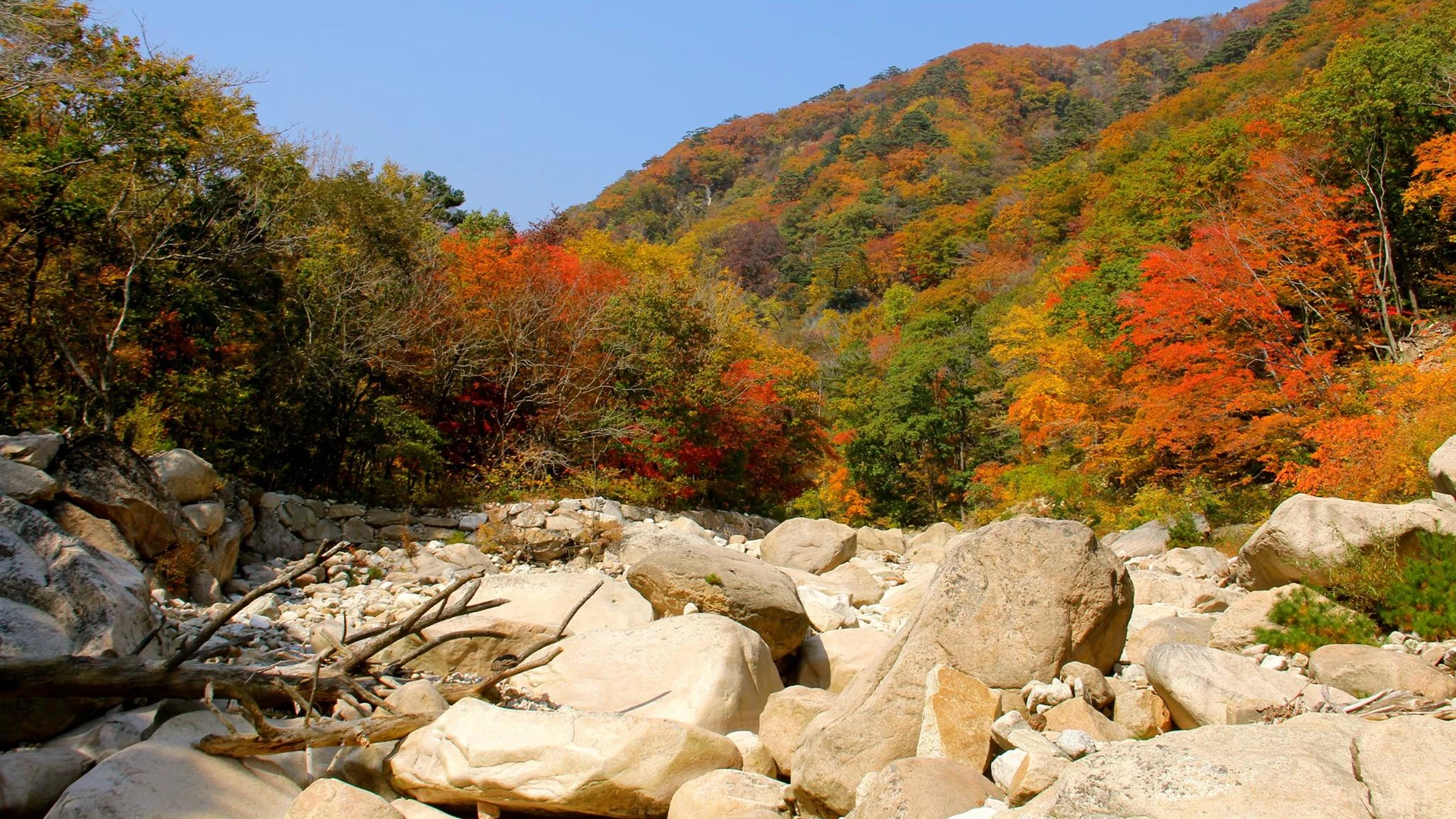
Seoraksan in autumn, photographed in 2015. Photo: Joycekim77 / Wikimedia Commons, CC BY-SA 3.0. Cropped to 16:9. Source · License
Use current local foliage observations, travel time and hiking effort to decide whether a short Seoraksan visit is enough or an overnight stay makes more sense.
The decision at a glance
Seoraksan had its first foliage observation on September 28, 2026. More recent Korea Meteorological Administration photographs marked local color at Yangpok Shelter, Huiungak Shelter, Daecheongbong and Biseondae on October 19; the latest Sogongwon photograph is from October 16. Those dated site photographs show color at particular points, not a confirmed peak across the whole mountain. If your trip depends on a specific color level, check the latest location photograph for the area you intend to visit.
Seoraksan makes sense for travelers who put a mountain setting high on the trip list and can accept weather and trail checks. The park-wide KNPS control feed displayed normal status when checked, but its underlying status timestamp was August 17; it is not a guarantee that every route will be open on your visit date. A short visit can be a conditional day trip from Seoul. Substantial hiking, an early start or room to change plans for weather makes an overnight stay more useful.
Choose the amount of walking
For a low-hiking Seoraksan visit, keep the plan near Sogongwon and the lower park, with only a short walk and a cable-car attempt if it runs. This is a smaller commitment than a major trail, but the cable car does not remove ticket queues, weather uncertainty or walking around the stations. Treat the lower-park visit as the plan you can still use if the cable car stops.
For a moderate Seoraksan walk, KNPS describes Sogongwon to Biseondae as 3.0 km and about 1 hour 20 minutes one way. It begins gently but includes some sloped stone steps. The return walk and your transport connection need additional time, so this is a different commitment from a brief entrance-area stop. Check that this particular route is accessible on the travel day.
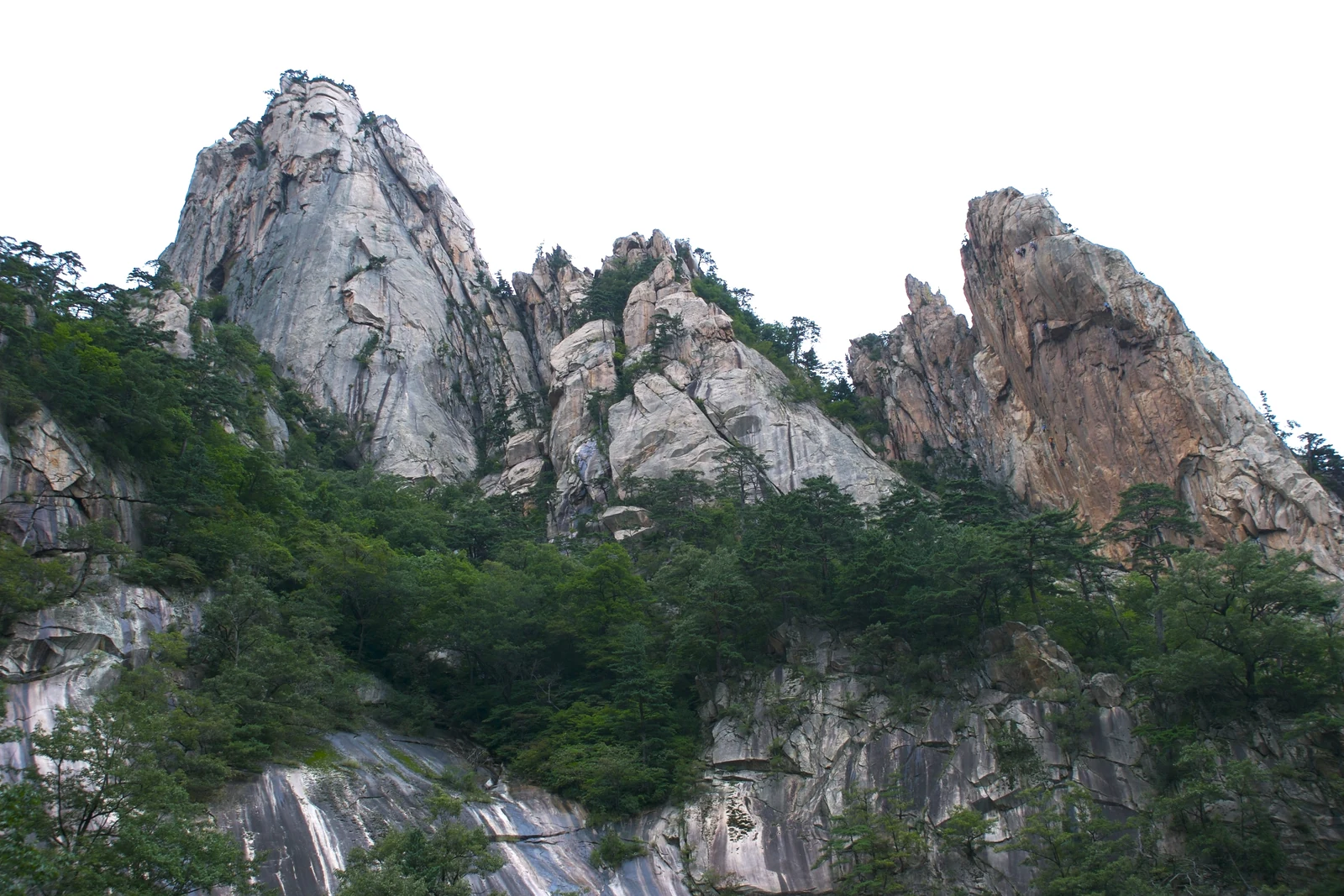
Biseondae in Seoraksan, photographed in 2007. Photo: Yoo Chung / Wikimedia Commons, CC BY-SA 3.0. Resized. Source · License
Full Seoraksan hiking is a separate plan. KNPS describes the Osaek-to-Daecheongbong route as about 10 km and 8 hours return, with steep sections. Osaek is a different trailhead from the Sokcho-to-Sogongwon approach discussed here; do not treat it as a walk that starts after the city bus arrives at Sogongwon. For this scale of hike, Seoraksan favors an overnight stay and an early start, with the exact route, entry rules, daylight and weather checked before departure.
Travel, cable car and access checks
The Seoul-to-Sokcho express-bus leg is about 2 hours 30 minutes according to the cable-car operator; Sokcho municipal routes 7 and 7-1 continue toward Seoraksan Sogongwon. Allow roughly 2.5–3.5 hours one way to the park approach before queues as a planning range, not a fixed timetable. A Seoraksan day trip depends on an early enough outbound bus, the local transfer, a workable return seat and how much park time you want. Confirm the actual buses for your date before committing to a same-day return.
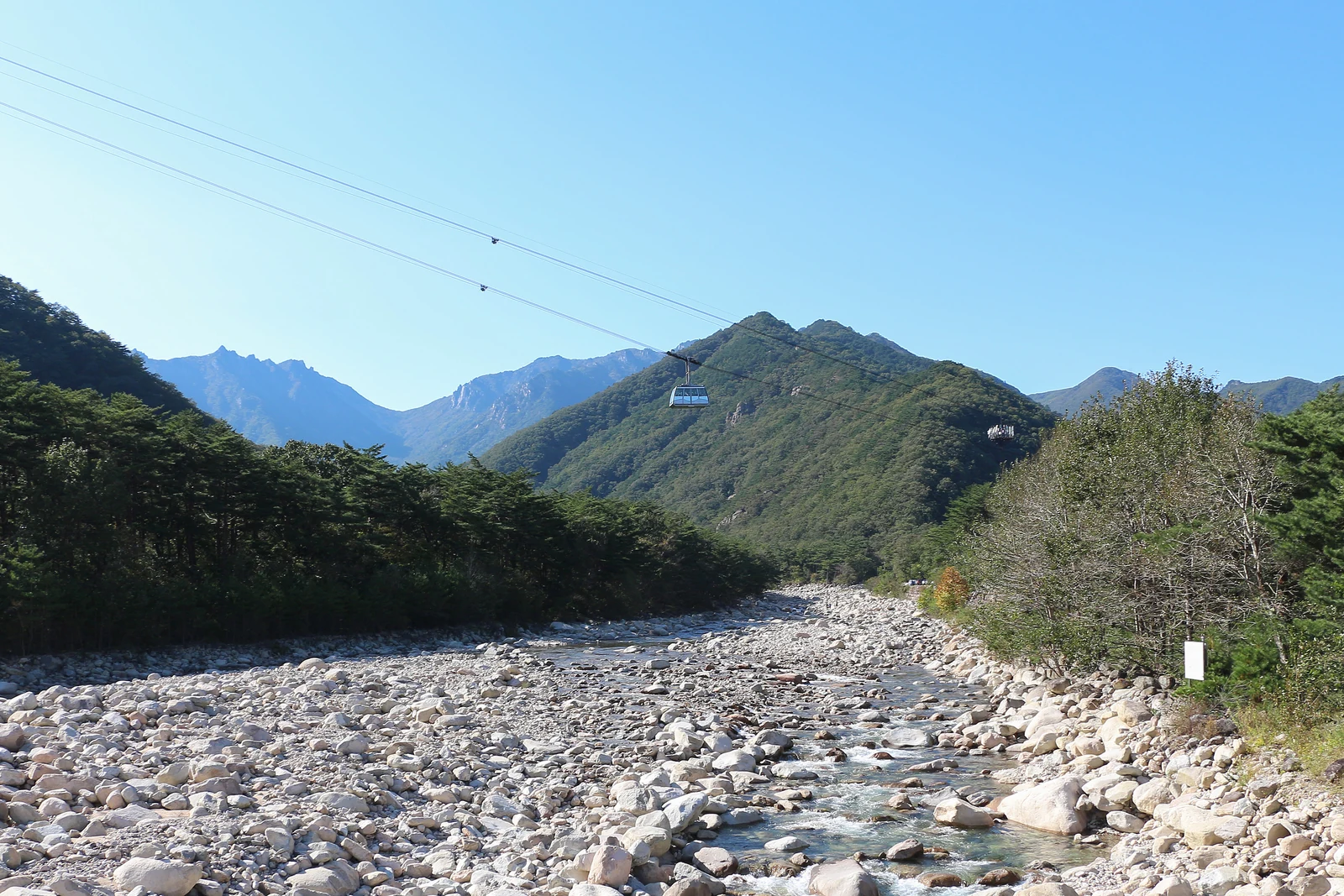
The Seorak Cable Car does not take advance reservations: buy the ticket on site on the visit day. The operator says daily hours can change with weather, its hours were pending when checked, strong wind or bad weather can suspend service, and a wait is possible. For Seoraksan, the cable car is an optional way to change the view and walking demand when conditions permit; it cannot be the guarantee that makes a long journey easy or replaces a full hike.
Seoraksan Cable Car, photographed in 2022. Photo: Bernard Gagnon / Wikimedia Commons, CC0 1.0. Resized. Source · License
Seoraksan trail rules are route-specific. Heullimgol requires a reservation during its October 1 to November 30, 2026 operating period; that rule does not apply to every lower-park walk. Recheck KNPS control, the chosen trail’s entry window and any new weather restriction immediately before visiting. A normal park-wide status and a working cable car are separate questions.
Is the trip worth it for you?
Choose a short Seoraksan day trip if mountain scenery matters enough to justify the long bus journey, you are content with a lower-park visit, and you can adapt if weather cancels the cable car. Skip a same-day attempt if you need guaranteed cable access or substantial hiking time without an early start and a verified return connection. For a fuller trail day, Seoraksan is better planned with an overnight stay; the main tradeoff is extra time and flexibility against an additional night away from Seoul.
If those conditions do not fit your trip, use the published Korea fall foliage 2026 guide to compare lower-commitment and later-season alternatives. Seoraksan remains a conditional mountain choice, and the latest local foliage photographs should be checked again before you travel.
Seoraksan is known for its mountain trails, but travelers should recheck course and weather conditions before planning their visit. The Korea Meteorological Administration (KMA) has not confirmed the peak foliage timing for the entire mountain as of now.
Odaesan offers a variety of hiking options, including a lower-effort walk in the Woljeongsa area or a longer hike on the Seonjaegil trail. However, reaching Jinbu requires a local transfer, which may complicate day trips.
Choose by timing and effort
For those planning to visit Naejangsan, forecasts suggest that foliage may reach 50% by November 4, with a later prediction of November 11. However, neither date confirms the current peak, so flexibility is advised.
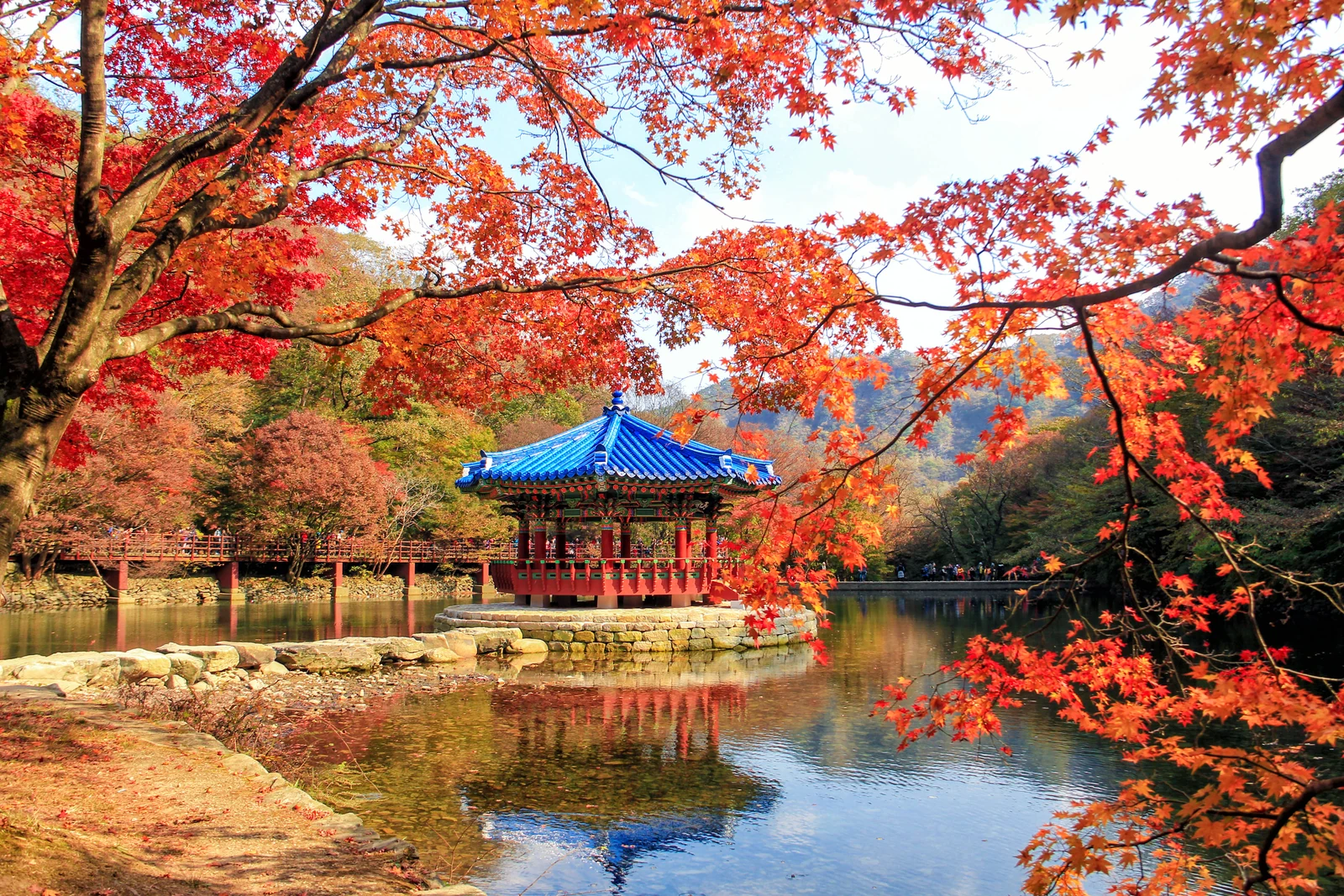
Naejangsan in autumn, photographed in 2016. Photo: Tung Thanh Dang / Wikimedia Commons, CC BY-SA 3.0. Resized. Source · License
Hwadam Forest requires advance online reservations for its autumn booking window from October 23 to November 15. This location is not a peak foliage observation site, so travelers should consider this when planning their visit.
Nami Island is accessible via a ferry that operates through November 22. This option is suitable for travelers who prefer to limit hiking, but access depends on weather conditions, and the current peak foliage status is unverified.
Before you leave
Travelers should consider Seoraksan for an overnight mountain trip, as it is a conditional day trip from Seoul with roughly 2.5–3.5 hours one-way planning to the park approach before queues. Overnight is preferred for fuller hiking, making it suitable for travelers wanting a more extensive experience in the mountains.
For those connecting through Jinbu, Odaesan provides a suitable option with its shorter hiking trails, but travelers should be aware that local transfers are necessary to reach this area. This option is conditional for day trips, depending on connections and available time.