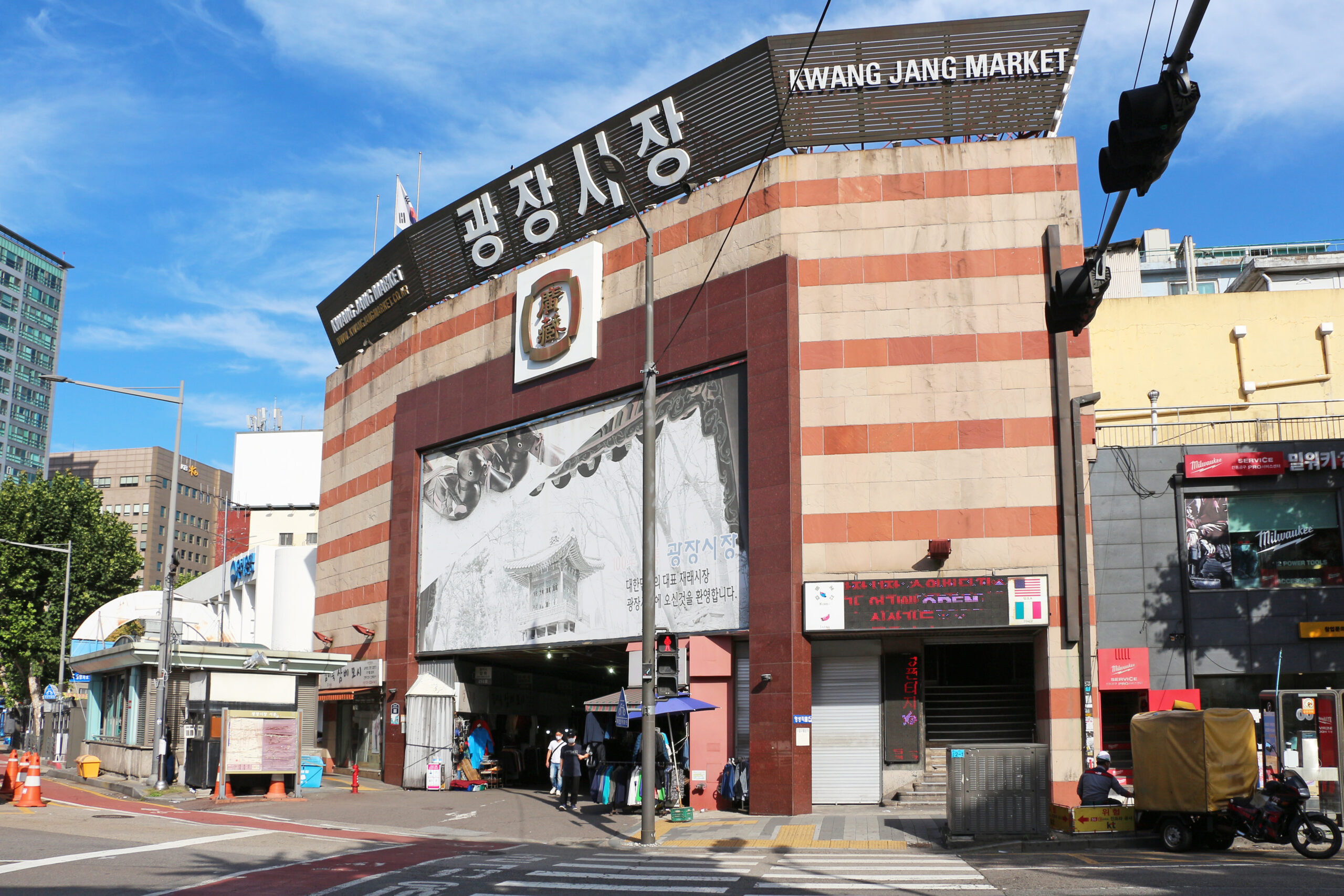
Photo: Bgag / Wikimedia Commons, CC0 1.0. Adaptations retain CC0 1.0.

A practical guide to Korea’s traditional markets, highlighting where to go, what to expect, and how to prepare for your visit.
Choose the right approach
Traditional markets are not one uniform shopping format. Gwangjang in Seoul combines a food street with textiles and other goods, so decide whether you want a meal or product shopping before choosing an entrance and time. Namdaemun is a broader goods market with clothing, kitchenware, gifts and food; its current visitor information options may help you orient yourself. Jagalchi in Busan is a seafood-focused choice. Pick the market by product and neighborhood, then check its own current listing. A food area may open on a different schedule from general stores, and one stall’s payment methods do not establish a rule for the whole market.
How to do it
Before leaving, save the market name in Korean and identify the nearest transit stop. Check the route from your lodging and save the return stop so that you can leave through a different market gate without losing your way.
At the market, look for a directory or numbered gate so you can find your way back. Walk one short loop before buying if you want to compare choices.
At a food stall, inspect the displayed menu and price, ask what the portion includes, and confirm how to pay before ordering. If the price or serving size is unclear, ask before ordering rather than relying on a photo of a different stall.
If a card sign is visible, it still may not apply to every vendor. Bring a second payment method. Keep bags out of narrow circulation lanes and ask before photographing a seller or food preparation area.
Do not assume bargaining is expected on every purchase. Fixed-price food and shops differ from some secondhand or flea-market settings. Ask politely whether a price is fixed rather than beginning with an aggressive offer. For food, choose a stall whose handling and storage are comfortable for you; do not infer hygiene from a market’s popularity alone. Some participating markets publish visitor services, but verify payment, pricing and hygiene conditions at the individual stall.
What to verify and avoid
Check the section-specific opening hours and any regular closure before making a market the anchor of a day trip. If you are buying seafood or other perishables, think about when you will return to your accommodation. A market meal can be part of a route, but allow time to locate the stall and handle possible queues. Use the official market or tourism listing for the specific site rather than copying a generic “traditional market hours” claim from another city.
For a first visit, choose one market instead of trying to cover several in a short window. Gwangjang suits a food-and-textiles stop, Namdaemun suits broader goods browsing, and Jagalchi suits a seafood-focused visit in Busan. Their product mixes are documented, but a particular stall, menu, payment method or opening time must be checked locally. Keep a route back to the nearest transit stop, especially if a market has several gates.