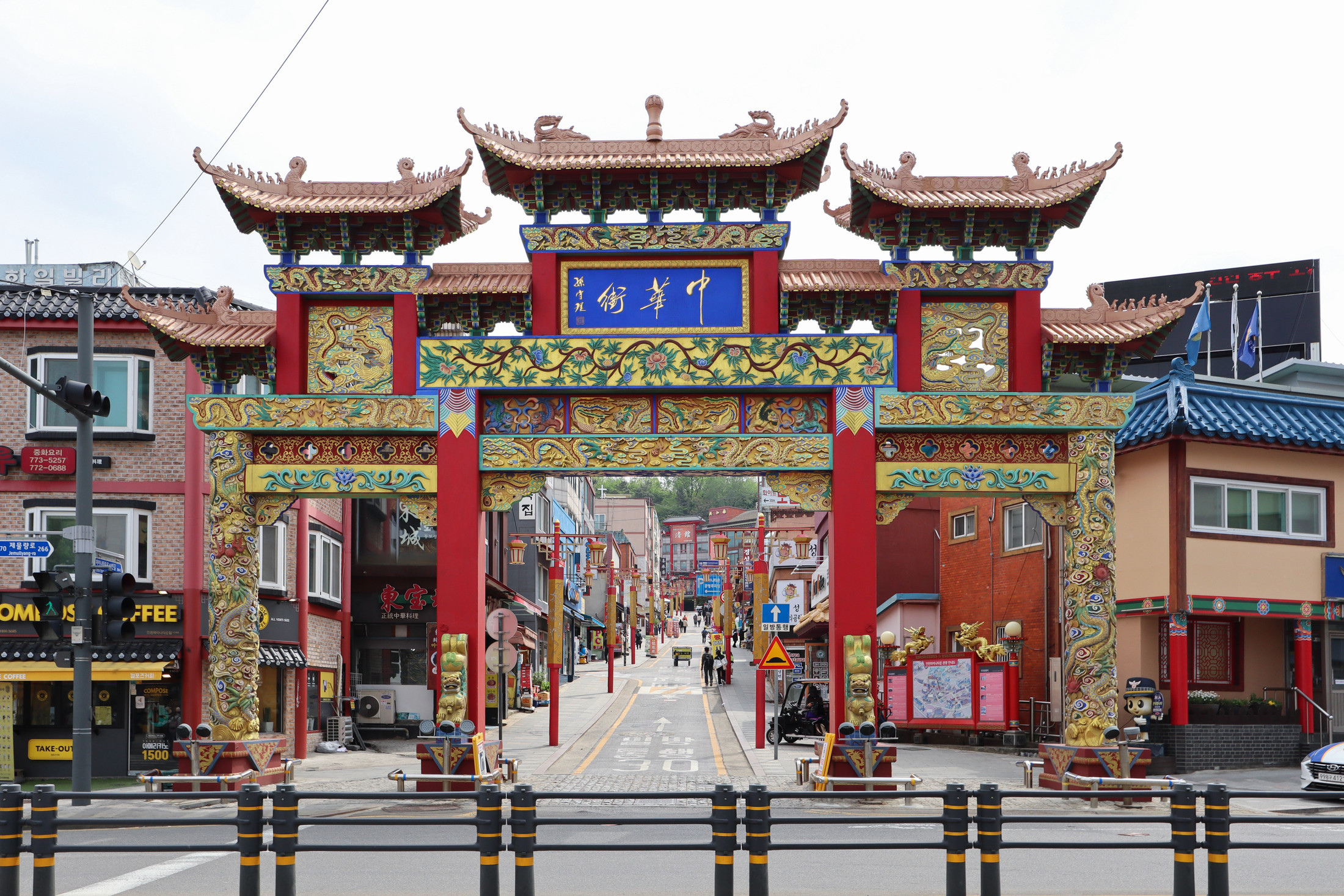
Photo: Mobius6 / Wikimedia Commons, CC BY-SA 4.0. KIGNAL_SIGNATURE_V1 adaptive exposure/color correction and resize; documentary objects unchanged. Adapted image distributed under CC BY-SA 4.0.

Incheon’s Chinatown and Open Port district make a compact, history-rich walk from Incheon Station. The route combines Chinatown’s food streets, the Jjajangmyeon Museum, Jayu Park, and the former port district’s museums and historic buildings. Plan roughly half a day, with more time if you want a sit-down meal or several museum visits.
Why the neighborhood matters
Incheon Port opened to international trade in 1883, and a Qing settlement followed in 1884. The port’s history brought Chinese, Japanese, and other international communities into close proximity. The streets today reflect that layered history, although many surviving buildings have later uses and should not be mistaken for unchanged nineteenth-century sites.
Start at Incheon Station
From Seoul, take Line 1 to Incheon Station. The Seoul Metropolitan Government identifies Seoul Station as a Line 1 station, and Incheon City describes the Gyeongin section as connecting Guro and Incheon Station. Some express services terminate at Dongincheon or Bupyeong, so check the destination and stopping pattern before boarding. If you start elsewhere in Seoul, use a live journey planner to find your connection to Line 1. The Chinatown gate is across the road from the station.
Suggested walking sequence
1. Enter Chinatown and follow the main uphill streets. Pass through the prominent Chinese-style gate and explore Chinatown-ro and its side lanes. The neighborhood is built on a slope, so wear shoes suitable for inclines and steps. Treat the walk as a choose-your-own loop rather than trying to cover every lane. The city’s current Chinatown and Open Port route also connects Chinatown, Jayu Park, and the historic port district.
2. Visit the Jjajangmyeon Museum. The museum is in the former Gonghwachun building at 56-14 Chinatown-ro. Its exhibits explore the history of jajangmyeon and the restaurant’s place in that story. The current operator visitor leaflet lists Tuesday–Sunday hours of 9 a.m.–6 p.m., with last admission at 5:30 p.m.; it is closed Mondays, January 1, and on Lunar New Year and Chuseok days. If Monday is a public holiday, the following day is listed as the closure day.
The operator’s current visitor leaflet lists individual adult admission at ₩1,000, and Incheon City’s tourism listing gives the same adult price. The listings differ on youth and child categories, so verify the applicable age and rate with the museum before buying a youth or child ticket. The Jjajangmyeon Museum and Open Port Museum are separate venues.
3. Climb to Jayu Park. From Chinatown, continue uphill to Jayu Park for a green-space break and views over the port area. The park sits above the Chinatown streets, so budget time for the climb and return descent. If the slope is not suitable for your group, skip the park and continue at street level toward the Open Port district.
4. Walk down into the Open Port historic district. Follow the pedestrian streets toward Gaehangnuri-gil and the historic port area. The Incheon Open Port Museum is at 89 Sinpo-ro 23beon-gil, in the former Japanese First Bank Incheon Branch. It covers the port’s opening and related modern history. The city lists adult admission at ₩500, youth and military admission at ₩300, and free entry for children. Its hours are Tuesday–Sunday, 9 a.m.–6 p.m., last entry 5:30 p.m.; it is closed Mondays, January 1, Lunar New Year and Chuseok. If Monday is a public holiday, the following day is listed as closed. Check the museum’s current notice before going, especially if your visit falls near a holiday.
Allow time to look at the surrounding streets, but distinguish the Open Port Museum from nearby venues such as the Modern Architecture Exhibition Hall and Daebul Hotel Exhibition Hall; they are separate venues rather than one ticketed building. You can end the walk here or return to Incheon Station after checking your transit route.
Food to try
Jajangmyeon is the signature meal associated with Chinatown. Local food guides also highlight gonggalppang, a hollow, crisp bread, and hongdubyeong, a filled red-bean bread. These are options rather than guaranteed offerings at every shop, and current prices and opening hours vary. Snack Street near the station is one area to look for snacks. Choose a restaurant based on the menu and queue when you arrive; this guide does not claim a neighborhood-wide average price.
Practical notes
The core walk is mostly outdoors and includes hills, stairs, and uneven sections. The order above minimizes backtracking between the station, Chinatown, the hilltop park, and the lower port district, but the slope may make the route tiring. You can omit Jayu Park or one museum to shorten it. Museum tickets are separate unless you deliberately buy the operator’s multi-museum pass; check which venues it covers before purchase. Keep enough time to return to Incheon Station and confirm your onward train or subway service before the evening. For other trip ideas, browse Kignal’s destination guides.