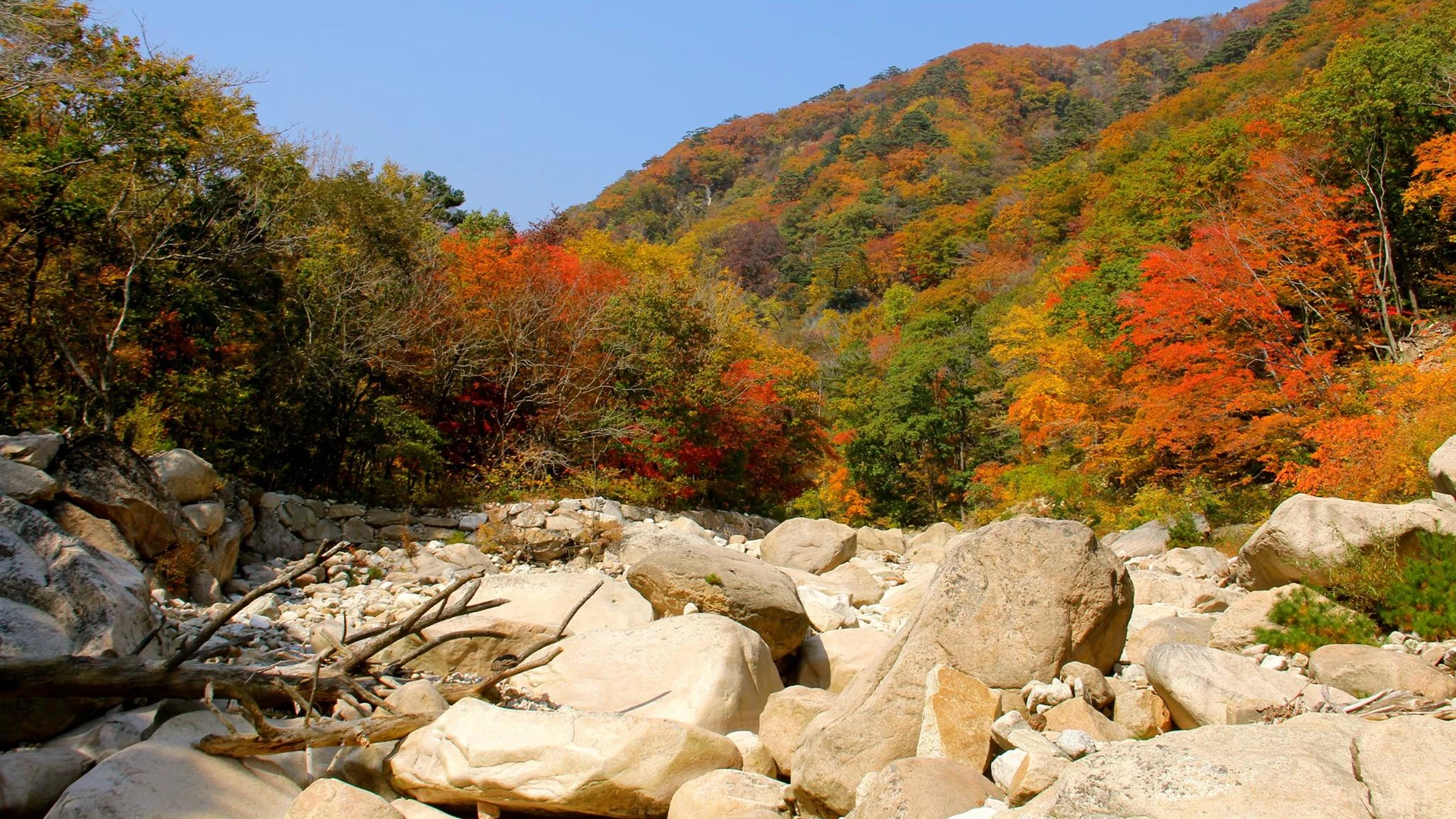

Use current local foliage observations, travel time and hiking effort to decide whether a short Seoraksan visit is enough or an overnight stay makes more sense.
The decision at a glance
Seoraksan had its first foliage observation on September 28, 2026. More recent Korea Meteorological Administration photographs marked local color at Yangpok Shelter, Huiungak Shelter, Daecheongbong and Biseondae on October 19; the latest Sogongwon photograph is from October 16. Those dated site photographs show color at particular points, not a confirmed peak across the whole mountain. If your trip depends on a specific color level, check the latest location photograph for the area you intend to visit.
Seoraksan makes sense for travelers who put a mountain setting high on the trip list and can accept weather and trail checks. The park-wide KNPS control feed displayed normal status when checked, but its underlying status timestamp was August 17; it is not a guarantee that every route will be open on your visit date. A short visit can be a conditional day trip from Seoul. Substantial hiking, an early start or room to change plans for weather makes an overnight stay more useful.
Choose the amount of walking
For a low-hiking Seoraksan visit, keep the plan near Sogongwon and the lower park, with only a short walk and a cable-car attempt if it runs. This is a smaller commitment than a major trail, but the cable car does not remove ticket queues, weather uncertainty or walking around the stations. Treat the lower-park visit as the plan you can still use if the cable car stops.
For a moderate Seoraksan walk, KNPS describes Sogongwon to Biseondae as 3.0 km and about 1 hour 20 minutes one way. It begins gently but includes some sloped stone steps. The return walk and your transport connection need additional time, so this is a different commitment from a brief entrance-area stop. Check that this particular route is accessible on the travel day.
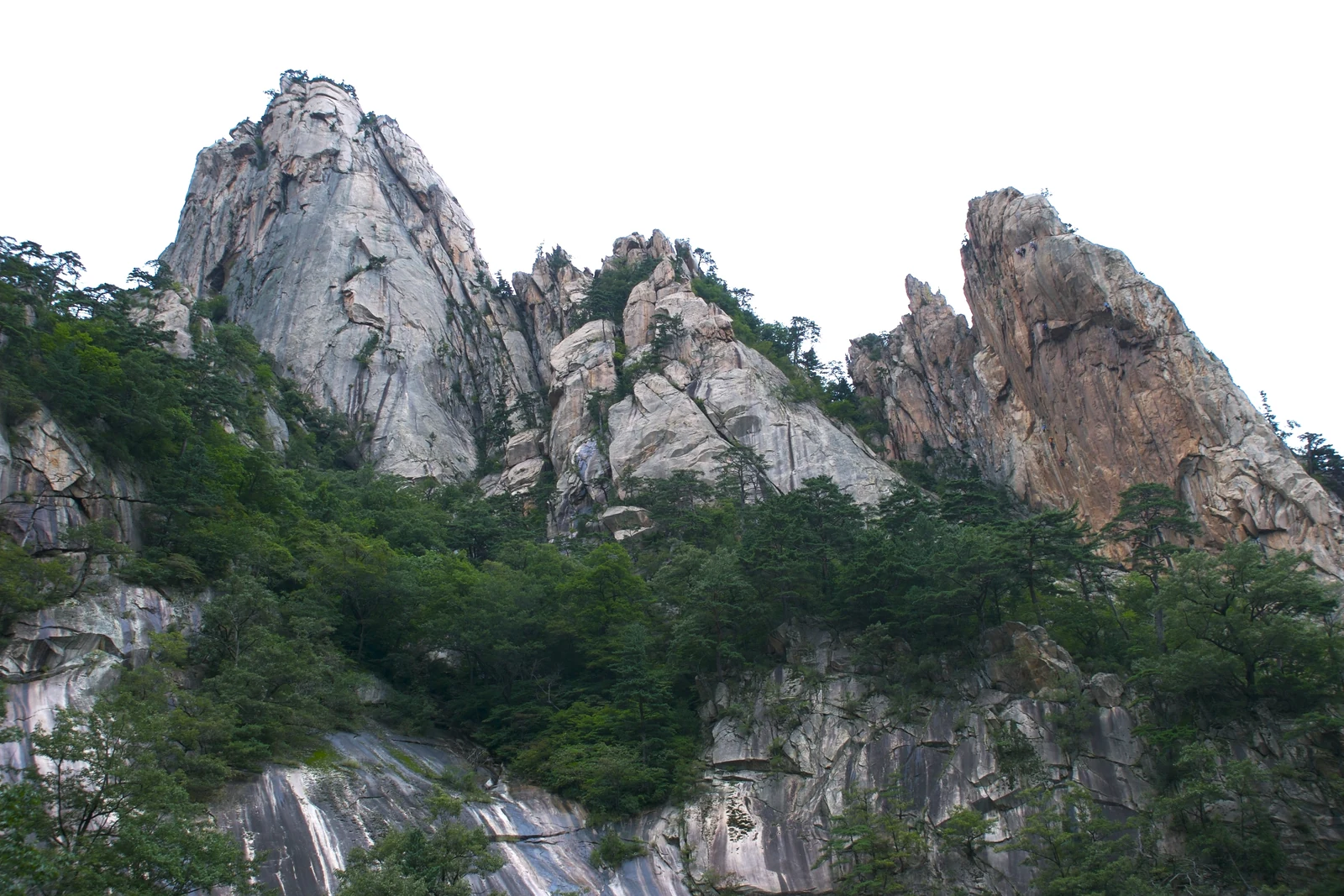

Full Seoraksan hiking is a separate plan. KNPS describes the Osaek-to-Daecheongbong route as about 10 km and 8 hours return, with steep sections. Osaek is a different trailhead from the Sokcho-to-Sogongwon approach discussed here; do not treat it as a walk that starts after the city bus arrives at Sogongwon. For this scale of hike, Seoraksan favors an overnight stay and an early start, with the exact route, entry rules, daylight and weather checked before departure.
Travel, cable car and access checks
The Seoul-to-Sokcho express-bus leg is about 2 hours 30 minutes according to the cable-car operator; Sokcho municipal routes 7 and 7-1 continue toward Seoraksan Sogongwon. Allow roughly 2.5–3.5 hours one way to the park approach before queues as a planning range, not a fixed timetable. A Seoraksan day trip depends on an early enough outbound bus, the local transfer, a workable return seat and how much park time you want. Confirm the actual buses for your date before committing to a same-day return.
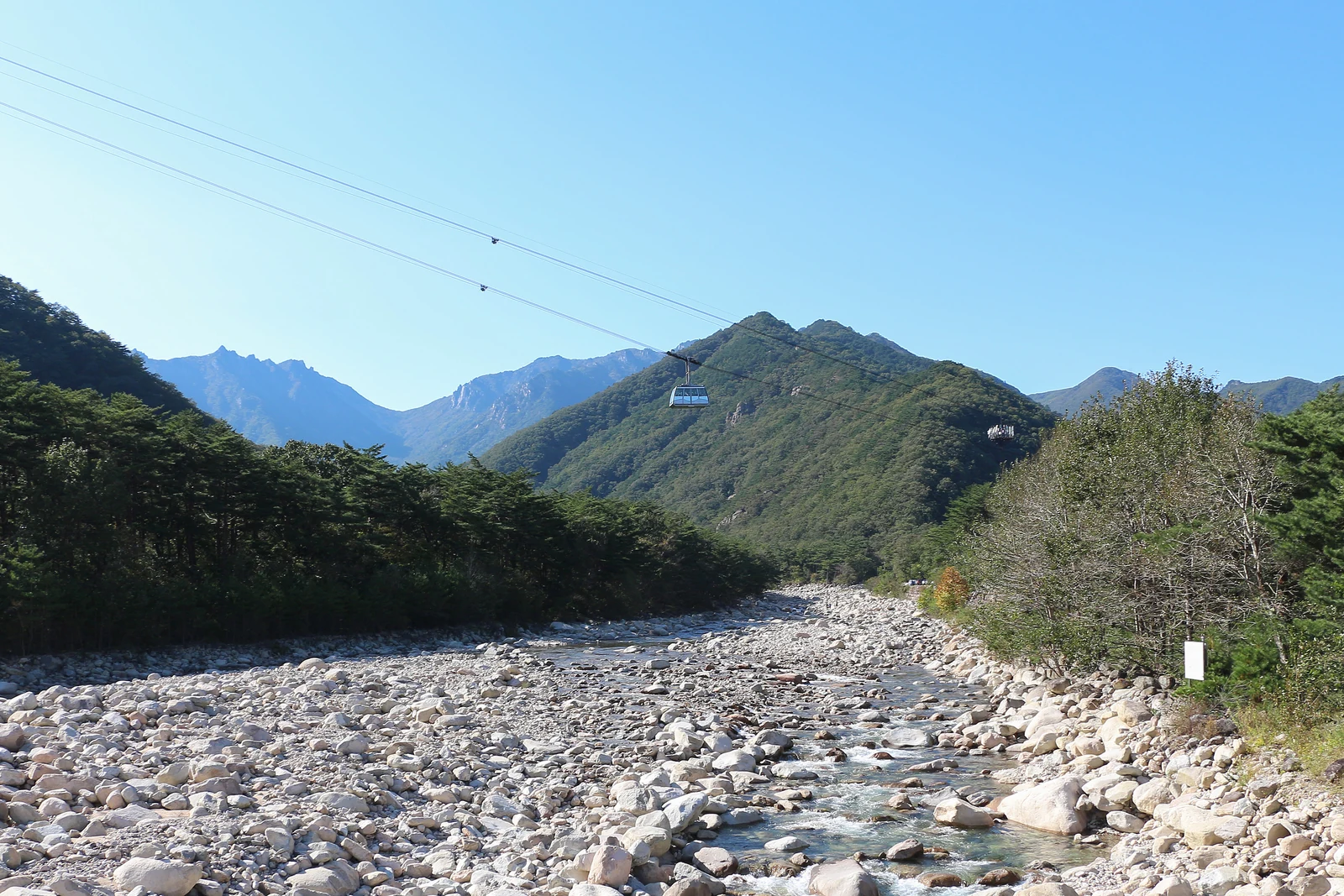
The Seorak Cable Car does not take advance reservations: buy the ticket on site on the visit day. The operator says daily hours can change with weather, its hours were pending when checked, strong wind or bad weather can suspend service, and a wait is possible. For Seoraksan, the cable car is an optional way to change the view and walking demand when conditions permit; it cannot be the guarantee that makes a long journey easy or replaces a full hike.

Seoraksan trail rules are route-specific. Heullimgol requires a reservation during its October 1 to November 30, 2026 operating period; that rule does not apply to every lower-park walk. Recheck KNPS control, the chosen trail’s entry window and any new weather restriction immediately before visiting. A normal park-wide status and a working cable car are separate questions.
Is the trip worth it for you?
Choose a short Seoraksan day trip if mountain scenery matters enough to justify the long bus journey, you are content with a lower-park visit, and you can adapt if weather cancels the cable car. Skip a same-day attempt if you need guaranteed cable access or substantial hiking time without an early start and a verified return connection. For a fuller trail day, Seoraksan is better planned with an overnight stay; the main tradeoff is extra time and flexibility against an additional night away from Seoul.
If those conditions do not fit your trip, use the published Korea fall foliage 2026 guide to compare lower-commitment and later-season alternatives. Seoraksan remains a conditional mountain choice, and the latest local foliage photographs should be checked again before you travel.