Seoul
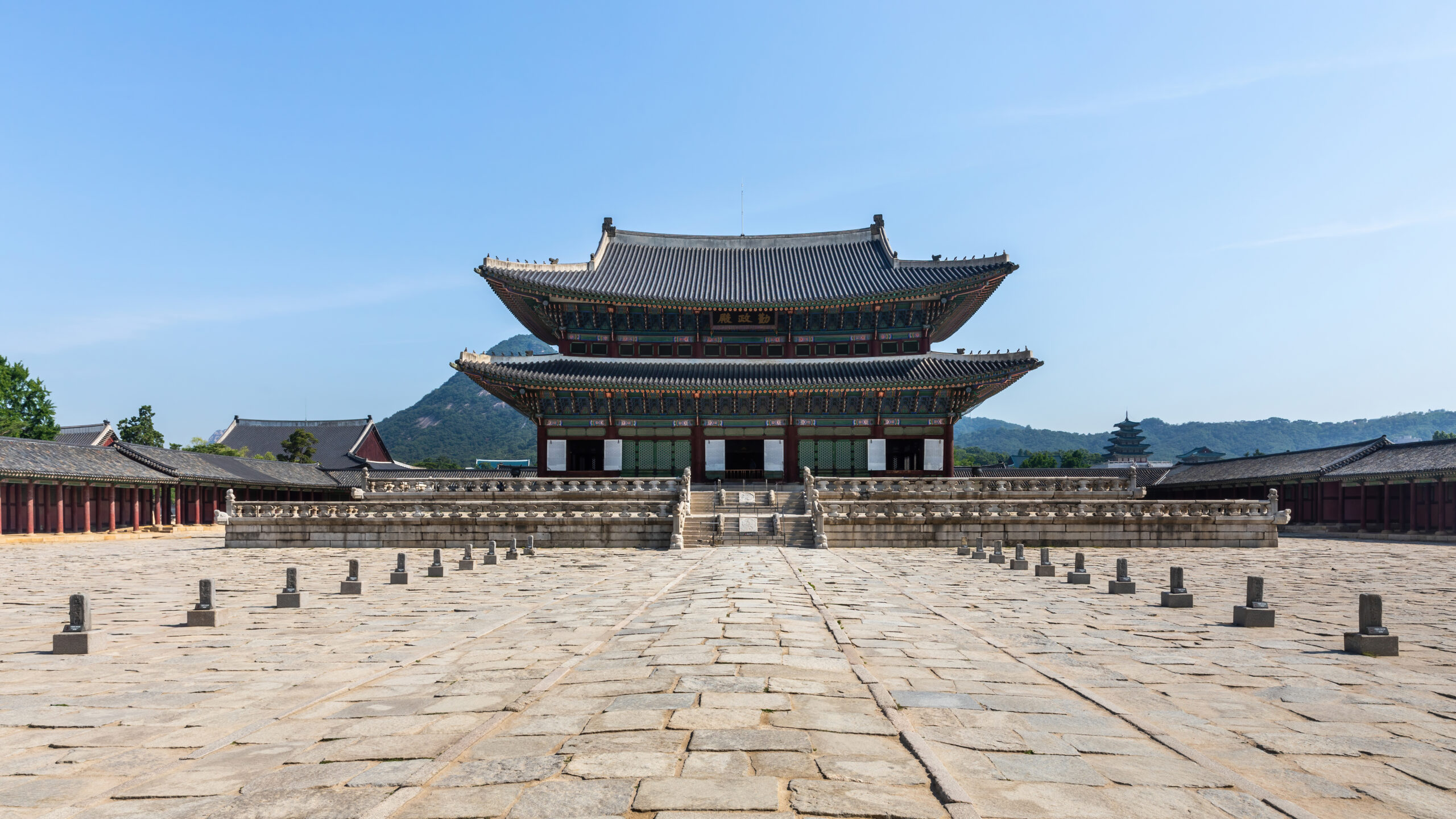
Front view of the Imperial Throne Hall Geunjeongjeon at Gyeongbokgung Palace with blue sky in Seoul.jpg by Basile Morin, CC BY-SA 4.0.
Visit Seoul describes Seoul as the capital of the Republic of Korea. The same guide says Joseon palaces such as Gyeongbokgung and Changdeokgung sit a short distance from skyscrapers and cafes. This page is the city overview. Street-level detail stays in the neighborhood guides, and the city list is on Destinations.
To compare neighborhoods as a base before choosing a street guide, use where to stay in Seoul.
For a full day planned under a ₩100,000 ceiling, use the Seoul ₩100,000 one-day budget guide.
Areas
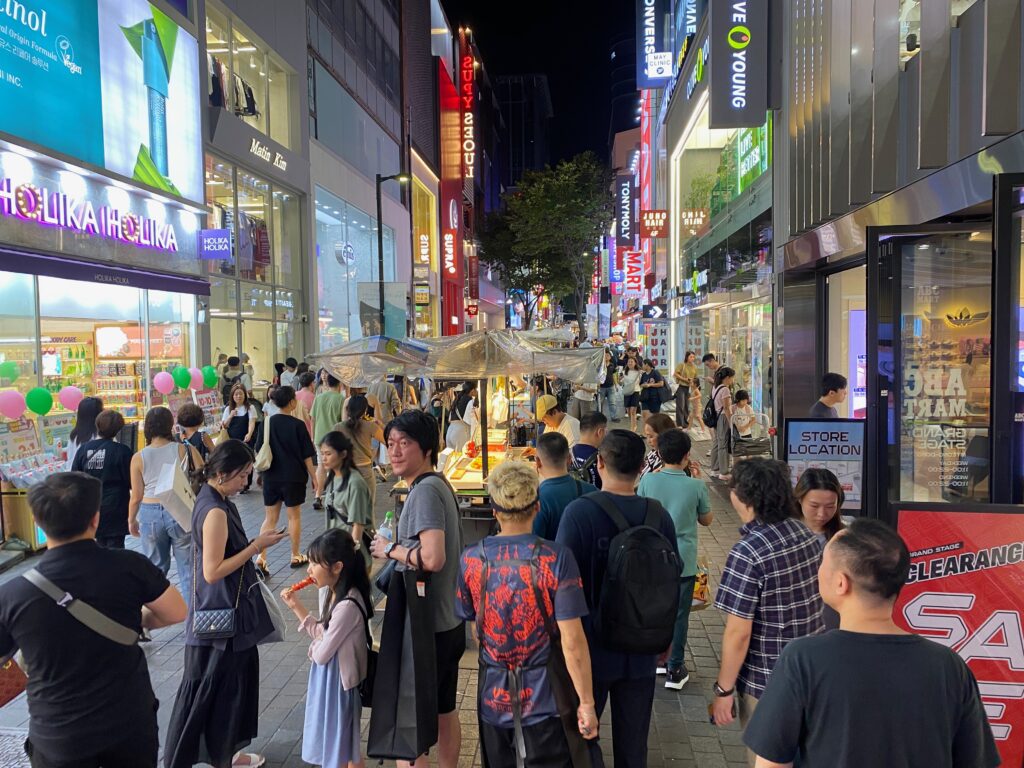
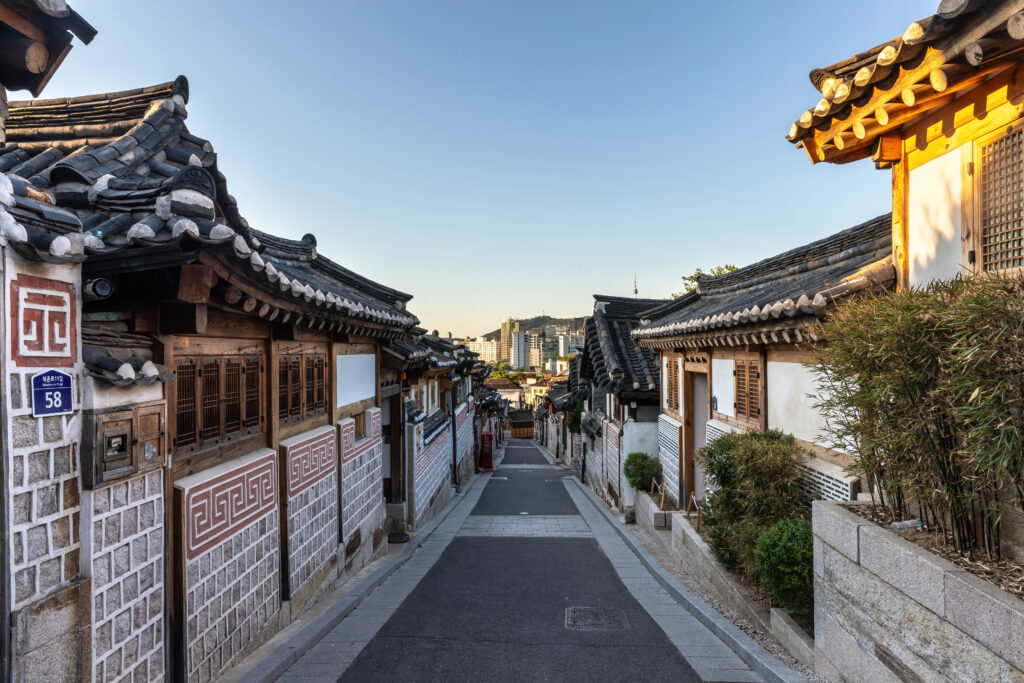
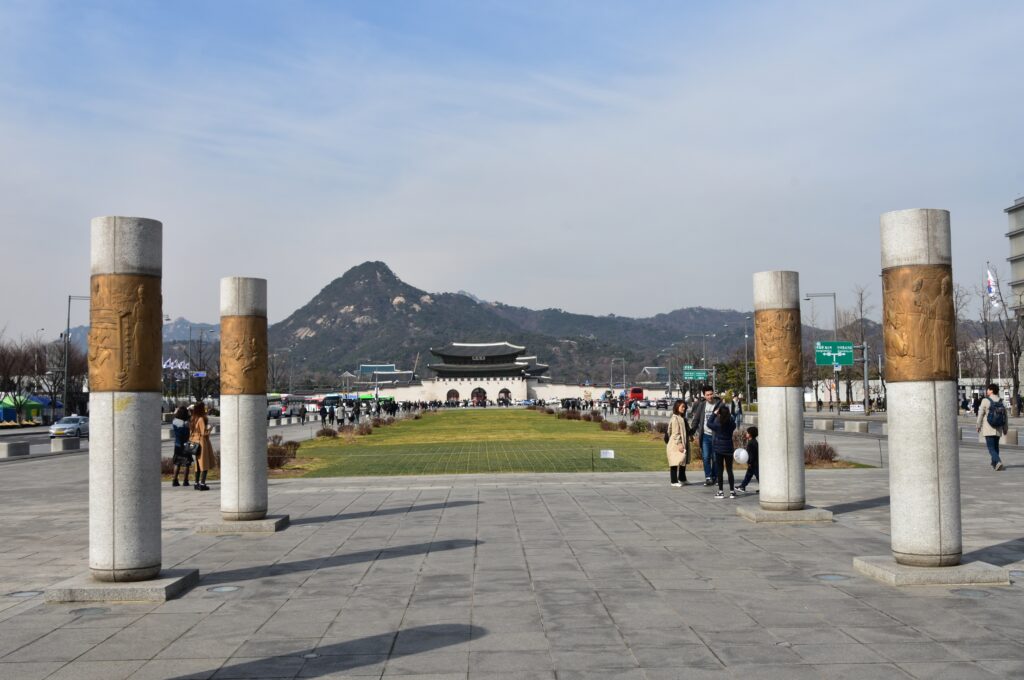
Visit Seoul groups Jongno-gu, Jung-gu, and Yongsan-gu as the heart of Seoul. Highlights it names there include Gyeongbokgung Palace, Myeongdong, Gwanghwamun, and Bukchon Hanok Village. Myeongdong is in Jung-gu. The guides are Myeongdong, Gwanghwamun, and Bukchon Hanok Village. Visit Seoul describes Bukchon Hanok Village as a historical and cultural village, and Gwanghwamun Square as a square where Joseon government offices were located.
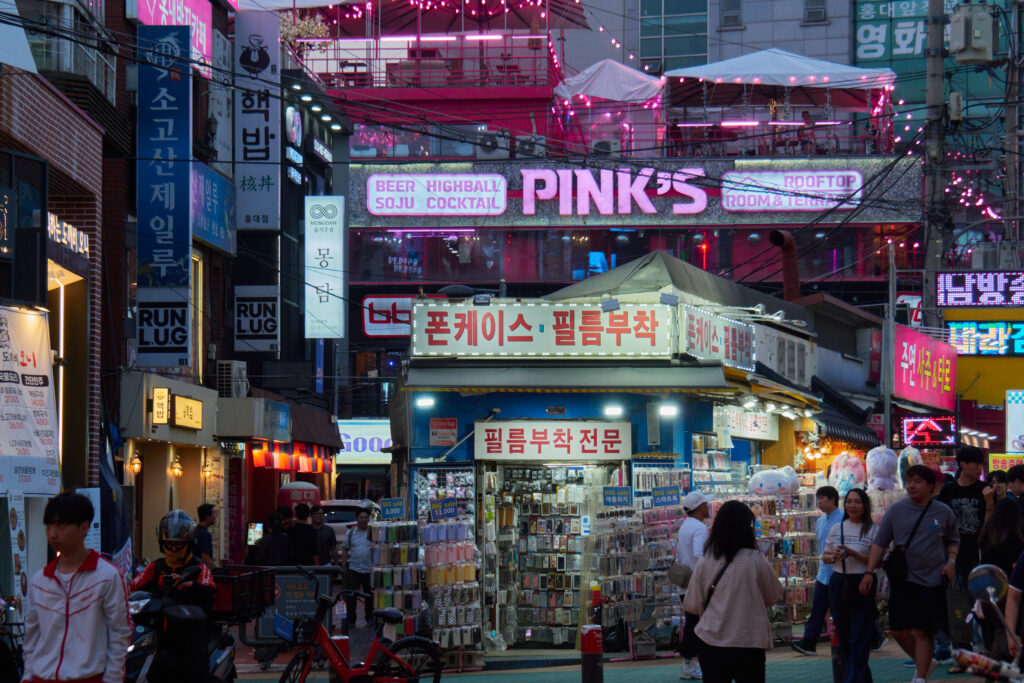
To the west, Visit Seoul groups Mapo-gu, Eunpyeong-gu, and Seodaemun-gu as a cultural hot spot and names Hongdae Street for youth culture and street performances. It describes the Red Road as a street in Hongdae, Mapo-gu. The neighborhood guide is Hongdae.
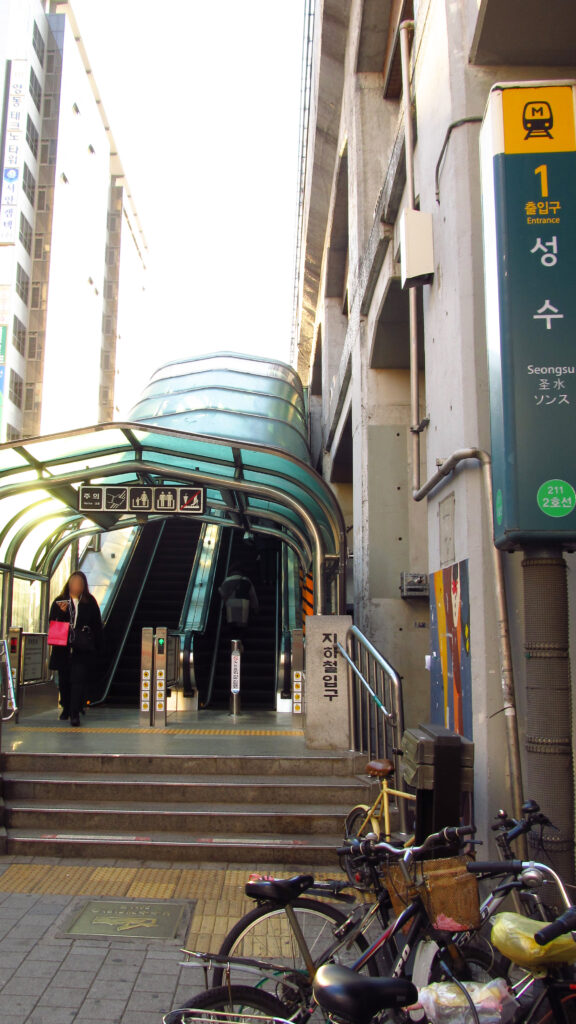
Visit Seoul lists Seongsu-dong in a district group that includes Seongdong-gu and Gwangjin-gu. It describes Seongsu Yeonmujang-gil as a street in Seongdong-gu. See Seongsu.
Visit Seoul describes the areas around Samseong-dong and Gangnam Station as major shopping and entertainment hubs. It names Yeongdeungpo and Yeouido as business and financial hubs.


Attractions
Visit Seoul says Namsan Seoul Tower was built in 1969 as Korea’s first integrated transmission tower. It says the Seoul City Wall (Hanyangdoseong) was originally built in 1396. Bukchon Hanok Village sits between Gyeongbokgung Palace and Changdeokgung Palace. Starfield Library in COEX Mall is described as an open public space.
Visit Seoul says Gyeongbokgung Palace was the first and largest of the royal palaces built during the Joseon Dynasty, and that it was built in 1395. The listed address is 161, Sajik-ro, Jongno-gu, Seoul. The National Palace Museum of Korea and the National Folk Museum of Korea are on the palace grounds.
Visit Seoul says Changdeokgung Palace is the second UNESCO World Heritage Site in Seoul, built by King Taejong in 1405. The listed address is 99 Yulgok-ro, Jongno-gu, Seoul.
Hours, closures, and routes can change. Check the operator before a visit. Current palace rules are under Practical information.
If you want to connect the palace with Bukchon, optional Insadong, and a meal at Gwangjang Market, use Traditional Seoul in One Day to plan the route.
Things to do
Visit Seoul lists K-pop dance classes, drama filming-location tours, and K-beauty styling among visitor activities. For the evening it names night views of Namsan and the Hangang River, Itaewon and Hongdae nightlife, and late-night shopping in Dongdaemun. It also names the National Museum of Korea, the National Museum of Modern and Contemporary Art, and the Leeum Museum of Art.
For the Sewoon Plaza complex used as Geumga Plaza in Vincenzo, see Sewoon Plaza and Vincenzo.
Food
Visit Seoul points to street food at Gwangjang Market and Namdaemun Market, and to traditional hanok restaurants around Anguk Station. It says Itaewon has restaurants from around the world.
For a walkable Jongno food route with market and sit-down stops, see the Seoul Food Day in Jongno guide.
Accommodation
Visit Seoul’s accommodation directory separates Hotel listings from Seoul Stay listings. It filters by area: Gwanghwamun, Myeongdong, Dongdaemun, Hongdae, Itaewon, Yeouido, Gangnam, Jamsil, and Seongsu. Those labels are a directory filter, not a ranking. This page does not compare areas and does not name individual places to stay. Directory listings can change. Check the current directory.
Transportation
Incheon International Airport lists bus, train, and taxi/call van as public transportation options. Under train options it lists Airport Railroad and Maglev train guides. It also lists Seoul late-night buses from Terminal 1 and Terminal 2. The airport has two passenger terminals with separate addresses: Terminal 1 (272 Gonghang-ro) and Terminal 2 (446 Je2terminal-daero).
Seoul Metro offers an English subway map download. It runs T-luggage, a same-day luggage delivery service between Incheon/Gimpo International Airports and subway stations.
Times, closures, and routes can change. Check Incheon International Airport and Seoul Metro for the current service.
For fares, tickets, and transfers inside the city, see How to Use the Seoul Subway.
Practical information
Visit Seoul says Gyeongbokgung Palace is closed every Tuesday, as of 2026, and that visitors wearing a complete hanbok can enter for free, as of 2026. It says Secret Garden and pavilion viewings at Changdeokgung Palace are reserved through the Integrated Reservation Service on the official website, and it lists Changdeokgung Palace as closed on Mondays. Confirm those rules with the palace operator. They can change.
Visit Seoul says all subway station signs are in Korean, English, and Chinese. Riders need a transportation card or single-use ticket to board the subway, and T-money cards are sold at convenience stores. A fare discount applies when transferring within 30 minutes using a transportation card.
Visit Seoul lists police at 112 and emergency medical help at 119. It lists 1330 for general tourism inquiries. It publishes Accessible Seoul information for people with disabilities, seniors, pregnant women, and families with infants.